Sie sind bereits eingeloggt. Klicken Sie auf 2. tolino select Abo, um fortzufahren.
Bitte loggen Sie sich zunächst in Ihr Kundenkonto ein oder registrieren Sie sich bei bücher.de, um das eBook-Abo tolino select nutzen zu können.
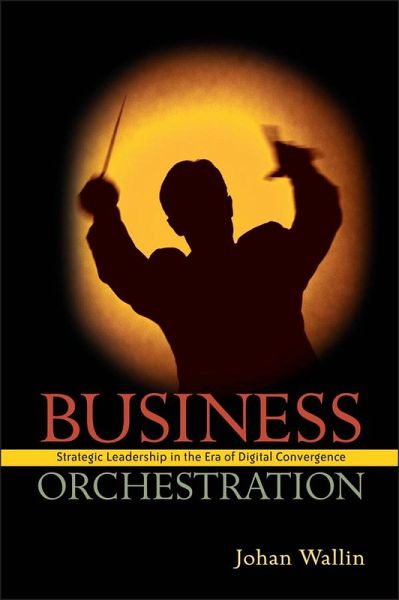
Digital convergence is redefining industries, and putting information, knowledge and collaboration at the heart of strategic leadership and management. In the face of such change it is those leaders who can 'orchestrate' a complex network of employees, customers and suppliers in a single ongoing learning experience that will succeed. Exploring four learning roles for customers (information acquirer; explorer; performer; inventor) and orchestrators (conductor; architect; auctioneer; promoter), Business Orchestration provides a strategic view of how to harness digital convergence by mobilizing…mehr
Digital convergence is redefining industries, and putting information, knowledge and collaboration at the heart of strategic leadership and management. In the face of such change it is those leaders who can 'orchestrate' a complex network of employees, customers and suppliers in a single ongoing learning experience that will succeed. Exploring four learning roles for customers (information acquirer; explorer; performer; inventor) and orchestrators (conductor; architect; auctioneer; promoter), Business Orchestration provides a strategic view of how to harness digital convergence by mobilizing and integrating the resources of other companies to create business value.
Dieser Download kann aus rechtlichen Gründen nur mit Rechnungsadresse in D ausgeliefert werden.
Die Herstellerinformationen sind derzeit nicht verfügbar.
Autorenporträt
ABOUT THE AUTHOR
JOHAN WALLIN, who started his career as a marketing executive, is now managing partner of Synocus Group, an international consulting company with offices in Helsinki, Shanghai and New York. He co-authored the book Prime Movers with Professor Rafael Ramírez in 2000, and has published a number of articles on customer orientation and capability building.
Dr Wallin has been an advisor to companies such as ABB, Canon, Nokia, Nordea, Sandvik, TeliaSonera, Tetra-Pak, and UPM-Kymmene, as well as leading public service organizations.
Business Orchestration is continuously discussed within its own forum: www.businessorchestration.com
Inhaltsangabe
Acknowledgments xi Introduction xv Part I: Conditions for Prime Movership 1 Value-creating Capabilities 7 The Anatomy of Value Creation 12 The Offering: the Case of an Auction House 20 Operational Capabilities 24 2 Focus on Learning 31 Digital Convergence and Learning 34 Learning in Communities 39 The Impact of Digital Convergence on Offerings and Capabilities 43 Learning Contexts 47 The Nature of Creative Work 53 3 Orchestrating Leadership 59 Alternative Orchestration Strategies 65 Orchestrating Leaders 71 The Orchestration Arena 79 Part II: Learning Contexts 4 Information Acquisition 89 Securing Seamless Information Transmission 95 Recouping Investments by Shifting Focus from Consumers to Carriers 101 Leadership Implications - The Value of an Orchestration Platform 106 5 Problem Solving 111 Leadership Implications - Institutionalizing Collective Regional Knowledge Building 120 6 Co-experiencing 125 Composing, Orchestrating, and Contemplating 134 Leadership Implications - Experience Provision as a Tool to Drive Change 136 7 Insight Accumulation 141 The Central Tenets of the Linux Philosophy - Sharing Information and Having Fun 145 Leadership Implications - Learning-Based Customer Segmentation 150 8 Transitional Objects 155 Supporting Learning with Transitional Objects 157 Information Acquisition and Transitional Objects 159 Problem Solving and Transitional Objects 161 Co-Experiencing and Transitional Objects 163 Insight Accumulation and Transitional Objects 164 Appropriate Transitional Objects in Different Learning Contexts 166 Part III: Building Capabilities 9 Core Resources 173 Excellence in Execution - Building a Superior Supply Chain Strategy 175 The Influence of Digital Convergence on the Cell-Phone Market 179 Who Will Own the Customer? 182 Leadership Implications - Industry Mapping 187 10 Offering Concepts 191 Leadership Implications - Balancing Efficiency and Creativity 202 11 Customer Interactions 207 A Historical Preview of Customer Communities 211 Embodied Values as Nurturers of Customer Communities 217 Leadership Implications - Co-Aligning the Strategy with Major Customers 223 12 Value Constellations 227 The Evolving Nature of Communities 238 Ethos - the Glue of a Resource Community 240 Leadership Implications - Building New Value Constellations 243 13 the Iocc Framework 247 The IOCC Framework 255 Part IV: the Leader as Orchestrator 14 the Leader as Conductor 265 Conducting an Orchestra: Instilling Disciplined Creativity 266 Orchestrating Based on Power or Knowledge? 273 The Game Plan 278 15 the Leader as Architect 281 Architecture Shaping its Environment 288 Operational Architecture 289 16 the Leader as Auctioneer 299 Information Architecture 310 17 the Leader as Promoter 315 Social Architecture 323 The Orchestration Architecture 324 18 Thriving, Aware, and Engaging 331 Characterizing an Orchestrator 344 Epilogue 355 The Business Idea 355 The Business Leader as Statesman 357 Orchestration and the World of People 359 Notes 365 References 375 Index 385
Acknowledgments xi Introduction xv Part I: Conditions for Prime Movership 1 Value-creating Capabilities 7 The Anatomy of Value Creation 12 The Offering: the Case of an Auction House 20 Operational Capabilities 24 2 Focus on Learning 31 Digital Convergence and Learning 34 Learning in Communities 39 The Impact of Digital Convergence on Offerings and Capabilities 43 Learning Contexts 47 The Nature of Creative Work 53 3 Orchestrating Leadership 59 Alternative Orchestration Strategies 65 Orchestrating Leaders 71 The Orchestration Arena 79 Part II: Learning Contexts 4 Information Acquisition 89 Securing Seamless Information Transmission 95 Recouping Investments by Shifting Focus from Consumers to Carriers 101 Leadership Implications - The Value of an Orchestration Platform 106 5 Problem Solving 111 Leadership Implications - Institutionalizing Collective Regional Knowledge Building 120 6 Co-experiencing 125 Composing, Orchestrating, and Contemplating 134 Leadership Implications - Experience Provision as a Tool to Drive Change 136 7 Insight Accumulation 141 The Central Tenets of the Linux Philosophy - Sharing Information and Having Fun 145 Leadership Implications - Learning-Based Customer Segmentation 150 8 Transitional Objects 155 Supporting Learning with Transitional Objects 157 Information Acquisition and Transitional Objects 159 Problem Solving and Transitional Objects 161 Co-Experiencing and Transitional Objects 163 Insight Accumulation and Transitional Objects 164 Appropriate Transitional Objects in Different Learning Contexts 166 Part III: Building Capabilities 9 Core Resources 173 Excellence in Execution - Building a Superior Supply Chain Strategy 175 The Influence of Digital Convergence on the Cell-Phone Market 179 Who Will Own the Customer? 182 Leadership Implications - Industry Mapping 187 10 Offering Concepts 191 Leadership Implications - Balancing Efficiency and Creativity 202 11 Customer Interactions 207 A Historical Preview of Customer Communities 211 Embodied Values as Nurturers of Customer Communities 217 Leadership Implications - Co-Aligning the Strategy with Major Customers 223 12 Value Constellations 227 The Evolving Nature of Communities 238 Ethos - the Glue of a Resource Community 240 Leadership Implications - Building New Value Constellations 243 13 the Iocc Framework 247 The IOCC Framework 255 Part IV: the Leader as Orchestrator 14 the Leader as Conductor 265 Conducting an Orchestra: Instilling Disciplined Creativity 266 Orchestrating Based on Power or Knowledge? 273 The Game Plan 278 15 the Leader as Architect 281 Architecture Shaping its Environment 288 Operational Architecture 289 16 the Leader as Auctioneer 299 Information Architecture 310 17 the Leader as Promoter 315 Social Architecture 323 The Orchestration Architecture 324 18 Thriving, Aware, and Engaging 331 Characterizing an Orchestrator 344 Epilogue 355 The Business Idea 355 The Business Leader as Statesman 357 Orchestration and the World of People 359 Notes 365 References 375 Index 385
Es gelten unsere Allgemeinen Geschäftsbedingungen: www.buecher.de/agb
Impressum
www.buecher.de ist ein Internetauftritt der buecher.de internetstores GmbH
Geschäftsführung: Monica Sawhney | Roland Kölbl | Günter Hilger
Sitz der Gesellschaft: Batheyer Straße 115 - 117, 58099 Hagen
Postanschrift: Bürgermeister-Wegele-Str. 12, 86167 Augsburg
Amtsgericht Hagen HRB 13257
Steuernummer: 321/5800/1497
USt-IdNr: DE450055826