Sie sind bereits eingeloggt. Klicken Sie auf 2. tolino select Abo, um fortzufahren.
Bitte loggen Sie sich zunächst in Ihr Kundenkonto ein oder registrieren Sie sich bei bücher.de, um das eBook-Abo tolino select nutzen zu können.
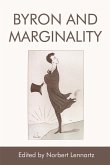
Explores Byron as the figurehead of Romanticism and the writer of provocatively ''marginal'' texts This book approaches Byron from a completely new angle: no longer seen in terms of his status as a celebrity and a star on the book-selling market, Byron is instead seen as an outsider both in Regency society and, even more so, for his iconoclastic views of life and literature. Pilgrims in pursuit of non-existing shrines, women as man-eating giants and viragos, cannibalism, suicide, black humour and other provocatively border-crossing topics leave scholars hopelessly at a loss as to where they…mehr
Explores Byron as the figurehead of Romanticism and the writer of provocatively ''marginal'' texts
This book approaches Byron from a completely new angle: no longer seen in terms of his status as a celebrity and a star on the book-selling market, Byron is instead seen as an outsider both in Regency society and, even more so, for his iconoclastic views of life and literature. Pilgrims in pursuit of non-existing shrines, women as man-eating giants and viragos, cannibalism, suicide, black humour and other provocatively border-crossing topics leave scholars hopelessly at a loss as to where they should categorise Byron and what they should do with his penchant for marginal themes, genres and characters. Byron caters to numerous Romantic clichés (weltschmerz, melancholy, subjectivity), while simultaneously reverting to genres, themes and motifs that cast him as a pre- or even anti-Romantic. This collection will trigger new debates in Byron scholarship and show that terms such as canonicity and marginality tend to be blurry and stand in constant need of re-negotiation.
Key Features:
Re-reads Byron''s heterogeneous texts
Foregrounds Byron''s marginal texts, the margins from which they were written and the thematic marginalities they deal with
Re-evalutates Romanticism in the light of marginality
Pinpoints the interface between Classicism, Romanticism and Modernity
Dieser Download kann aus rechtlichen Gründen nur mit Rechnungsadresse in A, B, BG, CY, CZ, D, DK, EW, E, FIN, F, GR, HR, H, IRL, I, LT, L, LR, M, NL, PL, P, R, S, SLO, SK ausgeliefert werden.
Die Herstellerinformationen sind derzeit nicht verfügbar.
Autorenporträt
Norbert Lennartz is Full Professor of English Literature at the University of Vechta, in Germany. He specialises in 19th-century British literature and culture, and is particularly interested in Lord Byron, Charles Dickens's dark novels and Byronic reverberations in late Victorian and Modernist literature.
Inhaltsangabe
I. Introduction: Lord Byron - Wandering and Wavering between the Centres and Margins of Romanticism: An Attempt at an Introduction, Norbert Lennartz (Vechta); II. Byron's Marginalisation in Romantic World Literature; 1. Byron and Weltliteratur, Nicholas Halmi (Oxford); 2. Reshaping the Romantic Canon from the Margins: The Medial Construction of 'Byron' in Childe Harold's Pilgrimage Ralf Haekel (Göttingen); 3. Byron and Romantic-Period Neoclassicism Rolf Lessenich (Bonn); III. Byron's Marginal Identities and Places; 4. 'When a man talks of system, his case is hopeless:' Byron at the Margins of Romantic Counterculture, Friederike Wolfrum (Innsbruck); 5. At the Margins of Europe: Byron's East Revisited: The Giaour, Stephen Minta (York); 6. Literary Forefathers: Byron's Marginalia in Isaac D'Israeli's Literary Character of Men of Genius, Jonathan Gross (Chicago); IV. Cherishing the Marginal - Marginal Genres in Byron; 7. 'Like a Flash of Inspiration:' Byron's Marginalised Lyricism in Hebrew Melodies, Michael O'Neill (Durham); 8. Out of Romanticism: Byron and Romance, Anna Camilleri (Oxford); 9. The Margins of Genius: Byron, Nationalism, and the Periodical Reviews, Josefina Tuominen-Pope (Zürich); V. On the Provocative Margins of Taste; 10. 'Stand not on that brink!¿ Byron, Gender and Romantic Suicide, Caroline Franklin (Swansea); 11. Byron and the Good Death, Tom Mole (Edinburgh); 12. At the Margins of Romanticism: The Women of Don Juan's English Cantos, Drummond Bone (Oxford); VI. Marginal Affairs - Visual and Paratextual; 13. A Marginal Interest? Byron and the Fine Arts, Richard Lansdown (Groningen); 13. 'I ask his pardon for a postscript:' Byron's Epistolary Afterthoughts, Jonathon Shears (Keele); VII. List of Contributors; Index.
Es gelten unsere Allgemeinen Geschäftsbedingungen: www.buecher.de/agb
Impressum
www.buecher.de ist ein Internetauftritt der buecher.de internetstores GmbH
Geschäftsführung: Monica Sawhney | Roland Kölbl | Günter Hilger
Sitz der Gesellschaft: Batheyer Straße 115 - 117, 58099 Hagen
Postanschrift: Bürgermeister-Wegele-Str. 12, 86167 Augsburg
Amtsgericht Hagen HRB 13257
Steuernummer: 321/5800/1497
USt-IdNr: DE450055826