22,74 €
inkl. MwSt.
Sofort per Download lieferbar
0 °P sammeln

Andere Kunden interessierten sich auch für
") Neon Nevada (eBook, ePUB)26,70 €
Neon Nevada (eBook, ePUB)26,70 €") New York Through the Lens (eBook, ePUB)3,99 €
New York Through the Lens (eBook, ePUB)3,99 €") Vivian Maier Developed (eBook, ePUB)21,75 €
Vivian Maier Developed (eBook, ePUB)21,75 €") Across the Great Divide (eBook, ePUB)9,88 €
Across the Great Divide (eBook, ePUB)9,88 €") Stefan Lorant (eBook, ePUB)60,95 €
Stefan Lorant (eBook, ePUB)60,95 €") To Washington Park, With Love (eBook, ePUB)15,95 €
To Washington Park, With Love (eBook, ePUB)15,95 €") The Times London In Photos (eBook, ePUB)18,48 €
The Times London In Photos (eBook, ePUB)18,48 €


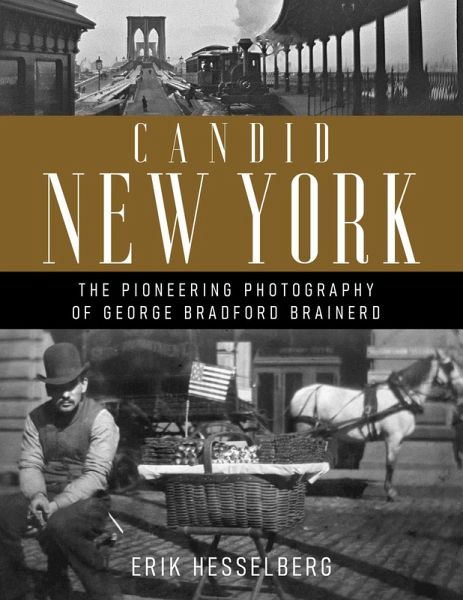
The American entrepreneur George Eastman has been called "the father of the snapshot," bringing photography to the masses with his compact Kodak camera in 1888. But more than a decade earlier, a Connecticut-born inventor devised ingenious hand-held cameras, which he used to record daily life on the streets of New York. As early as 1870, before dry plates were commercially available, George Bradford Brainerd, a civil engineer with the Brooklyn water department, developed photographic plates with more sensitive film emulsions to freeze action which had previously been a blur. Brainerd used the new technology to document the colorful street types he saw as he went about his rounds-fruit peddlers, artisans, musicians, dock workers, newsboys, launderesses, and even beggars-laying the groundwork for photojournalists like Jacob Riis and Louis Hine. But in America in the early 1880s, when Brainerd was active, such documentary or "street photography" was unknown. Candid New York is the first published work on this pioneering American inventor, once hailed as the "father of instantaneous photography."
Dieser Download kann aus rechtlichen Gründen nur mit Rechnungsadresse in A, B, BG, CY, CZ, D, DK, EW, E, FIN, F, GR, HR, H, I, LT, L, LR, M, NL, PL, P, R, S, SLO, SK ausgeliefert werden.