5,99 €
5,99 €
inkl. MwSt.
Sofort per Download lieferbar

3 °P sammeln
5,99 €
Als Download kaufen
5,99 €
inkl. MwSt.
Sofort per Download lieferbar
3 °P sammeln
Jetzt verschenken
Alle Infos zum eBook verschenken
5,99 €
inkl. MwSt.
Sofort per Download lieferbar
Alle Infos zum eBook verschenken
3 °P sammeln

Andere Kunden interessierten sich auch für
") Capitalism and Disability (eBook, ePUB)10,95 €
Capitalism and Disability (eBook, ePUB)10,95 €") Keywords for Capitalism (eBook, ePUB)9,95 €
Keywords for Capitalism (eBook, ePUB)9,95 €") The Feminist Subversion of the Economy (eBook, ePUB)9,95 €
The Feminist Subversion of the Economy (eBook, ePUB)9,95 €") Family, Welfare, and the State (eBook, ePUB)5,99 €
Family, Welfare, and the State (eBook, ePUB)5,99 €") Inside the Second Wave of Feminism (eBook, ePUB)9,95 €
Inside the Second Wave of Feminism (eBook, ePUB)9,95 €") Negro Liberation (eBook, ePUB)5,99 €
Negro Liberation (eBook, ePUB)5,99 €") Capital (eBook, ePUB)2,99 €
Capital (eBook, ePUB)2,99 €







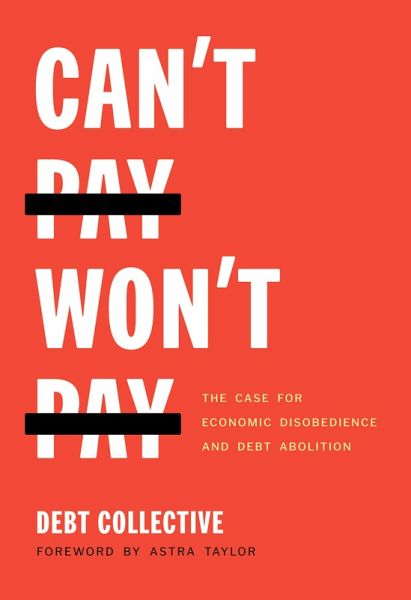
Debtors have been mocked, scolded and lied to for decades. We have been told that it is perfectly normal to go into debt to get medical care, to go to school, or even to pay for our own incarceration. We've been told there is no way to change an economy that pushes the majority of people into debt while a small minority hoard wealth and power. The coronavirus pandemic has revealed that mass indebtedness and extreme inequality are a political choice. In the early days of the crisis, elected officials drew up plans to spend trillions of dollars. The only question was: where would the money go and who would benefit from the bailout? The truth is that there has never been a lack of money for things like housing, education and health care. Millions of people never needed to be forced into debt for those things in the first place. Armed with this knowledge, a militant debtors movement has the potential to rewrite the contract and assure that no one has to mortgage their future to survive.
Debtors of the World Must Unite.
As isolated individuals, debtors have little influence. But as a bloc, we can leverage our debts and devise new tactics to challenge the corporate creditor class and help win reparative, universal public goods. Individually, our debts overwhelm us. But together, our debts can make us powerful.
Debtors of the World Must Unite.
As isolated individuals, debtors have little influence. But as a bloc, we can leverage our debts and devise new tactics to challenge the corporate creditor class and help win reparative, universal public goods. Individually, our debts overwhelm us. But together, our debts can make us powerful.
Dieser Download kann aus rechtlichen Gründen nur mit Rechnungsadresse in A, D ausgeliefert werden.