25,95 €
inkl. MwSt.
Sofort per Download lieferbar
13 °P sammeln

Andere Kunden interessierten sich auch für
") The Supply-side Revolution with Chinese Characteristics (eBook, PDF)32,95 €
The Supply-side Revolution with Chinese Characteristics (eBook, PDF)32,95 €") Chinese Enterprise Management (eBook, PDF)77,95 €
Chinese Enterprise Management (eBook, PDF)77,95 €") Animal Spirits with Chinese Characteristics (eBook, PDF)72,95 €
Animal Spirits with Chinese Characteristics (eBook, PDF)72,95 €") The Chinese Economy (eBook, PDF)72,95 €
The Chinese Economy (eBook, PDF)72,95 €") China's Road Ahead (eBook, PDF)40,95 €
China's Road Ahead (eBook, PDF)40,95 €") The Chinese Economy (eBook, PDF)72,95 €
The Chinese Economy (eBook, PDF)72,95 €") Chinas Finanz- und Währungspolitik nach der Asienkrise (eBook, PDF)14,95 €
Chinas Finanz- und Währungspolitik nach der Asienkrise (eBook, PDF)14,95 €



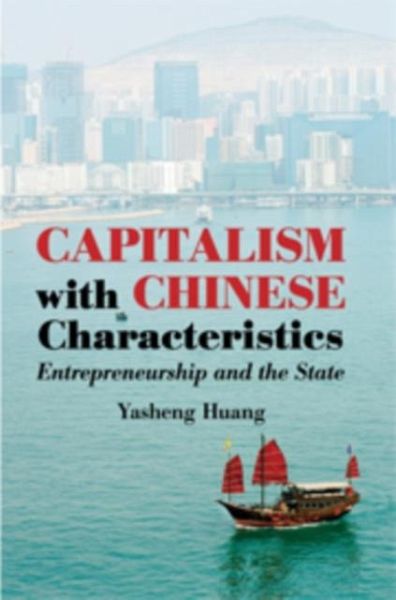
Presents a story of two Chinas - an entrepreneurial rural China and a state-controlled urban China. In the 1980s, rural China gained the upper hand. In the 1990s, urban China triumphed. In the 1990s, the Chinese state reversed many of its rural experiments, with long-lasting damage to the economy and society. A weak financial sector, income disparity, rising illiteracy, productivity slowdowns, and reduced personal income growth are the product of the capitalism with Chinese characteristics of the 1990s and beyond. While GDP grew quickly in both decades, the welfare implications of growth differed substantially. The book uses the emerging Indian miracle to debunk the widespread notion that democracy is automatically anti-growth. As the country marked its 30th anniversary of reforms in 2008, China faces some of its toughest economic challenges and substantial vulnerabilities that require fundamental institutional reforms.
Dieser Download kann aus rechtlichen Gründen nur mit Rechnungsadresse in A, B, BG, CY, CZ, D, DK, EW, E, FIN, F, GR, HR, H, IRL, I, LT, L, LR, M, NL, PL, P, R, S, SLO, SK ausgeliefert werden.