112,95 €
112,95 €
inkl. MwSt.
Sofort per Download lieferbar

56 °P sammeln
112,95 €
Als Download kaufen
112,95 €
inkl. MwSt.
Sofort per Download lieferbar
56 °P sammeln
Jetzt verschenken
Alle Infos zum eBook verschenken
112,95 €
inkl. MwSt.
Sofort per Download lieferbar
Alle Infos zum eBook verschenken
56 °P sammeln

Andere Kunden interessierten sich auch für
") Psychosocial Approaches to Child and Adolescent Health and Wellbeing (eBook, PDF)32,95 €
Psychosocial Approaches to Child and Adolescent Health and Wellbeing (eBook, PDF)32,95 €") Psychiatric Oppression in Women's Lives (eBook, PDF)104,95 €
Psychiatric Oppression in Women's Lives (eBook, PDF)104,95 €") Psychiatry Interrogated (eBook, PDF)32,95 €
Psychiatry Interrogated (eBook, PDF)32,95 €") De-Medicalizing Misery (eBook, PDF)72,95 €
De-Medicalizing Misery (eBook, PDF)72,95 €") Lacan in Italy (eBook, PDF)80,95 €
Lacan in Italy (eBook, PDF)80,95 €") Pathologisation, Depathologisation and Mental Health (eBook, PDF)112,95 €
Pathologisation, Depathologisation and Mental Health (eBook, PDF)112,95 €") Mad Knowledges and User-Led Research (eBook, PDF)72,95 €
Mad Knowledges and User-Led Research (eBook, PDF)72,95 €






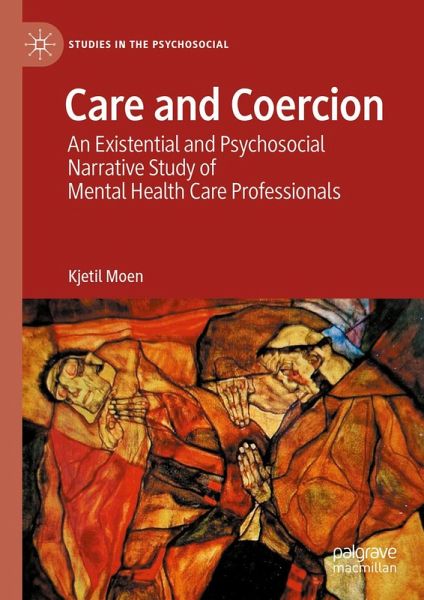
This book presents an existential and psychosocial interpretation of the experiences of mental health care practitioners whose work involves use of coercion. Through in-depth case studies carried out in Norway, and theoretical discussions, it examines how the use of coercion is not merely directed by laws and regulations, but also by the situated subjectivities of the practitioners, and the wider contexts informing them. It demonstrates how the inner and outer worlds, the psychic and the social, and the existential and the cultural, all impact the professionals' experience and capacity to care.
Employing a phenomenological and contextual approach, the book explores the practitioners' paradoxical experiences of mandating and physically undertaking coercive measures toward vulnerable patients, while at the same time being members of a democratic society in which autonomy is a defining feature. It demonstrates the impact on professionals who are both authorized to use coercion and critiqued by the authorities for doing so. The author discusses what informs the moral deliberations taking place within and between professional subjects in charged situations involving use of coercion, and how the experience of using coercion informs the self-understanding of the professional and thus potentially future decision-making processes pertaining to the use of coercive measures. In doing so the book provides a look behind closed doors of "total institutions" that addresses, and partly undresses, psychiatric power.
This book offers a rich, contextual examination of mental health care practice that will be of interest to students, practitioners, and researchers of psychiatry, as well as those of adjacent fields such as psychology, social work, nursing, and criminology.
Employing a phenomenological and contextual approach, the book explores the practitioners' paradoxical experiences of mandating and physically undertaking coercive measures toward vulnerable patients, while at the same time being members of a democratic society in which autonomy is a defining feature. It demonstrates the impact on professionals who are both authorized to use coercion and critiqued by the authorities for doing so. The author discusses what informs the moral deliberations taking place within and between professional subjects in charged situations involving use of coercion, and how the experience of using coercion informs the self-understanding of the professional and thus potentially future decision-making processes pertaining to the use of coercive measures. In doing so the book provides a look behind closed doors of "total institutions" that addresses, and partly undresses, psychiatric power.
This book offers a rich, contextual examination of mental health care practice that will be of interest to students, practitioners, and researchers of psychiatry, as well as those of adjacent fields such as psychology, social work, nursing, and criminology.
Dieser Download kann aus rechtlichen Gründen nur mit Rechnungsadresse in A, B, BG, CY, CZ, D, DK, EW, E, FIN, F, GR, HR, H, IRL, I, LT, L, LR, M, NL, PL, P, R, S, SLO, SK ausgeliefert werden.