39,95 €
39,95 €
inkl. MwSt.
Sofort per Download lieferbar

20 °P sammeln
39,95 €
Als Download kaufen
39,95 €
inkl. MwSt.
Sofort per Download lieferbar
20 °P sammeln
Jetzt verschenken
Alle Infos zum eBook verschenken
39,95 €
inkl. MwSt.
Sofort per Download lieferbar
Alle Infos zum eBook verschenken
20 °P sammeln

Andere Kunden interessierten sich auch für
") Case Studies on Chinese Enterprises (eBook, ePUB)55,95 €
Case Studies on Chinese Enterprises (eBook, ePUB)55,95 €") TWI Case Studies (eBook, ePUB)37,95 €
TWI Case Studies (eBook, ePUB)37,95 €") Studies in Public Enterprise (eBook, ePUB)61,95 €
Studies in Public Enterprise (eBook, ePUB)61,95 €") Chinese Currency Exchange Rates Analysis (eBook, ePUB)22,95 €
Chinese Currency Exchange Rates Analysis (eBook, ePUB)22,95 €") The Routledge Handbook of Global and Digital Governance Crossroads (eBook, ePUB)47,95 €
The Routledge Handbook of Global and Digital Governance Crossroads (eBook, ePUB)47,95 €") Peak Performance (eBook, ePUB)48,95 €
Peak Performance (eBook, ePUB)48,95 €") Rural Economic Development in Japan (eBook, ePUB)45,95 €
Rural Economic Development in Japan (eBook, ePUB)45,95 €

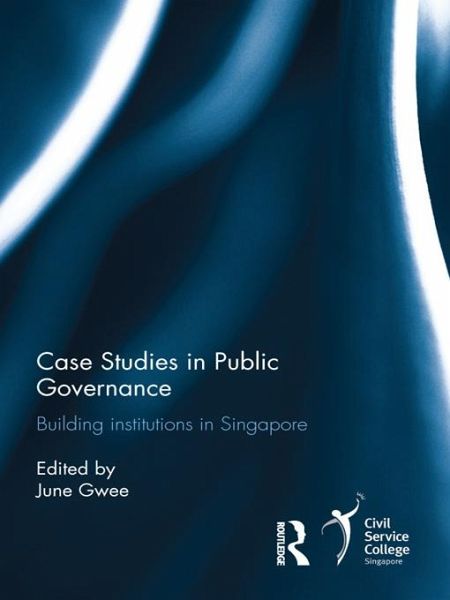
This book makes available original case studies on how institutions developed in Singapore. Up until now, these case studies have been used exclusively in Singapore to teach public governance, and have been well-received in the Singapore Civil Service College's milestone programmes. With this publication, more will be able to access this material. Students, researchers and policy-makers can now use these case studies for pedagogy or to derive insights on Singapore's approach on governance. Designed around the theme of "building institutions", the case studies also present facets of how institutions developed which are universal to management studies.
These case studies highlight a core aspect in the development of institutions, namely, how people and organisations change the culture of institutions, how leaders influence their organisations, and how policies define the systems that build institutions. The book contains 5 case studies, each profiling a unique sector and key institution in Singapore. They present how public agencies and leaders helped to build Singapore institutions over the last forty years.
Although there are more cases studies on management and strategy than public policy and administration, there is growing interest in Asian case studies, and more specifically, case studies on Singapore public governance. This collection of case studies on Singapore institutions provides the perspective from Singaporean case writers themselves, on the role of government in Singapore's development.
These case studies highlight a core aspect in the development of institutions, namely, how people and organisations change the culture of institutions, how leaders influence their organisations, and how policies define the systems that build institutions. The book contains 5 case studies, each profiling a unique sector and key institution in Singapore. They present how public agencies and leaders helped to build Singapore institutions over the last forty years.
Although there are more cases studies on management and strategy than public policy and administration, there is growing interest in Asian case studies, and more specifically, case studies on Singapore public governance. This collection of case studies on Singapore institutions provides the perspective from Singaporean case writers themselves, on the role of government in Singapore's development.
Dieser Download kann aus rechtlichen Gründen nur mit Rechnungsadresse in A, B, BG, CY, CZ, D, DK, EW, E, FIN, F, GR, HR, H, IRL, I, LT, L, LR, M, NL, PL, P, R, S, SLO, SK ausgeliefert werden.
"Singapore's rapid institutional transformation holds important lessons for developing and advanced countries alike. These useful case studies - drawn from a broad spectrum of public policy - describe the peculiar mix of leadership, culture, and organizational practices that have helped Singapore build the institutions that are the rest of the world's envy."
Dani Rodrik, John F. Kennedy School of Government, Harvard University
"The case studies in this excellent book combine to tell an important story of how the government adapted and organized itself to deliver policies and plans that define the Singapore of today. Tomorrow's public officers will better understand the demands of public governance in all its complexity if they have access to thoughtful and substantive books like this."
Peter Ho. Centre of Strategic Futures, Singapore
"The world is in dire need of leadership and institutions that accept the responsibility to serve the needs of their societies without losing sight of the greater good. The Singapore Civil Service College offers us a collection of cases that helps us to understand how Singapore, a small Asian state, has created governance structures to deliver on social protection and environmentally sustainable urban solutions for its citizens. This is a valuable read for researchers and policymakers worldwide."
Noeleen Heyzer, United Nations Economic and Social Commission for Asia and the Pacific
Dani Rodrik, John F. Kennedy School of Government, Harvard University
"The case studies in this excellent book combine to tell an important story of how the government adapted and organized itself to deliver policies and plans that define the Singapore of today. Tomorrow's public officers will better understand the demands of public governance in all its complexity if they have access to thoughtful and substantive books like this."
Peter Ho. Centre of Strategic Futures, Singapore
"The world is in dire need of leadership and institutions that accept the responsibility to serve the needs of their societies without losing sight of the greater good. The Singapore Civil Service College offers us a collection of cases that helps us to understand how Singapore, a small Asian state, has created governance structures to deliver on social protection and environmentally sustainable urban solutions for its citizens. This is a valuable read for researchers and policymakers worldwide."
Noeleen Heyzer, United Nations Economic and Social Commission for Asia and the Pacific