1,90 €
1,90 €
inkl. MwSt.
Sofort per Download lieferbar

0 °P sammeln
1,90 €
Als Download kaufen
1,90 €
inkl. MwSt.
Sofort per Download lieferbar
0 °P sammeln
Jetzt verschenken
Alle Infos zum eBook verschenken
1,90 €
inkl. MwSt.
Sofort per Download lieferbar
Alle Infos zum eBook verschenken
0 °P sammeln

Andere Kunden interessierten sich auch für
") Cavalleria Rusticana and Other Stories (eBook, ePUB)10,99 €
Cavalleria Rusticana and Other Stories (eBook, ePUB)10,99 €") Selected Stories (eBook, ePUB)3,99 €
Selected Stories (eBook, ePUB)3,99 €") The Garden Party and Other Stories (eBook, ePUB)8,49 €
The Garden Party and Other Stories (eBook, ePUB)8,49 €") Rashomon and Seventeen Other Stories (eBook, ePUB)9,49 €
Rashomon and Seventeen Other Stories (eBook, ePUB)9,49 €") The Awakening and Selected Stories (eBook, ePUB)6,99 €
The Awakening and Selected Stories (eBook, ePUB)6,99 €") Metamorphosis and Other Stories (eBook, ePUB)8,49 €
Metamorphosis and Other Stories (eBook, ePUB)8,49 €") Tales from the Decameron (eBook, ePUB)8,99 €
Tales from the Decameron (eBook, ePUB)8,99 €
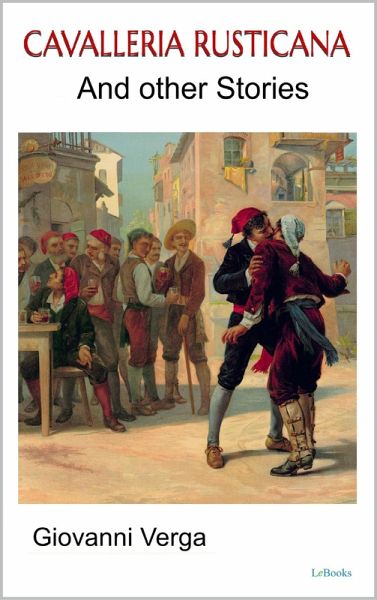
Cavalleria Rusticana and Other Stories, by Giovanni Verga, is a seminal work of Italian verismo literature that captures the raw realities of rural Sicilian life. Through a series of interconnected short stories, Verga portrays the struggles, passions, and harsh social codes of peasants and working-class individuals bound by honor, tradition, and poverty. The titular story, Cavalleria Rusticana, centers on a tragic love triangle marked by betrayal and vengeance, reflecting the deep emotional intensity and rigid moral expectations of its setting. Verga's stark, unembellished prose and objective narrative style strip away romanticism to present characters driven by instinct, pride, and survival. His stories emphasize the inevitability of fate and the weight of societal norms, highlighting how individuals are often powerless against the circumstances that define their lives. This approach marked a significant departure from idealized literature of the time and helped establish verismo as a powerful literary movement. The lasting impact of Cavalleria Rusticana and Other Tales lies in its vivid depiction of human emotion within a specific cultural and social context. Verga's ability to universalize themes such as love, jealousy, and loss through the lens of Sicilian village life continues to resonate, offering readers a poignant reflection on the intersection of personal desire and communal expectation.
Dieser Download kann aus rechtlichen Gründen nur mit Rechnungsadresse in A, B, BG, CY, CZ, D, DK, EW, E, FIN, F, GR, H, IRL, I, LT, L, LR, M, NL, PL, P, R, S, SLO, SK ausgeliefert werden.