0,91 €
inkl. MwSt.
Sofort per Download lieferbar
0 °P sammeln

Andere Kunden interessierten sich auch für
") The Inclusive Republic of Australia (eBook, ePUB)5,30 €
The Inclusive Republic of Australia (eBook, ePUB)5,30 € (eBook, ePUB)") The Forest Runners (Illustrated) (eBook, ePUB)0,99 €
The Forest Runners (Illustrated) (eBook, ePUB)0,99 €") The Frog King and the children of Frya (eBook, ePUB)9,99 €
The Frog King and the children of Frya (eBook, ePUB)9,99 €") The Story of Hiawatha (eBook, ePUB)1,82 €
The Story of Hiawatha (eBook, ePUB)1,82 €") Wyoming A Story of the Outdoor West (eBook, ePUB)1,99 €
Wyoming A Story of the Outdoor West (eBook, ePUB)1,99 €") The Growth of the British Empire (eBook, ePUB)1,82 €
The Growth of the British Empire (eBook, ePUB)1,82 €") The Book of Awesome Women (eBook, ePUB)7,99 €
The Book of Awesome Women (eBook, ePUB)7,99 €

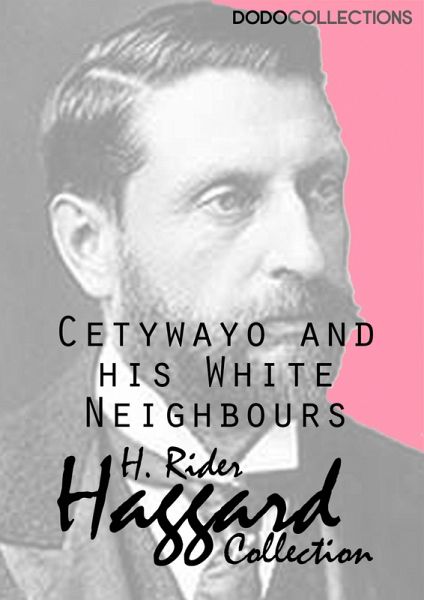
Dodo Collections brings you another classic from H. Rider Haggard, 'Cetywayo and his White Neighbors'.
Cetywayo and His White Neighbors, or Remarks on Recent Events in Zululand, Natal and the Transvaal is an 1882 non-fiction book by H. Rider Haggard, his first full-length published work. It was based on his time working in South Africa. The "Cetywayo" of the title is the Zulu king Cetshwayo kaMpande.
The book had some good reviews and Haggard received letters of praise from such figures as Lord Carnarvon and Randolph Churchill.
H. Rider Haggard - was an English writer of adventure novels set in exotic locations, predominantly Africa, and a pioneer of the Lost World literary genre. He was also involved in agricultural reform throughout the British Empire. His stories, situated at the lighter end of Victorian literature, continue to be popular and influential.
His novels portray many of the stereotypes associated with colonialism, yet they are unusual for the degree of sympathy with which the native populations are portrayed. Africans often play heroic roles in the novels, although the protagonists are typically European (though not invariably). Notable examples are the heroic Zulu warrior Umslopogaasi and Ignosi, the rightful king of Kukuanaland, in King Solomon's Mines. Having developed an intense mutual friendship with the three Englishmen who help him regain his throne, he accepts their advice and abolishes witch-hunts and arbitrary capital punishment.
Dieser Download kann aus rechtlichen Gründen nur mit Rechnungsadresse in A, B, BG, CY, CZ, D, DK, EW, E, FIN, F, GR, H, IRL, I, LT, L, LR, M, NL, PL, P, R, S, SLO, SK ausgeliefert werden.