112,95 €
inkl. MwSt.
Sofort per Download lieferbar
56 °P sammeln

Andere Kunden interessierten sich auch für
") Welternährung (eBook, PDF)46,99 €
Welternährung (eBook, PDF)46,99 €") Healthy Ties (eBook, PDF)112,95 €
Healthy Ties (eBook, PDF)112,95 €") Evidence-based Functional Foods for Prevention of Age-related Diseases (eBook, PDF)160,95 €
Evidence-based Functional Foods for Prevention of Age-related Diseases (eBook, PDF)160,95 €") The Journey of Modern Humans from Africa to Europe (eBook, PDF)39,90 €
The Journey of Modern Humans from Africa to Europe (eBook, PDF)39,90 €") Nutraceuticals and Functional Foods in Immunomodulators (eBook, PDF)167,95 €
Nutraceuticals and Functional Foods in Immunomodulators (eBook, PDF)167,95 €") Schnellmethoden der Lebensmittelsensorik (eBook, PDF)4,99 €
Schnellmethoden der Lebensmittelsensorik (eBook, PDF)4,99 €") Textbook of Pediatric Allergy (eBook, PDF)104,95 €
Textbook of Pediatric Allergy (eBook, PDF)104,95 €
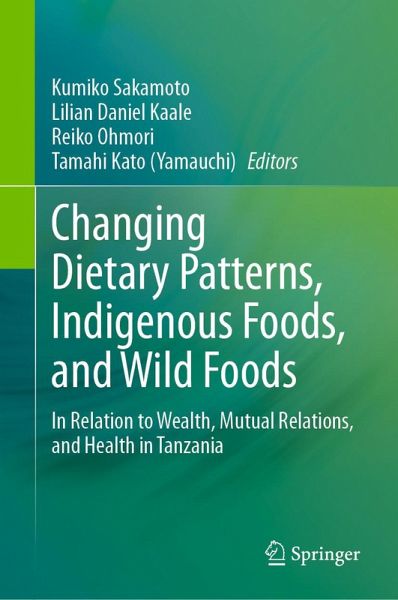
This book presents different dietary patterns, some utilizing wild foods and others facing drastically changing dietary patterns, and shows their implications for health in terms of wealth, mutual assistance, food sufficiency and food diversity. The book examines these globally important issues through a case study of Tanzania.
Using a novel methodology based on a global standard quality of life indicator, the book sheds light on the relationship between wild food intake and health in Tanzania. Descriptive case studies illustrate the impact of various food patterns and wild food intake on human health. It also highlights the divergence between food production sufficiency and food diversity. It then discusses the influence of wealth, mutual relations, and methods of food access. Finally, the book concludes with recommendations for maintaining good health in various environments.
The intended readers of this book are academicsand professionals in the fields of development, nutrition, and environment in East Africa. These include, but are not limited to, regional and district personnel who are actively engaged in development, relevant ministries of food and agriculture, and international organizations such as FAO, UNICEF, UNDP, and UNEP. In the academic field, students and researchers in international studies, development studies, African studies, social studies, cultural studies, nutrition, agriculture, and environmental studies are targeted.
This book won the 2024 Japan Society for International Development Committee Special Award.
Using a novel methodology based on a global standard quality of life indicator, the book sheds light on the relationship between wild food intake and health in Tanzania. Descriptive case studies illustrate the impact of various food patterns and wild food intake on human health. It also highlights the divergence between food production sufficiency and food diversity. It then discusses the influence of wealth, mutual relations, and methods of food access. Finally, the book concludes with recommendations for maintaining good health in various environments.
The intended readers of this book are academicsand professionals in the fields of development, nutrition, and environment in East Africa. These include, but are not limited to, regional and district personnel who are actively engaged in development, relevant ministries of food and agriculture, and international organizations such as FAO, UNICEF, UNDP, and UNEP. In the academic field, students and researchers in international studies, development studies, African studies, social studies, cultural studies, nutrition, agriculture, and environmental studies are targeted.
This book won the 2024 Japan Society for International Development Committee Special Award.
Dieser Download kann aus rechtlichen Gründen nur mit Rechnungsadresse in A, B, BG, CY, CZ, D, DK, EW, E, FIN, F, GR, HR, H, IRL, I, LT, L, LR, M, NL, PL, P, R, S, SLO, SK ausgeliefert werden.