Sie sind bereits eingeloggt. Klicken Sie auf 2. tolino select Abo, um fortzufahren.
Bitte loggen Sie sich zunächst in Ihr Kundenkonto ein oder registrieren Sie sich bei bücher.de, um das eBook-Abo tolino select nutzen zu können.
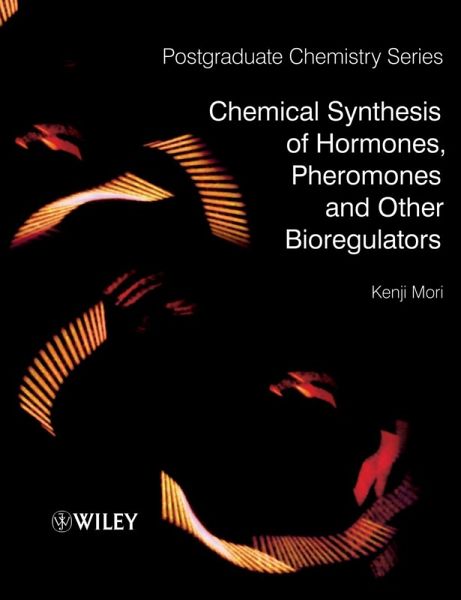
Many small molecules occur naturally as "messenger" chemicals which regulate the behaviour and functions of microbes, plants, insects and animals. Examples include hormones, pheromones, phytoalexins, and antifeedants. These biofunctional molecules are of great interest to researchers in helping develop our understanding of biological function and in the development of new drugs. However extracting them from nature can be prohibitively expensive, so there is great interest in devising methods of synthesising them from simple starting materials in the laboratory. Chemical Synthesis of Hormones,…mehr
Many small molecules occur naturally as "messenger" chemicals which regulate the behaviour and functions of microbes, plants, insects and animals. Examples include hormones, pheromones, phytoalexins, and antifeedants. These biofunctional molecules are of great interest to researchers in helping develop our understanding of biological function and in the development of new drugs. However extracting them from nature can be prohibitively expensive, so there is great interest in devising methods of synthesising them from simple starting materials in the laboratory. Chemical Synthesis of Hormones, Pheromones and Other Bioregulators is an introduction to the techniques and strategies for the synthesis of biofunctional small molecules. Topics include: * what are biofunctional molecules? * why must biofunctional molecules be synthesized? * how can we synthesize biofunctional molecules? * the synthesis of phytohormones, phytoalexins and other biofunctional molecules of plant origin * the synthesis of insect juvenile hormones and antifeedants * the synthesis of pheromones and the significance of chirality in pheromone science * the synthesis of microbial hormones and pheromones, antibiotics, and other biofunctional molecules of microbial origin * the synthesis of marine antifeedants and medicinal candidates * a synthetic examination of incorrectly proposed structures of biomolecules * reflections on science as a human endeavor Drawing on a career of almost 50 years researching and teaching this subject, Kenji Mori's Chemical Synthesis of Hormones, Pheromones and Other Bioregulators is a must-have textbook for students and researchers of organic synthesis and natural products, and a stimulating and inspiring account of a distinguished chemical career.
Dieser Download kann aus rechtlichen Gründen nur mit Rechnungsadresse in D ausgeliefert werden.
Die Herstellerinformationen sind derzeit nicht verfügbar.
Autorenporträt
Professor Kenji Mori has nearly 50 years experience researching and teaching the synthesis of biofunctional small molecules. He has been awarded the Japan Academy Prize (1981), the Silver Medal of the International Society of Chemical Ecology (1996), the American Chemical Society's Ernest Guenther Award in the Chemistry of Natural Products (1999), the Special Prize of the Society of Synthetic Organic Chemistry, Japan (2003), and the Frantisek Sorm Memorial Medal of the Academy of Sciences of the Czech Republic (2003). He is the author of "The Total Synthesis of Natural Products, Vol. 9" (Wiley, 1992), considered by many to be the authoritative volume on pheromone synthesis, and over 750 peer-reviewed research papers.
Inhaltsangabe
Preface. Abbreviations. 1 Introduction-Biofunctional Molecules and Organic Synthesis. 1.1 What are biofunctional molecules? 1.2 Developmental stages of studies on biofunctional molecules. 1.3 Small amounts of the samples are now sufficient for the elucidation of the structures of biofunctional molecules. 1.4 Why must biofunctional molecules be synthesized? 1.5 How can we synthesize biofunctional molecules? 1.5.1 What is synthesis? 1.5.2 What kind of consideration is necessary before starting a synthesis? 1.5.3 Synthon. 1.5.4 Molecular symmetry and synthesis. 1.5.5 Criteria for 'A Good Synthesis'. 1.6 What kind of knowledge and techniques are necessary to synthesize biofunctional molecules? 1.6.1 Stereochemistry and reactivity. 1.6.2 Stereochemistry and analytical methods. References. 2 Synthesis of Phytohormones, Phytoalexins and Other Biofunctional Molecules of Plant Origin. 2.1 Phytohormones. 2.1.1 What are phytohormones? 2.1.2 Gibberellins. 2.1.3 Diterpenes related to gibberellins. 2.1.4 Abscisic acid and its relatives-synthesis of optically active compounds. 2.1.5 Brassinosteroids. 2.1.6 Phyllanthrinolactone, a leaf-closing factor. 2.2 Phytoalexins. 2.2.1 What are phytoalexins? 2.2.2 Synthesis of pisatin. 2.2.3 Synthesis of 2-(4-hydroxyphenyl)naphthalene-1,8-dicarboxylic anhydride. 2.2.4 Synthesis of oryzalexins 53 2.2.5 Synthesis of phytocassanes. 2.3 Plant allelochemicals. 2.3.1 Synthesis of glycinoeclepin A. 2.3.2 Synthesis of strigolactones. 2.4 Other bioactive compounds of plant origin. 2.4.1 Synthesis of arnebinol. 2.4.2 Synthesis of magnosalicin. 2.4.3 Synthesis of hernandulcin. 2.4.4 Synthesis of O-methyl pisiferic acid. 2.4.5 Synthesis of diospyrin. 2.4.6 Synthesis of mispyric acid. References. 3 Synthesis of Insect Bioregulators Other than Pheromones. 3.1 Insect juvenile hormones. 3.1.1 What are insect hormones? 3.1.2 Synthesis of juvabione. 3.1.3 Synthesis of the racemates of juvenile hormones. 3.1.4 Synthesis of the enantiomers of juvenile hormones. 3.2 Insect antifeedants. 3.2.1 Synthesis of polygodial. 3.2.2 Synthesis of warburganal. 3.2.3 Synthesis of 3,4-dihydroxypropiophenone 3-ß-d-glucopyranoside. 3.2.4 Synthesis of homogynolide A. 3.3 Insect repellents. 3.3.1 Synthesis of rotundial. 3.3.2 Synthesis of polyzonimine. References. 4 Synthesis of Pheromones. 4.1 What are pheromones? 4.2 Methods for enantioselective synthesis. 4.2.1 Derivation from enantiopure natural products. 4.2.2 Enantiomer separation (optical resolution). 4.2.3 Asymmetric synthesis. 4.2.4 Determination of enantiomeric purity. 4.3 Why is it meaningful to synthesize enantiopure pheromones? 4.3.1 Determination of absolute configuration (1). trogodermal. 4.3.2 Determination of absolute configuration (2). hemiacetal pheromone of Biprorulus bibax. 4.3.3 Determination of absolute configuration (3). sesquiterpene pheromone of Eysarcoris lewisi. 4.3.4 Clarification of the relationship between absolute configuration and pheromone activity-exo-brevicomin. 4.3.5 Clarification of structure (1). lineatin. 4.3.6 Clarification of structure (2). American cockroach pheromone. 4.3.7 Clarification of structure (3). acoradiene. 4.3.8 Clarification of structure (4). himachalene-type pheromone. 4.3.9 Preparation of a pure sample for bioassay (1). disparlure. 4.3.10 Preparation of a pure sample for bioassay (2). japonilure. 4.3.11 Preparation of a pure sample for bioassay (3). pheromone of the palaearctic bee, Andrena wilkella. 4.4 Chiral pheromones whose single enantiomers show bioactivity. 4.4.1 Dihydroactinidiolide, a pheromone component of the red imported fire ant. 4.4.2 Lardolure, the aggregation pheromone of the acarid mite. 4.4.3 Pheromone of the fall webworm moth. 4.4.4 Posticlure, the female sex pheromone of Orgyia postica. 4.4.5 Faranal, the trail pheromone of the pharaoh's ant. 4.4.6 (1S,3S,7R)-3-Methyl-¿-himachalene, the male sex pheromone of the sandfly from Jacobina, Brazil. 4.4.7 (S )-9-Methylgermacrene-B, the male sex pheromone of the sandfly from Lapinha, Brazil. 4.4.8 (1S,5R)-Frontalin, the bark beetle pheromone. 4.4.9 (1R,5S,7R)-3,4-Dehydro-exo-brevicomin and (S )-2-sec -butyl-4,5-dihyrothiazole, the pheromone components of the male mouse. 4.5 Chiral pheromones whose stereochemistry-bioactivity relationships are diverse and complicated. 4.5.1 Sulcatol, the pheromone of Gnathotrichus sulcatus. 4.5.2 Sex pheromone components of female German cockroach. 4.5.3 Stigmolone, the pheromone of a myxobacterium Stigmatella aurantiaca. 4.5.4 Ipsenol and ipsdienol, pheromones of Ips bark beetles. 4.5.5 Serricornin, the cigarette beetle pheromone. 4.5.6 Stegobinone, the drugstore beetle pheromone. 4.5.7 Supellapyrone, the sex pheromone of the brownbanded cockroach. 4.5.8 Olean, the sex pheromone of the olive fruit fly. 4.5.9 13,23-Dimethylpentatriacontane as the sex pheromone of a tsetse fly. 4.6 Significance of chirality in pheromone science. References. 5 Synthesis of Biofunctional Molecules of Microbial Origin. 5.1 Microbial hormones. 5.1.1 A-factor. 5.1.2 Sch II and relatives, the fruiting-inducing cerebrosides. 5.1.3 Basidifferquinone C. 5.1.4 Sclerosporin. 5.1.5 Sporogen-AO. 5.1.6 Differolide. 5.2 Antibiotics. 5.2.1 Ascochlorin. 5.2.2 Ascofuranone. 5.2.3 Trichostatin A. 5.2.4 Koninginin A. 5.2.5 Cytoxazone. 5.2.6 Neuchromenin. 5.2.7 Nocardione A and B. 5.2.8 Cytosporone E. 5.3 Other bioactive metabolites of micro-organisms. 5.3.1 Monocerin. 5.3.2 Pinthunamide. References. 6 Synthesis of Marine Bioregulators, Medicinals and Related Compounds. 6.1 Marine natural products of ecological importance such as antifeedants. 6.1.1 Stypoldione. 6.1.2 meso- and (±)-Limatulone. 6.1.3 Testudinariol A. 6.1.4 Stellettadine A. 6.2 Marine natural products of medicinal interest. 6.2.1 Punaglandin 4. 6.2.2 Bifurcarenone. 6.2.3 Elenic acid. 6.2.4 Symbioramide. 6.2.5 Penazetidine A. 6.2.6 Penaresidin A and B. 6.2.7 Sulfobacin A, B and flavocristamide A. 6.2.8 Plakoside A. 6.3 Glycosphingolipids and sphingolipids of medical interest. 6.3.1 Esterified cerebroside of human and pig epidermis. 6.3.2 Ceramide B, 6-hydroxylated ceramide in human epidermis. 6.3.3 KRN7000, a glycosphingolipid that stimulates natural killer T cell. 6.3.4 Analogs of KRN7000 prepared in 2003-2006. 6.3.5 Cyclitol, carbasugar and modified d-galactose analogs of KRN7000: RCAI-56 and RCAI-61. References. 7 Synthetic Examination of Incorrectly Proposed Structures of Biomolecules. 7.1 Origin of incorrect or obscure structures. 7.2 Structure fabrications of historical interest. 7.2.1 Kogl's auxin-a and -b, the plant-growth promoters. 7.2.2 Chemical communication system of the green flagellate, Chlamydomonas . 7.2.3 Early fabrications of the structures of insect pheromones. 7.3 Incorrect structures resulting from inappropriate use of purification or analytical methods. 7.4 Inappropriate structural proposal caused by problems in bioassay methods. 7.4.1 Blattellastanoside A and B, putative components of the aggregation pheromone of the German cockroach. 7.4.2 2,2,4,4-Tetramethyl-N,N -bis(2,6-dimethylphenyl)cyclobutane-1,3-diimine as a putative antifeedant against the cotton boll weevil. 7.5 Human errors are inevitable in chemistry, too. References. 8 Conclusion-Science as a Human Endeavor. 8.1 Small molecules are also beautiful. 8.2 Continuous efforts may bring something meaningful. 8.3 Can a scientist eventually have a hope in the future? Acknowledgements. Index.
Preface. Abbreviations. 1 Introduction-Biofunctional Molecules and Organic Synthesis. 1.1 What are biofunctional molecules? 1.2 Developmental stages of studies on biofunctional molecules. 1.3 Small amounts of the samples are now sufficient for the elucidation of the structures of biofunctional molecules. 1.4 Why must biofunctional molecules be synthesized? 1.5 How can we synthesize biofunctional molecules? 1.5.1 What is synthesis? 1.5.2 What kind of consideration is necessary before starting a synthesis? 1.5.3 Synthon. 1.5.4 Molecular symmetry and synthesis. 1.5.5 Criteria for 'A Good Synthesis'. 1.6 What kind of knowledge and techniques are necessary to synthesize biofunctional molecules? 1.6.1 Stereochemistry and reactivity. 1.6.2 Stereochemistry and analytical methods. References. 2 Synthesis of Phytohormones, Phytoalexins and Other Biofunctional Molecules of Plant Origin. 2.1 Phytohormones. 2.1.1 What are phytohormones? 2.1.2 Gibberellins. 2.1.3 Diterpenes related to gibberellins. 2.1.4 Abscisic acid and its relatives-synthesis of optically active compounds. 2.1.5 Brassinosteroids. 2.1.6 Phyllanthrinolactone, a leaf-closing factor. 2.2 Phytoalexins. 2.2.1 What are phytoalexins? 2.2.2 Synthesis of pisatin. 2.2.3 Synthesis of 2-(4-hydroxyphenyl)naphthalene-1,8-dicarboxylic anhydride. 2.2.4 Synthesis of oryzalexins 53 2.2.5 Synthesis of phytocassanes. 2.3 Plant allelochemicals. 2.3.1 Synthesis of glycinoeclepin A. 2.3.2 Synthesis of strigolactones. 2.4 Other bioactive compounds of plant origin. 2.4.1 Synthesis of arnebinol. 2.4.2 Synthesis of magnosalicin. 2.4.3 Synthesis of hernandulcin. 2.4.4 Synthesis of O-methyl pisiferic acid. 2.4.5 Synthesis of diospyrin. 2.4.6 Synthesis of mispyric acid. References. 3 Synthesis of Insect Bioregulators Other than Pheromones. 3.1 Insect juvenile hormones. 3.1.1 What are insect hormones? 3.1.2 Synthesis of juvabione. 3.1.3 Synthesis of the racemates of juvenile hormones. 3.1.4 Synthesis of the enantiomers of juvenile hormones. 3.2 Insect antifeedants. 3.2.1 Synthesis of polygodial. 3.2.2 Synthesis of warburganal. 3.2.3 Synthesis of 3,4-dihydroxypropiophenone 3-ß-d-glucopyranoside. 3.2.4 Synthesis of homogynolide A. 3.3 Insect repellents. 3.3.1 Synthesis of rotundial. 3.3.2 Synthesis of polyzonimine. References. 4 Synthesis of Pheromones. 4.1 What are pheromones? 4.2 Methods for enantioselective synthesis. 4.2.1 Derivation from enantiopure natural products. 4.2.2 Enantiomer separation (optical resolution). 4.2.3 Asymmetric synthesis. 4.2.4 Determination of enantiomeric purity. 4.3 Why is it meaningful to synthesize enantiopure pheromones? 4.3.1 Determination of absolute configuration (1). trogodermal. 4.3.2 Determination of absolute configuration (2). hemiacetal pheromone of Biprorulus bibax. 4.3.3 Determination of absolute configuration (3). sesquiterpene pheromone of Eysarcoris lewisi. 4.3.4 Clarification of the relationship between absolute configuration and pheromone activity-exo-brevicomin. 4.3.5 Clarification of structure (1). lineatin. 4.3.6 Clarification of structure (2). American cockroach pheromone. 4.3.7 Clarification of structure (3). acoradiene. 4.3.8 Clarification of structure (4). himachalene-type pheromone. 4.3.9 Preparation of a pure sample for bioassay (1). disparlure. 4.3.10 Preparation of a pure sample for bioassay (2). japonilure. 4.3.11 Preparation of a pure sample for bioassay (3). pheromone of the palaearctic bee, Andrena wilkella. 4.4 Chiral pheromones whose single enantiomers show bioactivity. 4.4.1 Dihydroactinidiolide, a pheromone component of the red imported fire ant. 4.4.2 Lardolure, the aggregation pheromone of the acarid mite. 4.4.3 Pheromone of the fall webworm moth. 4.4.4 Posticlure, the female sex pheromone of Orgyia postica. 4.4.5 Faranal, the trail pheromone of the pharaoh's ant. 4.4.6 (1S,3S,7R)-3-Methyl-¿-himachalene, the male sex pheromone of the sandfly from Jacobina, Brazil. 4.4.7 (S )-9-Methylgermacrene-B, the male sex pheromone of the sandfly from Lapinha, Brazil. 4.4.8 (1S,5R)-Frontalin, the bark beetle pheromone. 4.4.9 (1R,5S,7R)-3,4-Dehydro-exo-brevicomin and (S )-2-sec -butyl-4,5-dihyrothiazole, the pheromone components of the male mouse. 4.5 Chiral pheromones whose stereochemistry-bioactivity relationships are diverse and complicated. 4.5.1 Sulcatol, the pheromone of Gnathotrichus sulcatus. 4.5.2 Sex pheromone components of female German cockroach. 4.5.3 Stigmolone, the pheromone of a myxobacterium Stigmatella aurantiaca. 4.5.4 Ipsenol and ipsdienol, pheromones of Ips bark beetles. 4.5.5 Serricornin, the cigarette beetle pheromone. 4.5.6 Stegobinone, the drugstore beetle pheromone. 4.5.7 Supellapyrone, the sex pheromone of the brownbanded cockroach. 4.5.8 Olean, the sex pheromone of the olive fruit fly. 4.5.9 13,23-Dimethylpentatriacontane as the sex pheromone of a tsetse fly. 4.6 Significance of chirality in pheromone science. References. 5 Synthesis of Biofunctional Molecules of Microbial Origin. 5.1 Microbial hormones. 5.1.1 A-factor. 5.1.2 Sch II and relatives, the fruiting-inducing cerebrosides. 5.1.3 Basidifferquinone C. 5.1.4 Sclerosporin. 5.1.5 Sporogen-AO. 5.1.6 Differolide. 5.2 Antibiotics. 5.2.1 Ascochlorin. 5.2.2 Ascofuranone. 5.2.3 Trichostatin A. 5.2.4 Koninginin A. 5.2.5 Cytoxazone. 5.2.6 Neuchromenin. 5.2.7 Nocardione A and B. 5.2.8 Cytosporone E. 5.3 Other bioactive metabolites of micro-organisms. 5.3.1 Monocerin. 5.3.2 Pinthunamide. References. 6 Synthesis of Marine Bioregulators, Medicinals and Related Compounds. 6.1 Marine natural products of ecological importance such as antifeedants. 6.1.1 Stypoldione. 6.1.2 meso- and (±)-Limatulone. 6.1.3 Testudinariol A. 6.1.4 Stellettadine A. 6.2 Marine natural products of medicinal interest. 6.2.1 Punaglandin 4. 6.2.2 Bifurcarenone. 6.2.3 Elenic acid. 6.2.4 Symbioramide. 6.2.5 Penazetidine A. 6.2.6 Penaresidin A and B. 6.2.7 Sulfobacin A, B and flavocristamide A. 6.2.8 Plakoside A. 6.3 Glycosphingolipids and sphingolipids of medical interest. 6.3.1 Esterified cerebroside of human and pig epidermis. 6.3.2 Ceramide B, 6-hydroxylated ceramide in human epidermis. 6.3.3 KRN7000, a glycosphingolipid that stimulates natural killer T cell. 6.3.4 Analogs of KRN7000 prepared in 2003-2006. 6.3.5 Cyclitol, carbasugar and modified d-galactose analogs of KRN7000: RCAI-56 and RCAI-61. References. 7 Synthetic Examination of Incorrectly Proposed Structures of Biomolecules. 7.1 Origin of incorrect or obscure structures. 7.2 Structure fabrications of historical interest. 7.2.1 Kogl's auxin-a and -b, the plant-growth promoters. 7.2.2 Chemical communication system of the green flagellate, Chlamydomonas . 7.2.3 Early fabrications of the structures of insect pheromones. 7.3 Incorrect structures resulting from inappropriate use of purification or analytical methods. 7.4 Inappropriate structural proposal caused by problems in bioassay methods. 7.4.1 Blattellastanoside A and B, putative components of the aggregation pheromone of the German cockroach. 7.4.2 2,2,4,4-Tetramethyl-N,N -bis(2,6-dimethylphenyl)cyclobutane-1,3-diimine as a putative antifeedant against the cotton boll weevil. 7.5 Human errors are inevitable in chemistry, too. References. 8 Conclusion-Science as a Human Endeavor. 8.1 Small molecules are also beautiful. 8.2 Continuous efforts may bring something meaningful. 8.3 Can a scientist eventually have a hope in the future? Acknowledgements. Index.
Es gelten unsere Allgemeinen Geschäftsbedingungen: www.buecher.de/agb
Impressum
www.buecher.de ist ein Internetauftritt der buecher.de internetstores GmbH
Geschäftsführung: Monica Sawhney | Roland Kölbl | Günter Hilger
Sitz der Gesellschaft: Batheyer Straße 115 - 117, 58099 Hagen
Postanschrift: Bürgermeister-Wegele-Str. 12, 86167 Augsburg
Amtsgericht Hagen HRB 13257
Steuernummer: 321/5800/1497
USt-IdNr: DE450055826