Sie sind bereits eingeloggt. Klicken Sie auf 2. tolino select Abo, um fortzufahren.
Bitte loggen Sie sich zunächst in Ihr Kundenkonto ein oder registrieren Sie sich bei bücher.de, um das eBook-Abo tolino select nutzen zu können.
Chemometrics uses advanced mathematical and statistical algorithms to provide maximum chemical information by analyzing chemical data, and obtain knowledge of chemical systems. Chemometrics significantly extends the possibilities of chromatography and with the technological advances of the personal computer and continuous development of open-source software, many laboratories are interested in incorporating chemometrics into their chromatographic methods. This book is an up-to-date reference that presents the most important information about each area of chemometrics used in chromatography,…mehr
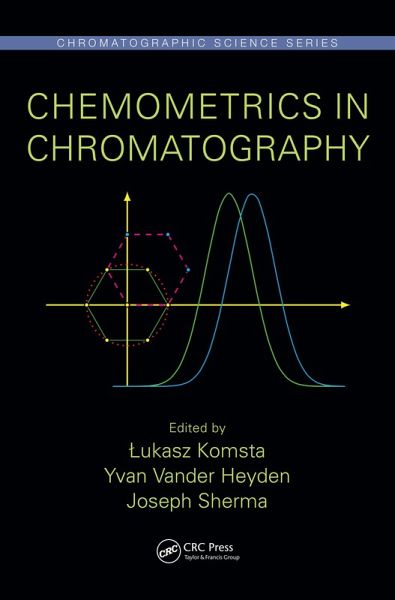
Chemometrics uses advanced mathematical and statistical algorithms to provide maximum chemical information by analyzing chemical data, and obtain knowledge of chemical systems. Chemometrics significantly extends the possibilities of chromatography and with the technological advances of the personal computer and continuous development of open-source software, many laboratories are interested in incorporating chemometrics into their chromatographic methods. This book is an up-to-date reference that presents the most important information about each area of chemometrics used in chromatography, demonstrating its effective use when applied to a chromatographic separation.
Dieser Download kann aus rechtlichen Gründen nur mit Rechnungsadresse in A, B, BG, CY, CZ, D, DK, EW, E, FIN, F, GR, HR, H, IRL, I, LT, L, LR, M, NL, PL, P, R, S, SLO, SK ausgeliefert werden.
Die Herstellerinformationen sind derzeit nicht verfügbar.
Autorenporträt
¿ukasz Komsta, Yvan Vander Heyden, Joseph Sherma
Inhaltsangabe
TABLE OF CONTENTS Preface 1. Method development and optimization 1. Experimental design in chromatographic method development and validation ( ukasz Komsta, Yvan Vander Heyden) 2. Chromatographic response functions (Regina M. B. O. Duarte, João T. V. Matos, Armando C. Duarte) 3. Chemometric strategies to characterize stationary phases (Charlene Galea, Debby Mangelings, Yvan Vander Heyden) 4. Chromatographic applications of genetic algorithms and other nature-inspired optimization methods (Mohammad Goodarzi, Yvan Vander Heyden) 1. Univariate analysis 1. Statistics and validation in quantitative chromatographic analysis (Eliangiringa Kaale, Danstan Shewiyo, David Jenkins) 2. Statistical evaluation of calibration curves in chromatography (Sven Declerck, Johan Viaene, Ines Salsinha, Yvan Vander Heyden) 1. Data preprocessing and unsupervised analysis 1. Introduction to multivariate data treatment ( ukasz Komsta, Yvan Vander Heyden) 2. Introduction to exploratory and clustering techniques (Ivana Stanimirova, Michä Daszykowski) 3. Denoising of signals, signal enhancement and baseline correction in chromatographic science (Zhi-Min Zhang, Hong-Mei Lu, Yi-Zeng Liang) 4. Alignment of one- and two-dimensional chromatographic signals (Michä Daszykowski) 5. Peak purity and resolution of chromatographic data (Silvia Mas, Anna de Juan) 6. Modeling of peak shape and asymmetry (Jose Ramon Torres, Juan Jose Baeza-Baeza, Maria Celia Garcia-Alvarez-Coque,) 7. Missing and censored data in chromatography (Ivana Stanimirova) 1. Classification, discrimination and calibration 1. Linear supervised techniques ( ukasz Komsta, Yvan Vander Heyden) 2. Discriminant analysis, and classification of chromatographic data (Alessandra Biancolillo, Federico Marini) 3. Nonlinear supervised techniques (Geert Postma, Lionel Blanchet, Frederik-Jan van Schooten, Lutgarde Buydens) 1. Retention modelling 1. Introduction to quantitative structure-retention relationships (QSRRs) (Krzesimir Ciura, Piotr Kawczak, Joanna Nowakowska, Tomasz B czek) 2. Topological Indices in modelling chromatographic retention (Mägorzata Do owy, Katarzyna Bober, Alina Pyka-Paj k) 1. Application overviews 1. Introduction to fingerprinting in chromatography (Johan Viaene and Yvan Vander Heyden) 2. Chemometric strategies in analysis of chromatographic-mass spectrometry data (Samantha Riccadonna, Pietro Franceschi) 3. Chemometric strategies in chromatographic analysis of pharmaceuticals (Erdal Dinc) 1. Miscellaneous 1. Bayesian methods in chromatographic science (David Brynn Hibbert) 2. Multi-way methods in chromatography ( ukasz Komsta, Yvan Vander Heyden) 3. Recurrent relationships in separation science (Igor Zenkevich) 4. Image processing in separation science (Bahram Hemmateenejad, Elaheh Talebanpour Bayat, Elmira Rafatmah, Zahra Shojaeifard, Nabioallah Mobaraki, Saeed Yousefinejad)
TABLE OF CONTENTS Preface 1. Method development and optimization 1. Experimental design in chromatographic method development and validation ( ukasz Komsta, Yvan Vander Heyden) 2. Chromatographic response functions (Regina M. B. O. Duarte, João T. V. Matos, Armando C. Duarte) 3. Chemometric strategies to characterize stationary phases (Charlene Galea, Debby Mangelings, Yvan Vander Heyden) 4. Chromatographic applications of genetic algorithms and other nature-inspired optimization methods (Mohammad Goodarzi, Yvan Vander Heyden) 1. Univariate analysis 1. Statistics and validation in quantitative chromatographic analysis (Eliangiringa Kaale, Danstan Shewiyo, David Jenkins) 2. Statistical evaluation of calibration curves in chromatography (Sven Declerck, Johan Viaene, Ines Salsinha, Yvan Vander Heyden) 1. Data preprocessing and unsupervised analysis 1. Introduction to multivariate data treatment ( ukasz Komsta, Yvan Vander Heyden) 2. Introduction to exploratory and clustering techniques (Ivana Stanimirova, Michä Daszykowski) 3. Denoising of signals, signal enhancement and baseline correction in chromatographic science (Zhi-Min Zhang, Hong-Mei Lu, Yi-Zeng Liang) 4. Alignment of one- and two-dimensional chromatographic signals (Michä Daszykowski) 5. Peak purity and resolution of chromatographic data (Silvia Mas, Anna de Juan) 6. Modeling of peak shape and asymmetry (Jose Ramon Torres, Juan Jose Baeza-Baeza, Maria Celia Garcia-Alvarez-Coque,) 7. Missing and censored data in chromatography (Ivana Stanimirova) 1. Classification, discrimination and calibration 1. Linear supervised techniques ( ukasz Komsta, Yvan Vander Heyden) 2. Discriminant analysis, and classification of chromatographic data (Alessandra Biancolillo, Federico Marini) 3. Nonlinear supervised techniques (Geert Postma, Lionel Blanchet, Frederik-Jan van Schooten, Lutgarde Buydens) 1. Retention modelling 1. Introduction to quantitative structure-retention relationships (QSRRs) (Krzesimir Ciura, Piotr Kawczak, Joanna Nowakowska, Tomasz B czek) 2. Topological Indices in modelling chromatographic retention (Mägorzata Do owy, Katarzyna Bober, Alina Pyka-Paj k) 1. Application overviews 1. Introduction to fingerprinting in chromatography (Johan Viaene and Yvan Vander Heyden) 2. Chemometric strategies in analysis of chromatographic-mass spectrometry data (Samantha Riccadonna, Pietro Franceschi) 3. Chemometric strategies in chromatographic analysis of pharmaceuticals (Erdal Dinc) 1. Miscellaneous 1. Bayesian methods in chromatographic science (David Brynn Hibbert) 2. Multi-way methods in chromatography ( ukasz Komsta, Yvan Vander Heyden) 3. Recurrent relationships in separation science (Igor Zenkevich) 4. Image processing in separation science (Bahram Hemmateenejad, Elaheh Talebanpour Bayat, Elmira Rafatmah, Zahra Shojaeifard, Nabioallah Mobaraki, Saeed Yousefinejad)
Es gelten unsere Allgemeinen Geschäftsbedingungen: www.buecher.de/agb
Impressum
www.buecher.de ist ein Internetauftritt der buecher.de internetstores GmbH
Geschäftsführung: Monica Sawhney | Roland Kölbl | Günter Hilger
Sitz der Gesellschaft: Batheyer Straße 115 - 117, 58099 Hagen
Postanschrift: Bürgermeister-Wegele-Str. 12, 86167 Augsburg
Amtsgericht Hagen HRB 13257
Steuernummer: 321/5800/1497
USt-IdNr: DE450055826