34,95 €
inkl. MwSt.
Sofort per Download lieferbar
17 °P sammeln

Andere Kunden interessierten sich auch für
") China's Outward Foreign Direct Investments and Impact on the World Economy (eBook, PDF)40,95 €
China's Outward Foreign Direct Investments and Impact on the World Economy (eBook, PDF)40,95 €") Rebel Economies (eBook, PDF)24,95 €
Rebel Economies (eBook, PDF)24,95 €") Political and Investment Risk in the International Oil and Gas Industry (eBook, PDF)76,95 €
Political and Investment Risk in the International Oil and Gas Industry (eBook, PDF)76,95 €") International Political Economy of Chinese Outward Foreign Direct Investment (eBook, PDF)96,95 €
International Political Economy of Chinese Outward Foreign Direct Investment (eBook, PDF)96,95 €") How Economics Professors Can Stop Failing Us (eBook, PDF)35,95 €
How Economics Professors Can Stop Failing Us (eBook, PDF)35,95 €") Knowledge and Entrepreneurship in Public Policy (eBook, PDF)67,95 €
Knowledge and Entrepreneurship in Public Policy (eBook, PDF)67,95 €") Energy Economics (eBook, PDF)28,95 €
Energy Economics (eBook, PDF)28,95 €
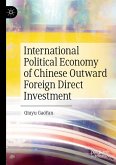


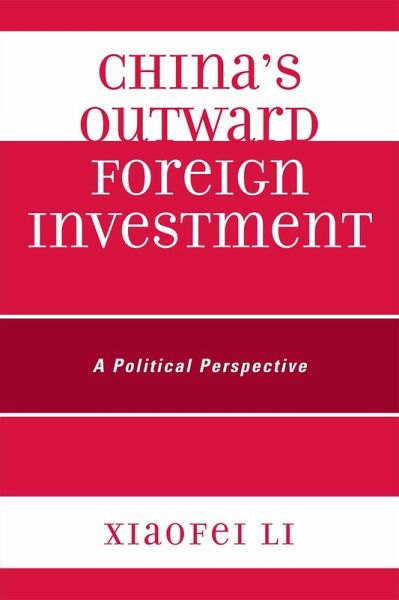
This book explores the characteristics of China's outward foreign investment, its motivation, its sector distribution, and its geographical distribution in order to illustrate the current pattern of 'merchant-state dualism' in China's overseas foreign direct investment. Merchant-state dualism is a hybrid relationship between the state and society that maintains state control over merchants, while giving them some autonomy. By investigating the interactions between business and government elites to determine Chinese outward foreign investment, and by exploring the reasons for selecting certain foreign investments in light of internal political and economic concerns and the external effect of investing in politically sensitive countries, the book highlights the political underpinnings and calculations of China's foreign investment. It thus sheds light on current merchant-state dualism by concluding that merchant-state dualism is the most suitable model for explaining contemporary Chinese government-business relations.