25,95 €
inkl. MwSt.
Sofort per Download lieferbar
13 °P sammeln

Andere Kunden interessierten sich auch für
") Believing in Ghosts and Spirits (eBook, ePUB)45,95 €
Believing in Ghosts and Spirits (eBook, ePUB)45,95 €") Language Contact and Language Conflict in Arabic (eBook, ePUB)58,95 €
Language Contact and Language Conflict in Arabic (eBook, ePUB)58,95 €") English Language in India (eBook, ePUB)49,95 €
English Language in India (eBook, ePUB)49,95 €") Womansword (eBook, ePUB)4,99 €
Womansword (eBook, ePUB)4,99 €") Young Children as Intercultural Mediators (eBook, ePUB)18,95 €
Young Children as Intercultural Mediators (eBook, ePUB)18,95 €") Tamil Oratory and the Dravidian Aesthetic (eBook, ePUB)59,95 €
Tamil Oratory and the Dravidian Aesthetic (eBook, ePUB)59,95 €") The Oxford Handbook of Endangered Languages (eBook, ePUB)72,95 €
The Oxford Handbook of Endangered Languages (eBook, ePUB)72,95 €


A fascinating story of writing across cultures and time
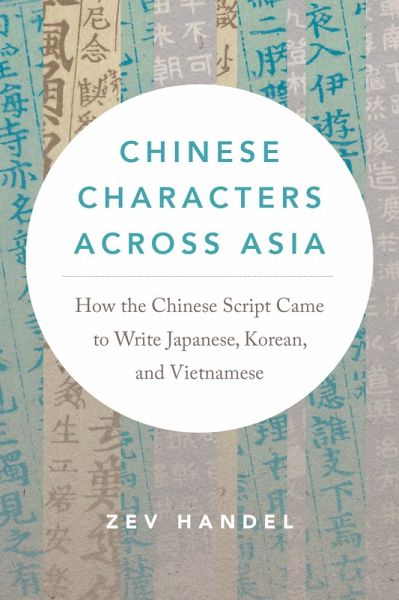
While other ancient nonalphabetic scriptsSumerian cuneiform, Egyptian hieroglyphs, and Mayan hieroglyphsare long extinct, Chinese characters, invented over three thousand years ago, are today used by well over a billion people to write Chinese and Japanese. In medieval East Asia, the written Classical Chinese language knit the region together in a common intellectual enterprise that encompassed religion, philosophy, historiography, political theory, art, and literature. Literacy in Classical Chinese set the stage for the adaptation of Chinese characters into ways of writing non-Chinese languages like Vietnamese and Korean, which differ dramatically from Chinese in vocabularies and grammatical structures.
Because of its unique status in the modern world, myths and misunderstandings about Chinese characters abound. Where does this writing system, so different in form and function from alphabetic writing, come from? How does it really work? How did it come to be used to write non-Chinese languages? And why has it proven so resilient? By exploring the spread and adaptation of the script across two millennia and thousands of miles, Chinese Characters across Asia addresses these questions and provides insights into human cognition and culture. Written in an approachable style and meant for readers with no prior knowledge of Chinese script or Asian languages, it presents a fascinating story that challenges assumptions about speech and writing.
While other ancient nonalphabetic scriptsSumerian cuneiform, Egyptian hieroglyphs, and Mayan hieroglyphsare long extinct, Chinese characters, invented over three thousand years ago, are today used by well over a billion people to write Chinese and Japanese. In medieval East Asia, the written Classical Chinese language knit the region together in a common intellectual enterprise that encompassed religion, philosophy, historiography, political theory, art, and literature. Literacy in Classical Chinese set the stage for the adaptation of Chinese characters into ways of writing non-Chinese languages like Vietnamese and Korean, which differ dramatically from Chinese in vocabularies and grammatical structures.
Because of its unique status in the modern world, myths and misunderstandings about Chinese characters abound. Where does this writing system, so different in form and function from alphabetic writing, come from? How does it really work? How did it come to be used to write non-Chinese languages? And why has it proven so resilient? By exploring the spread and adaptation of the script across two millennia and thousands of miles, Chinese Characters across Asia addresses these questions and provides insights into human cognition and culture. Written in an approachable style and meant for readers with no prior knowledge of Chinese script or Asian languages, it presents a fascinating story that challenges assumptions about speech and writing.
Dieser Download kann aus rechtlichen Gründen nur mit Rechnungsadresse in A, D ausgeliefert werden.