33,95 €
33,95 €
inkl. MwSt.
Sofort per Download lieferbar

17 °P sammeln
33,95 €
Als Download kaufen
33,95 €
inkl. MwSt.
Sofort per Download lieferbar
17 °P sammeln
Jetzt verschenken
Alle Infos zum eBook verschenken
33,95 €
inkl. MwSt.
Sofort per Download lieferbar
Alle Infos zum eBook verschenken
17 °P sammeln

Andere Kunden interessierten sich auch für
") Choosing and Using Fiction and Non-Fiction 3-11 (eBook, ePUB)33,95 €
Choosing and Using Fiction and Non-Fiction 3-11 (eBook, ePUB)33,95 €") History 7-11 (eBook, PDF)37,95 €
History 7-11 (eBook, PDF)37,95 €") Gifted and Talented Children 4-11 (eBook, PDF)32,95 €
Gifted and Talented Children 4-11 (eBook, PDF)32,95 €") Developing Your Portfolio - Enhancing Your Learning and Showing Your Stuff (eBook, PDF)32,95 €
Developing Your Portfolio - Enhancing Your Learning and Showing Your Stuff (eBook, PDF)32,95 €") Religious Education 7-11 (eBook, PDF)41,95 €
Religious Education 7-11 (eBook, PDF)41,95 €") English 7-11 (eBook, PDF)41,95 €
English 7-11 (eBook, PDF)41,95 €") Science 7-11 (eBook, PDF)27,95 €
Science 7-11 (eBook, PDF)27,95 €
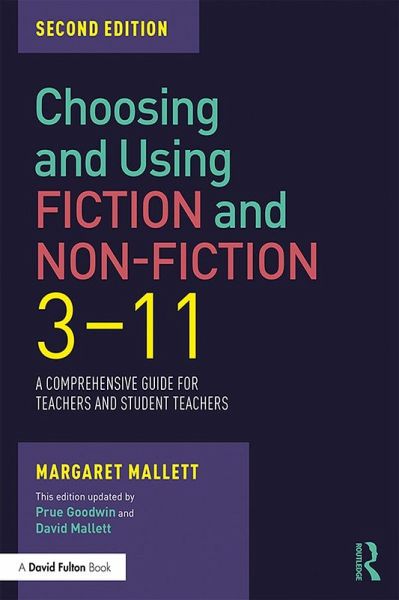
Choosing and Using Fiction and Non-Fiction 3-11 is a guide for primary teachers to the many kinds of texts children encounter, use and enjoy in their nursery and primary school years, providing an invaluable insight into the literature available. Addressing important issues and allowing for the voices of teachers, reviewers and children to be heard, it contains suggestions of best practice which offer a more creative approach to learning.
Including both fiction and non-fiction, with genres ranging from picturebooks to biographies, this fully updated second edition features:
Exploring fiction, non-fiction and poetry, Choosing and Using Fiction and Non-Fiction 3-11 is an invaluable resource, supporting teachers as they help children on their journey to becoming insightful and critical readers of non-fiction, and sensitive and reflective readers of fiction.
Including both fiction and non-fiction, with genres ranging from picturebooks to biographies, this fully updated second edition features:
- New coverage on recent books
- Discussion of new changes in concepts of literacy, particularly focused on technological advances in moving image media and virtual worlds
- The balance between print and screen-based texts on developing children's visual and multimodal literacy
- Annotated booklists for each genre for different age groups
- New sections on equality, diversity and translation
Exploring fiction, non-fiction and poetry, Choosing and Using Fiction and Non-Fiction 3-11 is an invaluable resource, supporting teachers as they help children on their journey to becoming insightful and critical readers of non-fiction, and sensitive and reflective readers of fiction.
Dieser Download kann aus rechtlichen Gründen nur mit Rechnungsadresse in A, B, BG, CY, CZ, D, DK, EW, E, FIN, F, GR, HR, H, IRL, I, LT, L, LR, M, NL, PL, P, R, S, SLO, SK ausgeliefert werden.