80,95 €
80,95 €
inkl. MwSt.
Sofort per Download lieferbar

40 °P sammeln
80,95 €
Als Download kaufen
80,95 €
inkl. MwSt.
Sofort per Download lieferbar
40 °P sammeln
Jetzt verschenken
Alle Infos zum eBook verschenken
80,95 €
inkl. MwSt.
Sofort per Download lieferbar
Alle Infos zum eBook verschenken
40 °P sammeln

Andere Kunden interessierten sich auch für
") Christian Faith, Justice, and a Politics of Mercy (eBook, ePUB)80,95 €
Christian Faith, Justice, and a Politics of Mercy (eBook, ePUB)80,95 €") On Faith, Works, Eternity and the Creatures We Are (eBook, PDF)19,95 €
On Faith, Works, Eternity and the Creatures We Are (eBook, PDF)19,95 €") Virtue and the Moral Life (eBook, PDF)34,95 €
Virtue and the Moral Life (eBook, PDF)34,95 €") The Future of Christian Realism (eBook, PDF)78,95 €
The Future of Christian Realism (eBook, PDF)78,95 €") Christian Faith and Social Justice: Five Views (eBook, PDF)25,95 €
Christian Faith and Social Justice: Five Views (eBook, PDF)25,95 €") Recovering Christian Realism (eBook, PDF)70,95 €
Recovering Christian Realism (eBook, PDF)70,95 €") The Future of Creation Order (eBook, PDF)72,95 €
The Future of Creation Order (eBook, PDF)72,95 €





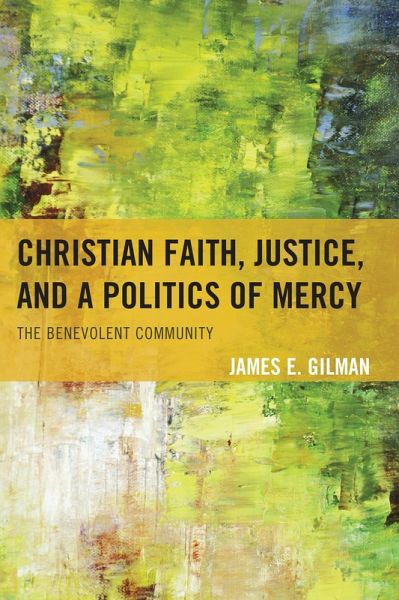
Christian Faith, Justice, and a Politics of Mercy: The Benevolent Community assumes that the most profound moral conflict today is between two virtues-justice and mercy. Gilman argues that the two are organically linked through the common experience of compassion. In an unjust world, justice cannot establish itself, but requires, in public as well as private life, projects of merciful benevolence. Mercy alone has the power to subvert patterns of injustice, and mercy and projects of benevolence are tailored to establish and sustain patterns of justice, especially fair economic outcomes. To show this, against Rawl's Difference Principle, Gilman argues for a Distribution Principle, which states that social and economic inequalities should be addressed by policies that directly and primarily benefit the least advantaged members of society, while at the same time minimizing burdens and/or maximizing benefits for the most advantaged. Along the way he shows how in the United States benevolence as a public virtue was disestablished along with religion; how it might and should be re-established without re-establishing religion; and how the Christian tradition provides resources for evolving morally from a liberal, procedural practice of justice to one that embraces egalitarian, economic justice as well. Finally, he demonstrates how in the global community today, Christianity and other traditions can and should make "benevolent community" a reality.