
42,95 €
42,95 €
inkl. MwSt.
Sofort per Download lieferbar

21 °P sammeln
42,95 €
Als Download kaufen
42,95 €
inkl. MwSt.
Sofort per Download lieferbar
21 °P sammeln
Jetzt verschenken
Alle Infos zum eBook verschenken
42,95 €
inkl. MwSt.
Sofort per Download lieferbar
Alle Infos zum eBook verschenken
21 °P sammeln

Andere Kunden interessierten sich auch für
") Christopher Columbus and the Genesis of New World Colonialism, 1493-96 (eBook, ePUB)42,95 €
Christopher Columbus and the Genesis of New World Colonialism, 1493-96 (eBook, ePUB)42,95 €") A Historical Geography of Christopher Columbus's First Voyage and his Interactions with Indigenous Peoples of the Caribbean (eBook, PDF)38,95 €
A Historical Geography of Christopher Columbus's First Voyage and his Interactions with Indigenous Peoples of the Caribbean (eBook, PDF)38,95 €") The Vulnerable Andaman and Nicobar Islands (eBook, PDF)41,95 €
The Vulnerable Andaman and Nicobar Islands (eBook, PDF)41,95 €") Resisting the Rule of Law in Nineteenth-Century Ceylon (eBook, PDF)41,95 €
Resisting the Rule of Law in Nineteenth-Century Ceylon (eBook, PDF)41,95 €") Decoloniality in the Break of Global Blackness (eBook, PDF)39,95 €
Decoloniality in the Break of Global Blackness (eBook, PDF)39,95 €") The Coloniality of Modern Taste (eBook, PDF)36,95 €
The Coloniality of Modern Taste (eBook, PDF)36,95 €") Coloniality and Decolonisation in the Nordic Region (eBook, PDF)41,95 €
Coloniality and Decolonisation in the Nordic Region (eBook, PDF)41,95 €
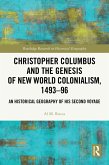

This book explores the role of geography's five themes: location, place, human-environmental interaction, movement, and region, in Christopher Colombus's second voyage. It explores the impacting events that led to deteriorating relations between Columbus, the Spanish settlers (adventurers), and the indigenous Taíno and Carib people, creating a social paradigm of confusion, displacement, destruction, and the genesis of New World Colonization.
Dieser Download kann aus rechtlichen Gründen nur mit Rechnungsadresse in A, B, BG, CY, CZ, D, DK, EW, E, FIN, F, GR, HR, H, IRL, I, LT, L, LR, M, NL, PL, P, R, S, SLO, SK ausgeliefert werden.
Continuing the precious, innovative reading of the Colombian experience of the previous two books, Al Rocca dedicates himself here to the critical analysis of the Second Voyage, a voyage that at the beginning involved more than a thousand Spaniards who had enlisted, but also Columbus had imagined easy and decisive, and that instead upon arrival in the Nuovo Mondo (New World) had revealed itself to be full of pitfalls and obstacles.
What distinguishes this book from others that deal with the same subject is the fact that, in addition to telling the story of the voyage clearly and, as usual, with the help of beautiful geographical maps, it reconstructs the geographical environment, both physical and human, through the eyes of Columbus: an environment that, with the passing of time, reveals itself to be increasingly different from his expectations and difficult to understand and interpret.
Professor Ilaria Caraci
What distinguishes this book from others that deal with the same subject is the fact that, in addition to telling the story of the voyage clearly and, as usual, with the help of beautiful geographical maps, it reconstructs the geographical environment, both physical and human, through the eyes of Columbus: an environment that, with the passing of time, reveals itself to be increasingly different from his expectations and difficult to understand and interpret.
Professor Ilaria Caraci