1,99 €
inkl. MwSt.
Sofort per Download lieferbar
0 °P sammeln

Andere Kunden interessierten sich auch für
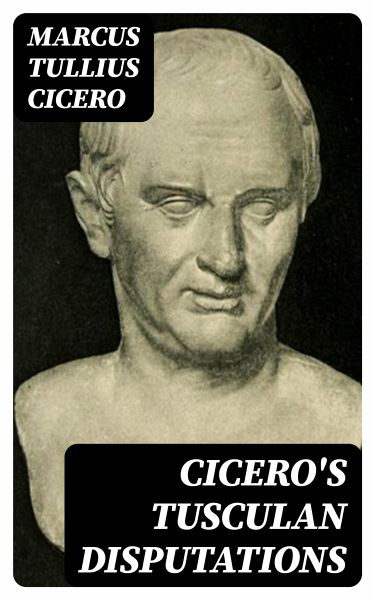
") Cicero's Tusculan Disputations (eBook, ePUB)1,99 €
Cicero's Tusculan Disputations (eBook, ePUB)1,99 €") Cicero's Tusculan Disputations; Also, Treatises on the Nature of the Gods, and on The Commonwealth (eBook, ePUB)7,99 €
Cicero's Tusculan Disputations; Also, Treatises on the Nature of the Gods, and on The Commonwealth (eBook, ePUB)7,99 €") How to Be a Friend (eBook, ePUB)12,95 €
How to Be a Friend (eBook, ePUB)12,95 €") Gorgias (eBook, ePUB)8,49 €
Gorgias (eBook, ePUB)8,49 €") The Teachings of a Stoic (eBook, ePUB)2,19 €
The Teachings of a Stoic (eBook, ePUB)2,19 €") Apology Of Socrates And Crito (eBook, ePUB)7,99 €
Apology Of Socrates And Crito (eBook, ePUB)7,99 €") The Symposium (eBook, ePUB)4,99 €
The Symposium (eBook, ePUB)4,99 €
Cicero's *Tusculan Disputations* is a profound philosophical dialogue that explores the nature of happiness and the human condition through a series of discussions between the author and his interlocutors. Written in a direct and engaging style, the text weaves together Stoic principles and Platonic ideals, allowing Cicero to delve into the complexities of morality, death, and the pursuit of the good life. Set against the backdrop of late Roman Republic turmoil, this work stands as a testament to the intellectual discourse of the time, emphasizing both the personal and civic dimensions of philosophy. Marcus Tullius Cicero, a statesman, orator, and philosopher of the first century BCE, was deeply influenced by the political and social upheaval of his era. His experiences in public life, coupled with his belief in the importance of philosophy as a means for ethical living and civic responsibility, shaped the themes in *Tusculan Disputations*. Cicero sought to make philosophy accessible to a wide audience, framing his inquiries through the lens of Roman cultural values and the urgent quest for stability amidst chaos. *Tusculan Disputations* is highly recommended for readers interested in classical philosophy, ethics, and the historical context of Roman thought. Cicero's eloquence and mastery in presenting complex ideas make this work not only intellectually enriching but also profoundly relatable to contemporary struggles with morality and existential inquiry. In this enriched edition, we have carefully created added value for your reading experience: - A comprehensive Introduction outlines these selected works' unifying features, themes, or stylistic evolutions. - The Author Biography highlights personal milestones and literary influences that shape the entire body of writing. - A Historical Context section situates the works in their broader era-social currents, cultural trends, and key events that underpin their creation. - A concise Synopsis (Selection) offers an accessible overview of the included texts, helping readers navigate plotlines and main ideas without revealing critical twists. - A unified Analysis examines recurring motifs and stylistic hallmarks across the collection, tying the stories together while spotlighting the different work's strengths. - Reflection questions inspire deeper contemplation of the author's overarching message, inviting readers to draw connections among different texts and relate them to modern contexts. - Lastly, our hand-picked Memorable Quotes distill pivotal lines and turning points, serving as touchstones for the collection's central themes.
Dieser Download kann aus rechtlichen Gründen nur mit Rechnungsadresse in A, B, BG, CY, CZ, D, DK, EW, E, FIN, F, GR, H, IRL, I, LT, L, LR, M, NL, PL, P, R, S, SLO, SK ausgeliefert werden.