44,95 €
inkl. MwSt.
Sofort per Download lieferbar
22 °P sammeln

Andere Kunden interessierten sich auch für
") Energy, Cities and Sustainability (eBook, PDF)52,95 €
Energy, Cities and Sustainability (eBook, PDF)52,95 €") Towards Low Carbon Cities in China (eBook, PDF)45,95 €
Towards Low Carbon Cities in China (eBook, PDF)45,95 €") Sustainability Citizenship in Cities (eBook, PDF)45,95 €
Sustainability Citizenship in Cities (eBook, PDF)45,95 €") Housing Sustainability in Low Carbon Cities (eBook, PDF)41,95 €
Housing Sustainability in Low Carbon Cities (eBook, PDF)41,95 €") Responding to Climate Change in Asian Cities (eBook, PDF)45,95 €
Responding to Climate Change in Asian Cities (eBook, PDF)45,95 €") Environmental Justice in the Anthropocene (eBook, PDF)37,95 €
Environmental Justice in the Anthropocene (eBook, PDF)37,95 €") The Creative Arts in Governance of Urban Renewal and Development (eBook, PDF)44,95 €
The Creative Arts in Governance of Urban Renewal and Development (eBook, PDF)44,95 €
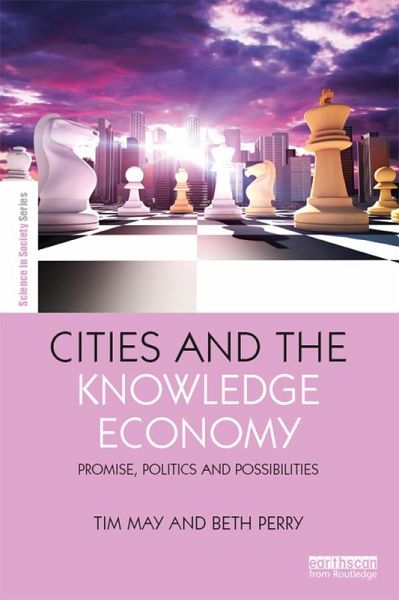
Cities and the Knowledge Economy is an in-depth, interdisciplinary, international and comparative examination of the relationship between knowledge and urban development in the contemporary era. Through the lenses of promise, politics and possibility, it examines how the knowledge economy has arisen, how different cities have sought to realise its potential, how universities play a role in its realisation and, overall, what this reveals about the relationship between politics, capitalism, space, place and knowledge in cities.
The book argues that the 21st century city has been predicated on particular circuits of knowledge that constitute expertise as residing in elite and professional epistemic communities. In contrast, alternative conceptions of the knowledge society are founded on assumptions which take analysis, deliberation, democracy and the role of the citizen and communities of practice seriously. Drawing on a range of examples from cities around the world, the book reflects on these possibilities and asks what roles the practice of 'active intermediation', the university and a critical and engaged social scientific practice can all play in this process.
The book is aimed at researchers and students from different disciplines - geography, politics, sociology, business studies, economics and planning - with interests in contemporary urbanism and the role of knowledge in understanding development, as well as urban policymakers, politicians and practitioners who are concerned with the future of our cities and seek to create coalitions of different communities oriented towards more just and sustainable futures.
The book argues that the 21st century city has been predicated on particular circuits of knowledge that constitute expertise as residing in elite and professional epistemic communities. In contrast, alternative conceptions of the knowledge society are founded on assumptions which take analysis, deliberation, democracy and the role of the citizen and communities of practice seriously. Drawing on a range of examples from cities around the world, the book reflects on these possibilities and asks what roles the practice of 'active intermediation', the university and a critical and engaged social scientific practice can all play in this process.
The book is aimed at researchers and students from different disciplines - geography, politics, sociology, business studies, economics and planning - with interests in contemporary urbanism and the role of knowledge in understanding development, as well as urban policymakers, politicians and practitioners who are concerned with the future of our cities and seek to create coalitions of different communities oriented towards more just and sustainable futures.
Dieser Download kann aus rechtlichen Gründen nur mit Rechnungsadresse in A, B, BG, CY, CZ, D, DK, EW, E, FIN, F, GR, HR, H, IRL, I, LT, L, LR, M, NL, PL, P, R, S, SLO, SK ausgeliefert werden.