72,95 €
72,95 €
inkl. MwSt.
Sofort per Download lieferbar

36 °P sammeln
72,95 €
Als Download kaufen
72,95 €
inkl. MwSt.
Sofort per Download lieferbar
36 °P sammeln
Jetzt verschenken
Alle Infos zum eBook verschenken
72,95 €
inkl. MwSt.
Sofort per Download lieferbar
Alle Infos zum eBook verschenken
36 °P sammeln

Andere Kunden interessierten sich auch für
") Post-conflict Security, Peace and Development (eBook, PDF)40,95 €
Post-conflict Security, Peace and Development (eBook, PDF)40,95 €") Rural-Urban Migration in Vietnam (eBook, PDF)112,95 €
Rural-Urban Migration in Vietnam (eBook, PDF)112,95 €") Freedoms, Fragility and Job Creation (eBook, PDF)40,95 €
Freedoms, Fragility and Job Creation (eBook, PDF)40,95 €") Rethinking Transitional Gender Justice (eBook, PDF)88,95 €
Rethinking Transitional Gender Justice (eBook, PDF)88,95 €") Transrational Resonances (eBook, PDF)112,95 €
Transrational Resonances (eBook, PDF)112,95 €") Globalisation and the Challenges of Development in Contemporary India (eBook, PDF)104,95 €
Globalisation and the Challenges of Development in Contemporary India (eBook, PDF)104,95 €") War, Denial and Nation-Building in Sri Lanka (eBook, PDF)112,95 €
War, Denial and Nation-Building in Sri Lanka (eBook, PDF)112,95 €
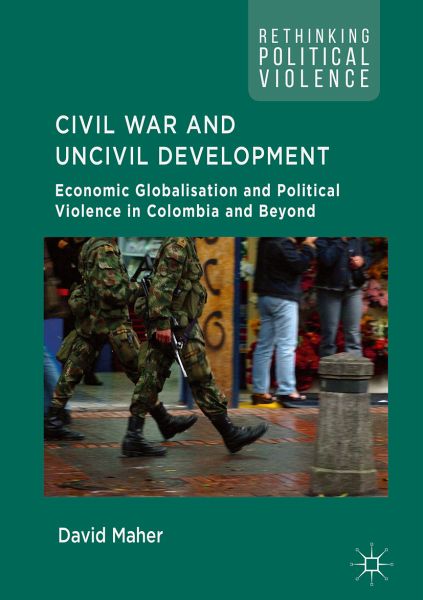
The first book to integrate two emerging research techniques for the study of civil war - process tracing methods and micro-level analysis
Includes unique datasets to provide novel insights into Colombia's conflict
Suggests a set of causal mechanisms that can result in economic growth in civil wars and types of mechanisms that ultimately lead to economic decline
Includes unique datasets to provide novel insights into Colombia's conflict
Suggests a set of causal mechanisms that can result in economic growth in civil wars and types of mechanisms that ultimately lead to economic decline
Dieser Download kann aus rechtlichen Gründen nur mit Rechnungsadresse in A, B, BG, CY, CZ, D, DK, EW, E, FIN, F, GR, HR, H, IRL, I, LT, L, LR, M, NL, PL, P, R, S, SLO, SK ausgeliefert werden.
"The book speaks to students, scholars, practitioners and human rights activists interested in the relationship between political violence, development and globalization. ... Scholars and students of civil war will find the book a theoretically sound and empirically rich source as it advances knowledge on a particularly relevant yet overlooked area in civil war studies through the lenses of critical theory and historical materialism." (Ervjola Selenica, Interdisciplinary Political Studies, Vol. 5 (1), 2019)