37,95 €
37,95 €
inkl. MwSt.
Sofort per Download lieferbar

19 °P sammeln
37,95 €
Als Download kaufen
37,95 €
inkl. MwSt.
Sofort per Download lieferbar
19 °P sammeln
Jetzt verschenken
Alle Infos zum eBook verschenken
37,95 €
inkl. MwSt.
Sofort per Download lieferbar
Alle Infos zum eBook verschenken
19 °P sammeln

Andere Kunden interessierten sich auch für
") Climate Change and Energy Insecurity (eBook, ePUB)37,95 €
Climate Change and Energy Insecurity (eBook, ePUB)37,95 €") How to Live a Low-Carbon Life (eBook, PDF)26,95 €
How to Live a Low-Carbon Life (eBook, PDF)26,95 €") Contested Waterscapes in the Mekong Region (eBook, PDF)54,95 €
Contested Waterscapes in the Mekong Region (eBook, PDF)54,95 €") Transport Systems (eBook, PDF)47,95 €
Transport Systems (eBook, PDF)47,95 €") Renewable Energy - The Facts (eBook, PDF)45,95 €
Renewable Energy - The Facts (eBook, PDF)45,95 €") Sustainable Energy Landscapes (eBook, PDF)64,95 €
Sustainable Energy Landscapes (eBook, PDF)64,95 €") Domestic Microgeneration (eBook, PDF)201,95 €
Domestic Microgeneration (eBook, PDF)201,95 €
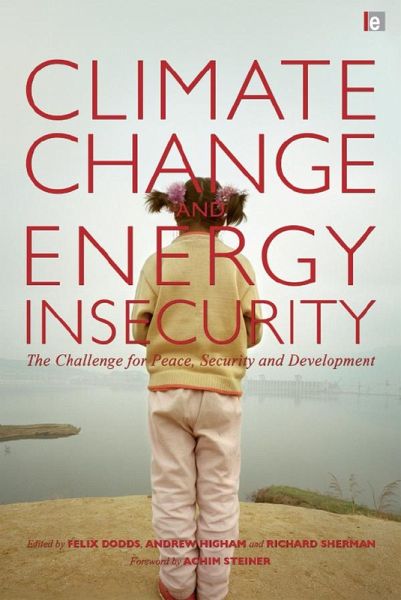
Climate change is now recognised as one of the greatest challenges facing the international community and when coupled with energy production and use - the most significant contributor to climate change - and the related security problems the double threat to international security and human development is of the highest order. This wide-ranging book brings together leading thinkers from academia, government and civil society to examine and address the global insecurity and development challenges arising from the twin thrust of climate change and the energy supply crunch.
Part one considers energy. It analyses the challenges of meeting future energy demands and the ongoing and future security-related conflicts over energy. Coverage includes security and development concerns related to the oil and gas, nuclear, bio-fuels and hydropower sectors, ensuring energy access for all and addressing sustainable consumption and production in both developed and rapidly industrializing countries such as India, China, Brazil and South Africa.
Part two analyses how climate change contributes to global insecurity and presents a consolidated overview of the potential threats and challenges it poses to international peace and development. Coverage includes future water scenarios including a focus on scarcity in the Middle East, food security, biodiversity loss, land degradation, the changing economics of climate change, adaptation and the special case of small island states.
The final part lays out the potential avenues and mechanisms available to the international community to address and avert climate and energy instability via the multilateral framework under the United Nations. It also addresses mechanisms for resource and knowledge transfer from industrialized to developing countries to ensure a low-carbon energy transition by focusing on the rapid deployment of clean energy technologies and ways to tackle income and employment insecurity created by the transition away from traditional energy sources.
This book offers the most comprehensive international assessment of the challenges and solutions for tackling the global insecurity arising from climate change and energy provision and use. It is essential reading for students, researchers and professionals across international relations, security, climate change and the energy sectors.
Part one considers energy. It analyses the challenges of meeting future energy demands and the ongoing and future security-related conflicts over energy. Coverage includes security and development concerns related to the oil and gas, nuclear, bio-fuels and hydropower sectors, ensuring energy access for all and addressing sustainable consumption and production in both developed and rapidly industrializing countries such as India, China, Brazil and South Africa.
Part two analyses how climate change contributes to global insecurity and presents a consolidated overview of the potential threats and challenges it poses to international peace and development. Coverage includes future water scenarios including a focus on scarcity in the Middle East, food security, biodiversity loss, land degradation, the changing economics of climate change, adaptation and the special case of small island states.
The final part lays out the potential avenues and mechanisms available to the international community to address and avert climate and energy instability via the multilateral framework under the United Nations. It also addresses mechanisms for resource and knowledge transfer from industrialized to developing countries to ensure a low-carbon energy transition by focusing on the rapid deployment of clean energy technologies and ways to tackle income and employment insecurity created by the transition away from traditional energy sources.
This book offers the most comprehensive international assessment of the challenges and solutions for tackling the global insecurity arising from climate change and energy provision and use. It is essential reading for students, researchers and professionals across international relations, security, climate change and the energy sectors.
Dieser Download kann aus rechtlichen Gründen nur mit Rechnungsadresse in A, B, BG, CY, CZ, D, DK, EW, E, FIN, F, GR, HR, H, IRL, I, LT, L, LR, M, NL, PL, P, R, S, SLO, SK ausgeliefert werden.