22,95 €
22,95 €
inkl. MwSt.
Sofort per Download lieferbar

11 °P sammeln
22,95 €
Als Download kaufen
22,95 €
inkl. MwSt.
Sofort per Download lieferbar
11 °P sammeln
Jetzt verschenken
Alle Infos zum eBook verschenken
22,95 €
inkl. MwSt.
Sofort per Download lieferbar
Alle Infos zum eBook verschenken
11 °P sammeln

Andere Kunden interessierten sich auch für
") Adaptation to Climate Change through Water Resources Management (eBook, PDF)49,95 €
Adaptation to Climate Change through Water Resources Management (eBook, PDF)49,95 €") Culture, Politics and Climate Change (eBook, PDF)49,95 €
Culture, Politics and Climate Change (eBook, PDF)49,95 €") How the World's Religions are Responding to Climate Change (eBook, PDF)55,95 €
How the World's Religions are Responding to Climate Change (eBook, PDF)55,95 €") The Political Ecology of Climate Change Adaptation (eBook, PDF)49,95 €
The Political Ecology of Climate Change Adaptation (eBook, PDF)49,95 €") Climate Change in Cyprus (eBook, PDF)40,95 €
Climate Change in Cyprus (eBook, PDF)40,95 €") The Anthropology of Climate Change (eBook, PDF)39,95 €
The Anthropology of Climate Change (eBook, PDF)39,95 €") Discourses of Global Climate Change (eBook, PDF)45,95 €
Discourses of Global Climate Change (eBook, PDF)45,95 €

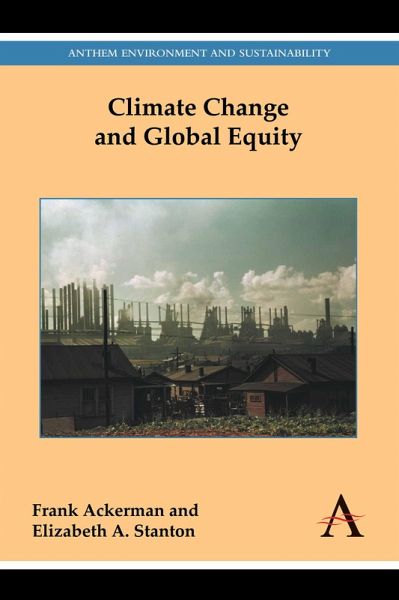
Ambitious measures to reduce carbon emissions are all too rare in reality, impeded by economic and political concerns rather than technological advances. In this collection of essays, Frank Ackerman and Elizabeth A. Stanton show that the impact of inaction on climate change will be far worse than the cost of ambitious climate policies.
After setting out the basic principles which must shape contemporary climate economics, Ackerman and Stanton consider common flaws in climate change policy - from mistaken assumptions that dismiss the welfare of future generations and anticipate little or no growth in low-income countries, to unrealistic projections of climate damages that dismiss catastrophic risks - and offer their own insightful remedies. They question the usefulness of conventional integrated assessment models (IAMs) that model the long-term interaction between economic growth and climate change, and propose an alternative in their Climate and Regional Economics and Development (CRED) model.
In this incisive work, Stanton and Ackerman offer a timely and original contribution to the fields of climate economics and global equity.
After setting out the basic principles which must shape contemporary climate economics, Ackerman and Stanton consider common flaws in climate change policy - from mistaken assumptions that dismiss the welfare of future generations and anticipate little or no growth in low-income countries, to unrealistic projections of climate damages that dismiss catastrophic risks - and offer their own insightful remedies. They question the usefulness of conventional integrated assessment models (IAMs) that model the long-term interaction between economic growth and climate change, and propose an alternative in their Climate and Regional Economics and Development (CRED) model.
In this incisive work, Stanton and Ackerman offer a timely and original contribution to the fields of climate economics and global equity.
Dieser Download kann aus rechtlichen Gründen nur mit Rechnungsadresse in A, D ausgeliefert werden.