52,95 €
52,95 €
inkl. MwSt.
Sofort per Download lieferbar

26 °P sammeln
52,95 €
Als Download kaufen
52,95 €
inkl. MwSt.
Sofort per Download lieferbar
26 °P sammeln
Jetzt verschenken
Alle Infos zum eBook verschenken
52,95 €
inkl. MwSt.
Sofort per Download lieferbar
Alle Infos zum eBook verschenken
26 °P sammeln

Andere Kunden interessierten sich auch für
") Coffee Agroecology (eBook, PDF)51,95 €
Coffee Agroecology (eBook, PDF)51,95 €") Diversity and Dynamics in Forest Ecosystems (eBook, PDF)129,95 €
Diversity and Dynamics in Forest Ecosystems (eBook, PDF)129,95 €") Rangeland Sustainability (eBook, PDF)45,95 €
Rangeland Sustainability (eBook, PDF)45,95 €") Climate Change and Legumes (eBook, ePUB)52,95 €
Climate Change and Legumes (eBook, ePUB)52,95 €") European Wood-pastures in Transition (eBook, PDF)49,95 €
European Wood-pastures in Transition (eBook, PDF)49,95 €") Monetary Valuation of Environmental Impacts (eBook, PDF)47,95 €
Monetary Valuation of Environmental Impacts (eBook, PDF)47,95 €") Climate Change Alleviation for Sustainable Progression (eBook, PDF)49,95 €
Climate Change Alleviation for Sustainable Progression (eBook, PDF)49,95 €
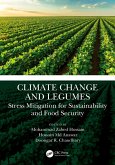
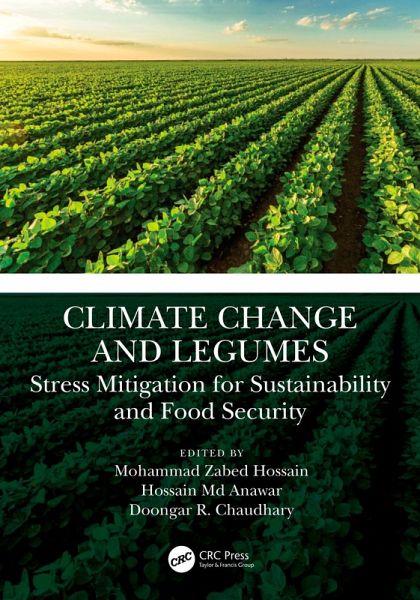
Global climate change has created unprecedented challenges for human civilization due to its widespread adverse consequences, including a reduction in crop yield and threatening food security across the globe. Among the crop plants, legumes have great potential for ameliorating global warming since they can reduce carbon emissions by lowering reliance on the application of chemical fertilizers, by increasing nitrification and carbon sequestration in soil, and by providing protein-rich diets to both humans and livestock. This book identifies the extent of climate-induced stresses on legume plants and focuses on achieving food security through sustainable agricultural practices.
This book compiles recent research findings and reviews on climate-related problems, the potential of legumes in ameliorating the impacts of climate change, as well as better management of agricultural land and practices for achieving environmental sustainability and food security.
This book will serve as guidelines for scientists, agricultural practitioners, and policymakers working to achieve food security and better management of climate-induced stresses in agricultural interventions. It will also be useful as a reference book for researchers and students of both graduate and postgraduate levels. Furthermore, this book will provide enhanced knowledge about the mechanisms of yield and stress tolerance of legumes as well as developing climate-smart crops and improving cropping systems for a sustainable environment and food security.
Features of the book
This book compiles recent research findings and reviews on climate-related problems, the potential of legumes in ameliorating the impacts of climate change, as well as better management of agricultural land and practices for achieving environmental sustainability and food security.
This book will serve as guidelines for scientists, agricultural practitioners, and policymakers working to achieve food security and better management of climate-induced stresses in agricultural interventions. It will also be useful as a reference book for researchers and students of both graduate and postgraduate levels. Furthermore, this book will provide enhanced knowledge about the mechanisms of yield and stress tolerance of legumes as well as developing climate-smart crops and improving cropping systems for a sustainable environment and food security.
Features of the book
- Reviews trends of global climate change and its consequences for food security across the continents
- Identifies the challenges and scopes of cultivating legumes in achieving food security in the context of global climate change
- Focuses on the improvements of legume production through conservation approaches in agricultural practices and modern techniques, including omics-based breeding, biotechnology, genetic engineering, and rhizobium technology
- Discusses the sustainable amelioration options for soils affected by climate-induced stresses
- Cites examples of applications of rhizobium technologies in reducing greenhouse gas emission
- Describes pathways associated with yield, resistance, and tolerance of legumes to climate-induced stresses
Dieser Download kann aus rechtlichen Gründen nur mit Rechnungsadresse in A, B, BG, CY, CZ, D, DK, EW, E, FIN, F, GR, HR, H, IRL, I, LT, L, LR, M, NL, PL, P, R, S, SLO, SK ausgeliefert werden.