41,95 €
41,95 €
inkl. MwSt.
Sofort per Download lieferbar

21 °P sammeln
41,95 €
Als Download kaufen
41,95 €
inkl. MwSt.
Sofort per Download lieferbar
21 °P sammeln
Jetzt verschenken
Alle Infos zum eBook verschenken
41,95 €
inkl. MwSt.
Sofort per Download lieferbar
Alle Infos zum eBook verschenken
21 °P sammeln

Andere Kunden interessierten sich auch für
") Myths and Realities of Secessionisms (eBook, PDF)40,95 €
Myths and Realities of Secessionisms (eBook, PDF)40,95 €") China Threat: Perceptions Myths (eBook, PDF)55,95 €
China Threat: Perceptions Myths (eBook, PDF)55,95 €") Domestic Political Realities and European Unification (eBook, PDF)41,95 €
Domestic Political Realities and European Unification (eBook, PDF)41,95 €") Coal Surface Mining (eBook, PDF)41,95 €
Coal Surface Mining (eBook, PDF)41,95 €") Myths and Nationhood (eBook, PDF)39,95 €
Myths and Nationhood (eBook, PDF)39,95 €") National Coal Policy Vol 1 (eBook, PDF)41,95 €
National Coal Policy Vol 1 (eBook, PDF)41,95 €") The New Realities (eBook, PDF)45,95 €
The New Realities (eBook, PDF)45,95 €




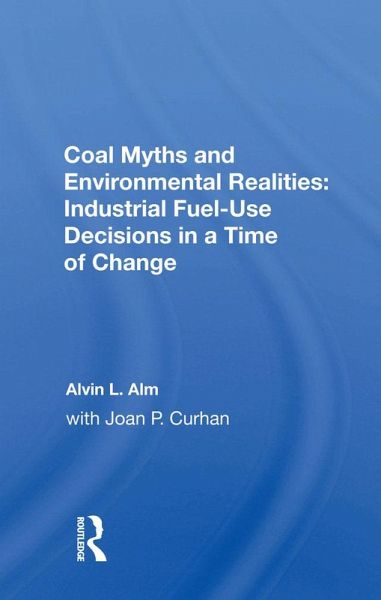
This book deals with two inconsistent myths that persistently surround industrial use of coal. The first myth is that the Clean Air Act precluded the use of coal; the second, that industrial use of coal will expand rapidly as a result of purely economic choices. Through analyzing fuel-use decisions actually made by industry, Mr. Alm concludes that environmental quality standards have played a minor role in industrial choice of fuel. Historically, natural gas and oil have been both less costly and more convenient fuels for industry to use. Coal gained a substantial economic advantage over oil after the oil price increases of the last decade, yet it continues to maintain a lower market share than economics alone would suggest. Mr. Alm demonstrates that coal's share of the fuel market will continue to remain low because of the way U.S. businesses view fuel-use choices. For most U.S. firms, energy costs are a relatively small portion of total costs and a minor factor in a firm's ability to compete. Faced with alternative capital projects to expand production facilities or to make mandatory investments, companies do not generally give high priority to coal conversion projects. Moreover, most U.S. firms have little experience with burning coal, and that lack of expertise creates additional psychological and institutional barriers to coal's use. Finally, there is a tendency to prefer high-payoff, short-term investments over projects that promise cost savings many years in the future. These are all strong reasons for coal's lackluster performance in the industrial market-much more potent forces than environmental regulations.
Dieser Download kann aus rechtlichen Gründen nur mit Rechnungsadresse in A, B, BG, CY, CZ, D, DK, EW, E, FIN, F, GR, HR, H, IRL, I, LT, L, LR, M, NL, PL, P, R, S, SLO, SK ausgeliefert werden.