73,95 €
73,95 €
inkl. MwSt.
Sofort per Download lieferbar

37 °P sammeln
73,95 €
Als Download kaufen
73,95 €
inkl. MwSt.
Sofort per Download lieferbar
37 °P sammeln
Jetzt verschenken
Alle Infos zum eBook verschenken
73,95 €
inkl. MwSt.
Sofort per Download lieferbar
Alle Infos zum eBook verschenken
37 °P sammeln

Andere Kunden interessierten sich auch für
") Motivation, Emotion, and Cognition (eBook, ePUB)58,95 €
Motivation, Emotion, and Cognition (eBook, ePUB)58,95 €") Handbook of Self-Regulation of Learning and Performance (eBook, ePUB)113,95 €
Handbook of Self-Regulation of Learning and Performance (eBook, ePUB)113,95 €") Cognition in Education (eBook, ePUB)29,95 €
Cognition in Education (eBook, ePUB)29,95 €") In Search of Pedagogy Volume I (eBook, ePUB)35,95 €
In Search of Pedagogy Volume I (eBook, ePUB)35,95 €") Scientific Inquiry into Human Potential (eBook, ePUB)39,95 €
Scientific Inquiry into Human Potential (eBook, ePUB)39,95 €") Developmental Cognitive Science Goes to School (eBook, ePUB)54,95 €
Developmental Cognitive Science Goes to School (eBook, ePUB)54,95 €") Handbook of Educational Psychology (eBook, ePUB)98,95 €
Handbook of Educational Psychology (eBook, ePUB)98,95 €






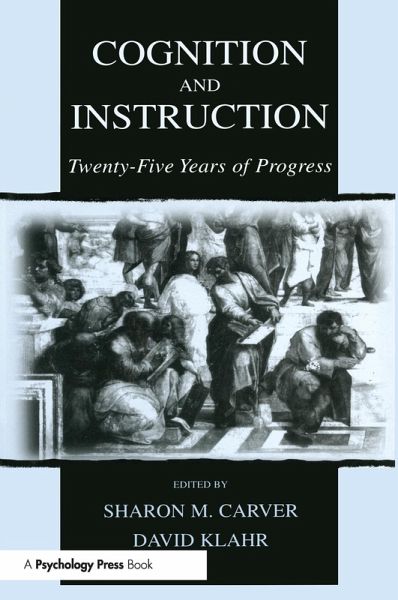
This volume is based on papers presented at the 30th Carnegie Mellon Symposium on Cognition. This particular symposium was conceived in reference to the 1974 symposium entitled Cognition and Instruction. In the 25 years since that symposium, reciprocal relationships have been forged between psychology and education, research and practice, and laboratory and classroom learning contexts. Synergistic advances in theories, empirical findings, and instructional practice have been facilitated by the establishment of new interdisciplinary journals, teacher education courses, funding initiatives, and research institutes. So, with all of this activity, where is the field of cognition and instruction? How much progress has been made in 25 years? What remains to be done? This volume proposes and illustrates some exciting and challenging answers to these questions.
Chapters in this volume describe advances and challenges in four areas, including development and instruction, teachers and instructional strategies, tools for learning from instruction, and social contexts of instruction and learning. Detailed analyses of tasks, subjects' knowledge and processes, and the changes in performance over time have led to new understanding of learners' representations, their use of multiple strategies, and the important role of metacognitive processes. New methods for assessing and tracking the development and elaboration of knowledge structures and processing strategies have yielded new conceptualizations of the process of change. Detailed cognitive analysis of expert teachers, as well as a direct focus on enhancing teachers' cognitive models of learners and use of effective instructional strategies, are other areas that have seen tremendous growth and refinement in the past 25 years. Similarly, the strong impact of curriculum materials and activities based on a thorough cognitive analysis of the task has been extended to the use of technological tools for learning, such as intelligent tutors and complex computer based instructional interfaces. Both the shift to conducting a significant portion of the cognition and instruction research in real classrooms and the increased collaboration between academics and educators have brought the role of the social context to center stage.
Chapters in this volume describe advances and challenges in four areas, including development and instruction, teachers and instructional strategies, tools for learning from instruction, and social contexts of instruction and learning. Detailed analyses of tasks, subjects' knowledge and processes, and the changes in performance over time have led to new understanding of learners' representations, their use of multiple strategies, and the important role of metacognitive processes. New methods for assessing and tracking the development and elaboration of knowledge structures and processing strategies have yielded new conceptualizations of the process of change. Detailed cognitive analysis of expert teachers, as well as a direct focus on enhancing teachers' cognitive models of learners and use of effective instructional strategies, are other areas that have seen tremendous growth and refinement in the past 25 years. Similarly, the strong impact of curriculum materials and activities based on a thorough cognitive analysis of the task has been extended to the use of technological tools for learning, such as intelligent tutors and complex computer based instructional interfaces. Both the shift to conducting a significant portion of the cognition and instruction research in real classrooms and the increased collaboration between academics and educators have brought the role of the social context to center stage.
Dieser Download kann aus rechtlichen Gründen nur mit Rechnungsadresse in A, B, BG, CY, CZ, D, DK, EW, E, FIN, F, GR, HR, H, IRL, I, LT, L, LR, M, NL, PL, P, R, S, SLO, SK ausgeliefert werden.