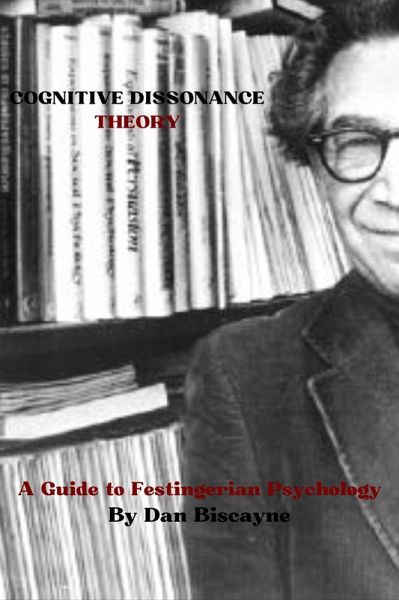
8,99 €
8,99 €
inkl. MwSt.
Sofort per Download lieferbar

0 °P sammeln
8,99 €
Als Download kaufen
8,99 €
inkl. MwSt.
Sofort per Download lieferbar
0 °P sammeln
Jetzt verschenken
Alle Infos zum eBook verschenken
8,99 €
inkl. MwSt.
Sofort per Download lieferbar
Alle Infos zum eBook verschenken
0 °P sammeln

Andere Kunden interessierten sich auch für
") An Analysis of Leon Festinger's A Theory of Cognitive Dissonance (eBook, ePUB)7,99 €
An Analysis of Leon Festinger's A Theory of Cognitive Dissonance (eBook, ePUB)7,99 €") Person and the Situation (eBook, ePUB)8,95 €
Person and the Situation (eBook, ePUB)8,95 €") 7 Principles of Nature (eBook, ePUB)7,99 €
7 Principles of Nature (eBook, ePUB)7,99 €") The Lies You Tell Yourself (eBook, ePUB)2,99 €
The Lies You Tell Yourself (eBook, ePUB)2,99 €") Voluntaristic Theory (eBook, ePUB)8,99 €
Voluntaristic Theory (eBook, ePUB)8,99 €") Theory of the Self (eBook, ePUB)8,99 €
Theory of the Self (eBook, ePUB)8,99 €") Cognitive Behavioral Therapy (eBook, ePUB)4,49 €
Cognitive Behavioral Therapy (eBook, ePUB)4,49 €





Why do we sometimes cling to beliefs even when evidence proves them wrong? Why do we justify choices we regret, or rationalize behaviors that contradict our values? These questions lie at the heart of cognitive dissonance-a psychological phenomenon that reveals the mind's remarkable, and often unconscious, efforts to maintain internal harmony.
First introduced by Leon Festinger in 1957, the theory of cognitive dissonance marked a turning point in our understanding of human behavior. It proposed that inconsistency between our thoughts, beliefs, or actions creates psychological discomfort, and that we are driven-often irrationally-to resolve this discomfort. The implications of this simple idea are vast. From politics to relationships, advertising to religion, cognitive dissonance shapes the way we interpret reality and construct our sense of self.
This book explores the theory of cognitive dissonance in depth-not only through its historical development and experimental foundations, but also through its relevance to everyday life. It draws on classic studies and contemporary research, connecting psychological theory to the real-world dilemmas we face daily: moral conflicts, identity shifts, group dynamics, and the justifications we use to bridge the gap between who we are and who we think we should be.
You do not need an extensive background in psychology to engage with this book. What you do need is curiosity-about the human mind, about why we think the way we do, and about the subtle forces that shape our choices. My hope is that this exploration of cognitive dissonance will challenge your assumptions, sharpen your self-awareness, and offer a deeper understanding of what it means to be human in a world full of contradictions.
Let's begin.
First introduced by Leon Festinger in 1957, the theory of cognitive dissonance marked a turning point in our understanding of human behavior. It proposed that inconsistency between our thoughts, beliefs, or actions creates psychological discomfort, and that we are driven-often irrationally-to resolve this discomfort. The implications of this simple idea are vast. From politics to relationships, advertising to religion, cognitive dissonance shapes the way we interpret reality and construct our sense of self.
This book explores the theory of cognitive dissonance in depth-not only through its historical development and experimental foundations, but also through its relevance to everyday life. It draws on classic studies and contemporary research, connecting psychological theory to the real-world dilemmas we face daily: moral conflicts, identity shifts, group dynamics, and the justifications we use to bridge the gap between who we are and who we think we should be.
You do not need an extensive background in psychology to engage with this book. What you do need is curiosity-about the human mind, about why we think the way we do, and about the subtle forces that shape our choices. My hope is that this exploration of cognitive dissonance will challenge your assumptions, sharpen your self-awareness, and offer a deeper understanding of what it means to be human in a world full of contradictions.
Let's begin.
Dieser Download kann aus rechtlichen Gründen nur mit Rechnungsadresse in A, B, BG, CY, CZ, D, DK, EW, E, FIN, F, GR, H, IRL, I, LT, L, LR, M, NL, PL, P, R, S, SLO, SK ausgeliefert werden.