112,95 €
inkl. MwSt.
Sofort per Download lieferbar
56 °P sammeln

Andere Kunden interessierten sich auch für
") A New Structure for Security, Peace, and Cooperation in the Persian Gulf (eBook, PDF)25,95 €
A New Structure for Security, Peace, and Cooperation in the Persian Gulf (eBook, PDF)25,95 €") President Trump and General Pershing (eBook, PDF)40,95 €
President Trump and General Pershing (eBook, PDF)40,95 €") The Exclusions of Civilization (eBook, PDF)88,95 €
The Exclusions of Civilization (eBook, PDF)88,95 €![]() "Dual Containment" Policy in the Persian Gulf (eBook, PDF)40,95 €
"Dual Containment" Policy in the Persian Gulf (eBook, PDF)40,95 €") Imperialism with Reference to Syria (eBook, PDF)40,95 €
Imperialism with Reference to Syria (eBook, PDF)40,95 €") The Persian Gulf (eBook, PDF)96,95 €
The Persian Gulf (eBook, PDF)96,95 €") Security in the Persian Gulf Region (eBook, PDF)72,95 €
Security in the Persian Gulf Region (eBook, PDF)72,95 €



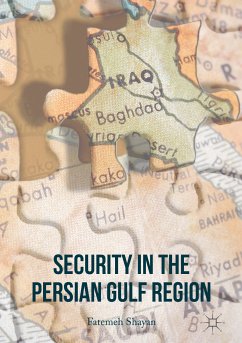
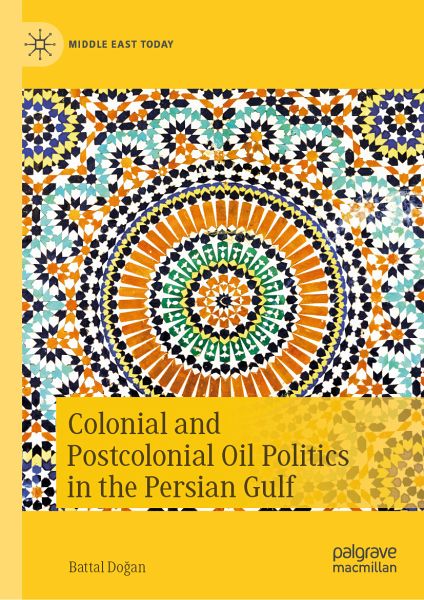
This book examines the British colonial and American post-colonial oil policies toward the Persian Gulf from a postcolonial critical perspective, taking into account the coloniality and postcoloniality of power structures. It examines colonization, decolonization, and postcolonization of oil in the Persian Gulf through the parameters of political order, formulated policies, market structure, concession system, imperial/national interests, and great powers rivalry. In this work, the author uses qualitative, theory testing, and comparative case study method.
There are several reasons that are encouraging for the selection of these two cases: first, British colonial and American post-colonial oil policies toward the Gulf region show similar patterns of domination and exploitation; second, both colonial and post-colonial great powers consider the control of the Gulf oil among their national security priorities; third, both use military interventions, install military bases and involve in coup d'etat in the region to maintain their established oil order; and fourth, both justifies their colonial/imperial oil order in the region with humanitarian objectives such as 'civilizing mission' or 'democratization.'
In this research, the state-level of analysis is used to explore the oil policies of Anglo-American governments. The governance history of oil in the Persian Gulf can be broadly divided into three phases: (1) the colonial period 1901-1950; (2) the decolonization period 1950-1972; and (3) the post-colonial period, since the mid-1970s to the present. Chronologically, the oil policies of Anglo-American governments are examined in loose temporal and spatial contexts, and each period is introduced in independent chapters, but they are complementary to each other.
There are several reasons that are encouraging for the selection of these two cases: first, British colonial and American post-colonial oil policies toward the Gulf region show similar patterns of domination and exploitation; second, both colonial and post-colonial great powers consider the control of the Gulf oil among their national security priorities; third, both use military interventions, install military bases and involve in coup d'etat in the region to maintain their established oil order; and fourth, both justifies their colonial/imperial oil order in the region with humanitarian objectives such as 'civilizing mission' or 'democratization.'
In this research, the state-level of analysis is used to explore the oil policies of Anglo-American governments. The governance history of oil in the Persian Gulf can be broadly divided into three phases: (1) the colonial period 1901-1950; (2) the decolonization period 1950-1972; and (3) the post-colonial period, since the mid-1970s to the present. Chronologically, the oil policies of Anglo-American governments are examined in loose temporal and spatial contexts, and each period is introduced in independent chapters, but they are complementary to each other.
Dieser Download kann aus rechtlichen Gründen nur mit Rechnungsadresse in A, B, BG, CY, CZ, D, DK, EW, E, FIN, F, GR, HR, H, IRL, I, LT, L, LR, M, NL, PL, P, R, S, SLO, SK ausgeliefert werden.