Sie sind bereits eingeloggt. Klicken Sie auf 2. tolino select Abo, um fortzufahren.
Bitte loggen Sie sich zunächst in Ihr Kundenkonto ein oder registrieren Sie sich bei bücher.de, um das eBook-Abo tolino select nutzen zu können.
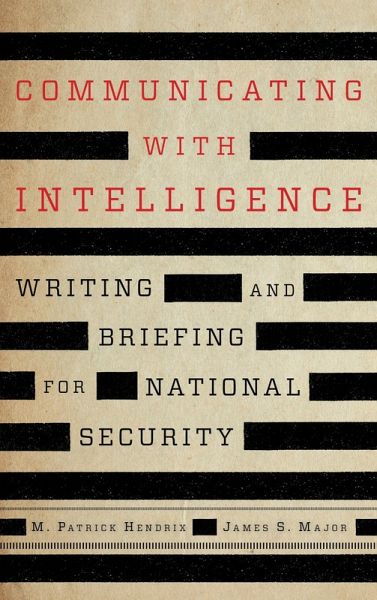
Writing and briefing are fundamental to the intelligence profession. The ability to communicate clearly, concisely, and coherently is basic to all intelligence disciplines, even the most technical. Communicating with Intelligence, Third Edition is a handbook on writing and briefing intelligence based on the decades of practical experience of James S. Major. The book is designed primarily for faculty and students pursuing studies in intelligence, national security, and homeland security, who need to learn the art of preparing written products and intelligence briefings. But it also has…mehr
Writing and briefing are fundamental to the intelligence profession. The ability to communicate clearly, concisely, and coherently is basic to all intelligence disciplines, even the most technical. Communicating with Intelligence, Third Edition is a handbook on writing and briefing intelligence based on the decades of practical experience of James S. Major. The book is designed primarily for faculty and students pursuing studies in intelligence, national security, and homeland security, who need to learn the art of preparing written products and intelligence briefings. But it also has considerable value for working professionals who simply wish to sharpen their communication skills. The third edition of Communicating with Intelligence provides the expediency, efficiency, and effectiveness instructors and members of the Intelligence Community require for a communication handbook.
Die Herstellerinformationen sind derzeit nicht verfügbar.
Autorenporträt
M. Patrick Hendrix is an assistant professor in the Department of Intelligence and Security Studies at The Citadel Military College of South Carolina. He teaches a variety of undergraduate and graduate courses including open-source intelligence, analysis and research, and Geospatial intelligence. He previously served as director of The Citadel's Writing Center. James S. Major spent 40 years in intelligence, serving in both military and civilian capacity, in assignments at the tactical, operational, strategic, and national levels. He has previously written 15 books, all published by the U.S. Government, and in 1997 he was awarded the National Intelligence Medal of Achievement.
Inhaltsangabe
Preface Introduction - Jan Goldman Part I: The Foundations of Good Intelligence Communication What It's All AboutBottom Line Up Front Analysts: The Voice of the Intelligence Community Getting Started: Consider the Reader The Style of Good Intelligence Writing: Bottom Line Upfront Three Goals of Intelligence Writing: Judge, Interpret, Support Real World Problems Four differences Between Academic and Intelligence Writing Making the Distinction Clear - Especially for Students Facilitating the Process Final Thoughts and Exercises Notes Using Argument in Intelligence WritingBottom Line Up Front What is an Argument? Formulating a Thesis Statement Argument Reflects How Humans Think Evaluating Arguments Final Thoughts and Exercises Reading: Fundamental to WritingBottom Line Up Front Read to Write The Forms of Intelligence: Basic, Current, Estimative Examining Content Evaluating Finished Intelligence Graphics: Attention Grabbers Final Thoughts and Exercises Part II: Writing with Intelligence Research MethodsBottom Line Up Front Time Management Searching, Researching Evaluating Sources Final Thoughts and Exercises Analysis CheckBottom Line Up Front Structured Analytic Techniques Final Thoughts and Exercises PrewritingBottom Line Up Front Finding Your Subject Focusing on Form and Format Finding Time and Managing Length Prewriting Tools: Building a Foundation Final Thoughts and Exercises Writing the First DraftBottom Line Up Front Drafting: Get Right To It Set Realistic Goals and Pace Yourself Clarity: Be Kind to Your Reader Time to Get Organized Transitions: Moving Smoothly Ahead Introductions: Not Methodology The Body of Your Writing Drafting Conclusion: The Role of Intelligence Writing Final Thoughts and Exercises Finishing a DraftBottom Line Up Front A Model Process for Revising an Analytical Paper Constraints on Review Reviewer and Writer's Experience Basic Revision Techniques Thesis and Overview Statements Commonly Asked Questions about Revision Ten Questions to Help You Examine Your Own Writing Process Exercises in Writing Analytical Papers Part III: Briefing with Intelligence Scripting Your BriefingBottom Line Up Front A Disclaimer: Read and Heed A Brief Typology of Briefings The Organization, Mission, and Functions Briefing The ABCs of Good Intelligence Briefings and Briefers Get Started: Get Organized Prewrite Analyze Your Audience Outline Your Thoughts Writing the Script Pointers for Writing the Script Use of Notes Using Visual Aids Putting Words and Pictures Together Final Thoughts and Exercises Briefing the CustomerBottom Line Up Front Appearance: Make First Impressions Count Cognizance: Knowledge Really Is Power Final Thoughts and Exercises Citing Your Sources Handling and Citing Classified MaterialAppendix A: Memo for the Director and Deputy Director from Vice Chairman of the National Intelligence Council Herbert E. Meyer Appendix B: FBI Intelligence Estimate Appendix C: Briefing Evaluation Form Bibliography Dictionaries and Thesauruses Sources for Writing Style, Grammar, and Composition Sources for Analysis and Research Briefing-Related Sources Other Sources Used or Consulted for This Book About the author Index
Preface Introduction - Jan Goldman Part I: The Foundations of Good Intelligence Communication What It's All AboutBottom Line Up Front Analysts: The Voice of the Intelligence Community Getting Started: Consider the Reader The Style of Good Intelligence Writing: Bottom Line Upfront Three Goals of Intelligence Writing: Judge, Interpret, Support Real World Problems Four differences Between Academic and Intelligence Writing Making the Distinction Clear - Especially for Students Facilitating the Process Final Thoughts and Exercises Notes Using Argument in Intelligence WritingBottom Line Up Front What is an Argument? Formulating a Thesis Statement Argument Reflects How Humans Think Evaluating Arguments Final Thoughts and Exercises Reading: Fundamental to WritingBottom Line Up Front Read to Write The Forms of Intelligence: Basic, Current, Estimative Examining Content Evaluating Finished Intelligence Graphics: Attention Grabbers Final Thoughts and Exercises Part II: Writing with Intelligence Research MethodsBottom Line Up Front Time Management Searching, Researching Evaluating Sources Final Thoughts and Exercises Analysis CheckBottom Line Up Front Structured Analytic Techniques Final Thoughts and Exercises PrewritingBottom Line Up Front Finding Your Subject Focusing on Form and Format Finding Time and Managing Length Prewriting Tools: Building a Foundation Final Thoughts and Exercises Writing the First DraftBottom Line Up Front Drafting: Get Right To It Set Realistic Goals and Pace Yourself Clarity: Be Kind to Your Reader Time to Get Organized Transitions: Moving Smoothly Ahead Introductions: Not Methodology The Body of Your Writing Drafting Conclusion: The Role of Intelligence Writing Final Thoughts and Exercises Finishing a DraftBottom Line Up Front A Model Process for Revising an Analytical Paper Constraints on Review Reviewer and Writer's Experience Basic Revision Techniques Thesis and Overview Statements Commonly Asked Questions about Revision Ten Questions to Help You Examine Your Own Writing Process Exercises in Writing Analytical Papers Part III: Briefing with Intelligence Scripting Your BriefingBottom Line Up Front A Disclaimer: Read and Heed A Brief Typology of Briefings The Organization, Mission, and Functions Briefing The ABCs of Good Intelligence Briefings and Briefers Get Started: Get Organized Prewrite Analyze Your Audience Outline Your Thoughts Writing the Script Pointers for Writing the Script Use of Notes Using Visual Aids Putting Words and Pictures Together Final Thoughts and Exercises Briefing the CustomerBottom Line Up Front Appearance: Make First Impressions Count Cognizance: Knowledge Really Is Power Final Thoughts and Exercises Citing Your Sources Handling and Citing Classified MaterialAppendix A: Memo for the Director and Deputy Director from Vice Chairman of the National Intelligence Council Herbert E. Meyer Appendix B: FBI Intelligence Estimate Appendix C: Briefing Evaluation Form Bibliography Dictionaries and Thesauruses Sources for Writing Style, Grammar, and Composition Sources for Analysis and Research Briefing-Related Sources Other Sources Used or Consulted for This Book About the author Index
Es gelten unsere Allgemeinen Geschäftsbedingungen: www.buecher.de/agb
Impressum
www.buecher.de ist ein Internetauftritt der buecher.de internetstores GmbH
Geschäftsführung: Monica Sawhney | Roland Kölbl | Günter Hilger
Sitz der Gesellschaft: Batheyer Straße 115 - 117, 58099 Hagen
Postanschrift: Bürgermeister-Wegele-Str. 12, 86167 Augsburg
Amtsgericht Hagen HRB 13257
Steuernummer: 321/5800/1497
USt-IdNr: DE450055826