82,95 €
82,95 €
inkl. MwSt.
Sofort per Download lieferbar

41 °P sammeln
82,95 €
Als Download kaufen
82,95 €
inkl. MwSt.
Sofort per Download lieferbar
41 °P sammeln
Jetzt verschenken
Alle Infos zum eBook verschenken
82,95 €
inkl. MwSt.
Sofort per Download lieferbar
Alle Infos zum eBook verschenken
41 °P sammeln

Andere Kunden interessierten sich auch für
") Communist Planning versus Rationality (eBook, ePUB)82,95 €
Communist Planning versus Rationality (eBook, ePUB)82,95 €") How Economics Professors Can Stop Failing Us (eBook, PDF)35,95 €
How Economics Professors Can Stop Failing Us (eBook, PDF)35,95 €") Knowledge and Entrepreneurship in Public Policy (eBook, PDF)67,95 €
Knowledge and Entrepreneurship in Public Policy (eBook, PDF)67,95 €") Rebel Economies (eBook, PDF)24,95 €
Rebel Economies (eBook, PDF)24,95 €") Knowledge Workers in Contemporary China (eBook, PDF)36,95 €
Knowledge Workers in Contemporary China (eBook, PDF)36,95 €") Energy Economics (eBook, PDF)28,95 €
Energy Economics (eBook, PDF)28,95 €") Exploring Atlas Shrugged (eBook, PDF)18,95 €
Exploring Atlas Shrugged (eBook, PDF)18,95 €





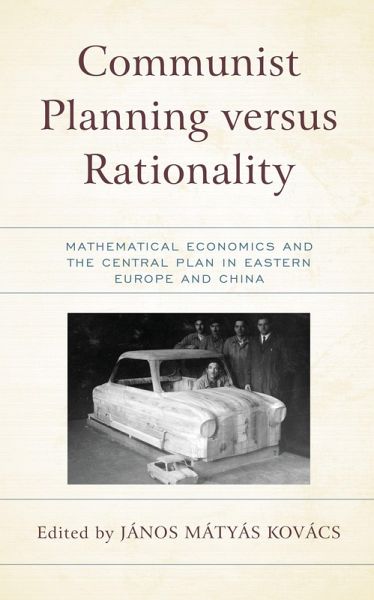
This volume examines concepts of central planning, a cornerstone of political economy in Soviet-type societies. It revolves around the theory of "optimal planning" which promised a profound modernization of Stalinist-style verbal planning. Encouraged by cybernetic dreams in the 1950s and supporting the strategic goals of communist leaders in the Cold War, optimal planners offered the ruling elites a panacea for the recurrent crises of the planned economy. Simultaneously, their planning projects conveyed the pride of rational management and scientific superiority over the West. The authors trace the rise and fall of the research program in the communist era in eight countries of Eastern Europe, including the Soviet Union, and China, describing why the mission of optimization was doomed to fail and why the failure was nevertheless very slow. The theorists of optimal planning contributed to the rehabilitation of mathematical culture in economic research in the communist countries, and thus, to a neoclassical turn in economics all over the ex-communist world). However, because they have not rejected optimal planning as "computopia," there is a large space left behind for future generations to experiment with Big Optimal Plans anew-based, at this time, on artificial intelligence and machine learning.