29,95 €
29,95 €
inkl. MwSt.
Sofort per Download lieferbar

15 °P sammeln
29,95 €
Als Download kaufen
29,95 €
inkl. MwSt.
Sofort per Download lieferbar
15 °P sammeln
Jetzt verschenken
Alle Infos zum eBook verschenken
29,95 €
inkl. MwSt.
Sofort per Download lieferbar
Alle Infos zum eBook verschenken
15 °P sammeln

Andere Kunden interessierten sich auch für
") The Iranian Sea-Air-Missile Threat to Gulf Shipping (eBook, PDF)45,95 €
The Iranian Sea-Air-Missile Threat to Gulf Shipping (eBook, PDF)45,95 €") Air Power in the Next Generation (eBook, PDF)37,95 €
Air Power in the Next Generation (eBook, PDF)37,95 €") Trends in Department of Defense Other Transaction Authority Usage (eBook, PDF)29,95 €
Trends in Department of Defense Other Transaction Authority Usage (eBook, PDF)29,95 €") Distributed Defense (eBook, PDF)38,95 €
Distributed Defense (eBook, PDF)38,95 €") Defense Acquisition Trends, 2016 (eBook, PDF)43,95 €
Defense Acquisition Trends, 2016 (eBook, PDF)43,95 €") Analysis of the FY 2017 Defense Budget (eBook, PDF)34,95 €
Analysis of the FY 2017 Defense Budget (eBook, PDF)34,95 €") Defense Acquisition Trends, 2015 (eBook, PDF)43,95 €
Defense Acquisition Trends, 2015 (eBook, PDF)43,95 €




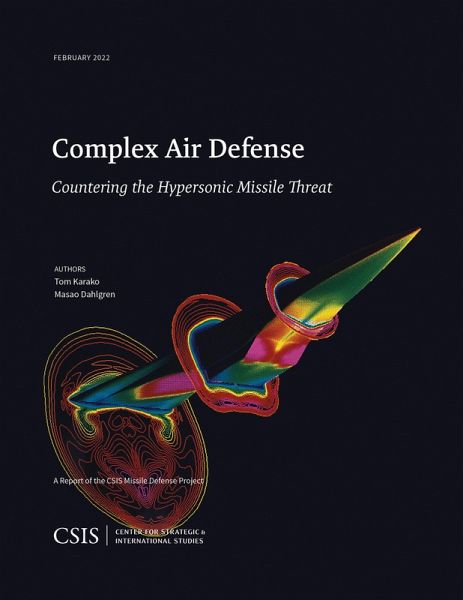
In the past five years, Russia, China, and others have accelerated their development of hypersonic missiles to threaten U.S. forces in the homeland and abroad. The current Ballistic Missile Defense System, largely equipped to contend with legacy ballistic missile threats, must be adapted to this challenge. The same characteristics that make hypersonic missiles attractive may also hold the key to defeating them. This CSIS report argues how a new hypersonic defense architecture should exploit hypersonic weapons' unique vulnerabilities and employ new capabilities, such as a space sensor layer, to secure critical nodes. These changes are not only necessary to mitigate the hypersonic threat but to defeat an emerging generation of maneuvering missiles and aerial threats.