Sie sind bereits eingeloggt. Klicken Sie auf 2. tolino select Abo, um fortzufahren.
Bitte loggen Sie sich zunächst in Ihr Kundenkonto ein oder registrieren Sie sich bei bücher.de, um das eBook-Abo tolino select nutzen zu können.
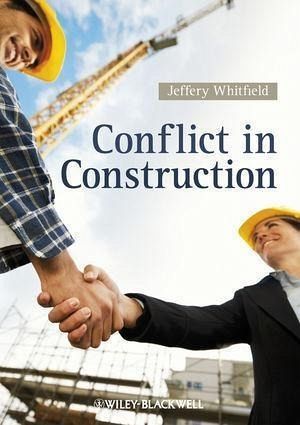
Construction projects are beset with disputes. In 1960 around 250 writs were issued relating to construction disputes. Within 30 years this number increased five-fold, and in the 20 years since then the number of disputes has not fallen. Some disputes are significant, others are quite minor, but most could probably be avoided. Disputes originate in disagreements or conflict between individuals, which if addressed early, can prevent escalation into situations that are difficult, expensive and time consuming to resolve. Conflicts in Construction deals with all types of conflict but concentrates…mehr
Construction projects are beset with disputes. In 1960 around 250 writs were issued relating to construction disputes. Within 30 years this number increased five-fold, and in the 20 years since then the number of disputes has not fallen. Some disputes are significant, others are quite minor, but most could probably be avoided. Disputes originate in disagreements or conflict between individuals, which if addressed early, can prevent escalation into situations that are difficult, expensive and time consuming to resolve. Conflicts in Construction deals with all types of conflict but concentrates on the conflicts that lead to disputes in construction projects. The book shows the reader how to avoid, manage and resolve conflicts before they become serious disputes. The first edition of Conflicts in Construction was read widely and saved many individuals and companies from falling into intractable disputes. The second edition, fully updated, forms the base content for the Hill/ Knowles seminar series on conflicts, delivered around the globe by the author, and will be an important read for everyone employed in the construction industry.
Dieser Download kann aus rechtlichen Gründen nur mit Rechnungsadresse in D ausgeliefert werden.
Die Herstellerinformationen sind derzeit nicht verfügbar.
Autorenporträt
Jeffery Whitfield FRICS, is an expert witness in quantum and delay cases in energy, engineering and construction projects and has worked on cases around the globe. A chartered quantity surveyor and trained planner/ scheduler, he is a Director at Hill International.
Inhaltsangabe
Preface vii 1 Conflicts in Construction 1 1.1 Recent history 2 1.2 Understanding conflict 3 1.3 Addressing conflict 3 1.4 Positive aspects of a conflict 4 1.5 The real causes of conflict 6 2 Why Do We Need to Manage Conflict? 11 2.1 Functional conflict 12 2.2 Dysfunctional conflict 12 3 Causes of Conflict 19 3.1 A conflict of ideas 19 3.2 A conflict of beliefs 22 3.3 A conflict of interests 24 3.4 The Fertile Ground Theory 25 3.5 Internal conflict 29 3.6 Internal conflict in construction 34 3.7 Other factors 38 4 Dishonesty and Self Deception 41 4.1 Plain dishonesty 41 4.2 Self delusion 43 4.3 Cognitive Dissonance 44 4.4 Confirmative Bias 45 5 Interpersonal Relationships 49 5.1 Anthropological factors 50 5.2 Sociological factors 52 5.3 Physiological factors 54 5.4 Psychological factors 54 5.5 Prejudice 57 5.6 Personality types 57 5.7 The urge to conflict 62 6 Anatomy of a Construction Project 63 6.1 Overview of the project and the parties 63 6.2 The pre-contract period 65 6.3 The contract period 67 6.4 The dispute period 69 6.5 Summary and analysis of the dispute 71 7 Twelve Steps for Reducing Conflict 73 7.1 Step 1: Communicate with precision 73 7.2 Step 2: Listen and consider attentively 75 7.3 Step 3: Think before speaking 76 7.4 Step 4: Take time to build relationships 78 7.5 Step 5: Be honest in your dealings with others 79 7.6 Step 6: Do not dispute trivial matters 80 7.7 Step 7: Look for common ground 80 7.8 Step 8: Recognise and avoid prejudice 81 7.9 Step 9: Express your understanding 82 7.10 Step 10: Control your emotions 83 7.11 Step 11: Apologise gracefully if you are wrong 84 7.12 Step 12: Accept apologies gracefully if others are in the wrong 86 8 Reducing Conflict 87 8.1 People, people, people 87 8.2 Interpersonal techniques 88 8.3 Perceptions and personalities 89 8.4 Tactical behaviour 95 8.5 Summary 97 9 Managing Conflict 99 9.1 Simple resolution techniques 99 9.2 Control of conflict 102 9.3 Conflict prevention 103 9.4 Prevent conflict from spreading 105 9.5 Call the professionals 106 9.6 Summary 107 10 Informal Dispute Resolution 109 10.1 Negotiation 109 10.2 Alternative Dispute Resolution (ADR) 119 11 Formal Dispute Resolution 123 11.1 General principles of dispute management 123 11.2 Arbitration and Litigation 125 11.3 Arbitration explained 125 11.4 Litigation explained 128 12 Conflict in Changing and Challenging Markets 133 12.1 Will people change? 133 12.2 Will contracts change? 135 12.3 Does Europe have anything better to offer? 137 12.4 Conflict in changing market conditions 138 12.5 More conflict or less conflict - you decide! 138 Index 139
Es gelten unsere Allgemeinen Geschäftsbedingungen: www.buecher.de/agb
Impressum
www.buecher.de ist ein Internetauftritt der buecher.de internetstores GmbH
Geschäftsführung: Monica Sawhney | Roland Kölbl | Günter Hilger
Sitz der Gesellschaft: Batheyer Straße 115 - 117, 58099 Hagen
Postanschrift: Bürgermeister-Wegele-Str. 12, 86167 Augsburg
Amtsgericht Hagen HRB 13257
Steuernummer: 321/5800/1497
USt-IdNr: DE450055826