29,95 €
29,95 €
inkl. MwSt.
Sofort per Download lieferbar

15 °P sammeln
29,95 €
Als Download kaufen
29,95 €
inkl. MwSt.
Sofort per Download lieferbar
15 °P sammeln
Jetzt verschenken
Alle Infos zum eBook verschenken
29,95 €
inkl. MwSt.
Sofort per Download lieferbar
Alle Infos zum eBook verschenken
15 °P sammeln

Andere Kunden interessierten sich auch für
") Confronting Disaster (eBook, ePUB)29,95 €
Confronting Disaster (eBook, ePUB)29,95 €") Talent Development, Existential Philosophy and Sport (eBook, PDF)45,95 €
Talent Development, Existential Philosophy and Sport (eBook, PDF)45,95 €") Phenomenology of the Winter-City (eBook, PDF)72,95 €
Phenomenology of the Winter-City (eBook, PDF)72,95 €") Philosophical Urbanism (eBook, PDF)40,95 €
Philosophical Urbanism (eBook, PDF)40,95 €") World, Affectivity, Trauma (eBook, PDF)28,95 €
World, Affectivity, Trauma (eBook, PDF)28,95 €") An Existential Phenomenology of Addiction (eBook, PDF)26,95 €
An Existential Phenomenology of Addiction (eBook, PDF)26,95 €") Place and Experience (eBook, PDF)44,95 €
Place and Experience (eBook, PDF)44,95 €





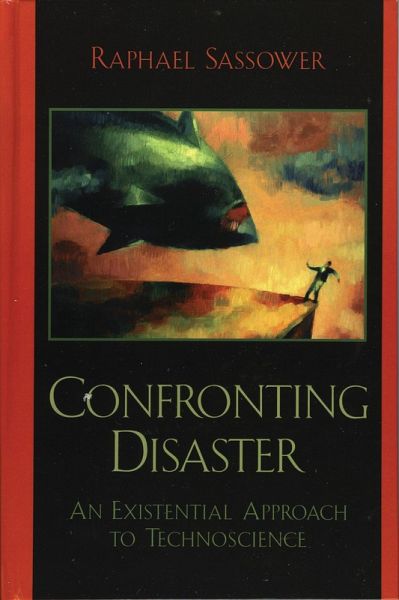
Contemporary society is rife with instability. Our active and invasive study of genetics has given life to one of the great specters of biological science: the clone. The scarcity of natural energy sources has led to an increased manipulation of atomic or nuclear energy and regressive environmental policies, resulting in a greater sense of danger for everyone. The promises of economic globalization have, in some cases, been delivered, but in many other ways globalization has created even greater gaps in social and economic life. Despite the expansion of our productive and technological capabilities, our workdays grow longer, not shorter. We find ourselves in exile from our families, our friends, and from other meaningful forms of social connection. And as "freedom" is bandied about in the popular press and media as the preeminent global social value, it actually seems that the reigning contemporary ethos of our time is stress and anxiety.
While Raphael Sassower's previous work has focused extensively on science and technology, this book is significantly different. It is an urgent commentary in the tradition of Herbert Marcuse's One Dimensional Man or even Sigmund Freud's Civilization and Its Discontents; a culmination of many years of research and thought carefully arranged into an extended essay on our contemporary social, cultural, and existential orientation in the modern world. This book is written for advanced graduate students, informed and concerned citizenry, and especially the young student who, in the face of mounting anxiety, must be able to make critical choices towards an uncertain future.
While Raphael Sassower's previous work has focused extensively on science and technology, this book is significantly different. It is an urgent commentary in the tradition of Herbert Marcuse's One Dimensional Man or even Sigmund Freud's Civilization and Its Discontents; a culmination of many years of research and thought carefully arranged into an extended essay on our contemporary social, cultural, and existential orientation in the modern world. This book is written for advanced graduate students, informed and concerned citizenry, and especially the young student who, in the face of mounting anxiety, must be able to make critical choices towards an uncertain future.
Raphael Sassower has written a veritable guide to the perplexed individuals who suffer the uncertainties of our contemporary world without tools such as political power or social organization to address the many disasters which confront them. What is unique about this book is its unapologetic existentialism and its refusal to blame the victims for their fate. This book will be useful for the despairing because it gives a measure of hope. -- Stanley Aronowitz, Distinguished Professor of Sociology, CUNY Graduate Center Sassower's insights and suggestions offer a lively and illuminating if not always convincing perspective on issues with which the reader in philosophy and ethics of technology will be familiar. Bridges In Confronting Disaster, Raphael Sassower masterfully presents a perennial philosophy for the postmodern condition. His intriguing mix of existentialism and stoicism steers the reader to 'peace of mind' in a time when most pundits veer between Scylla of complacency and the Charybdis of despair. To those who believe that professional philosophers can no longer address 'the meaning of life' in lay terms, I would direct them to this book as a shining example of how it can be done. -- Steve Fuller, Professor of Sociology, University of Warwick and Founding Editor, Social Epistemology