Sie sind bereits eingeloggt. Klicken Sie auf 2. tolino select Abo, um fortzufahren.
Bitte loggen Sie sich zunächst in Ihr Kundenkonto ein oder registrieren Sie sich bei bücher.de, um das eBook-Abo tolino select nutzen zu können.
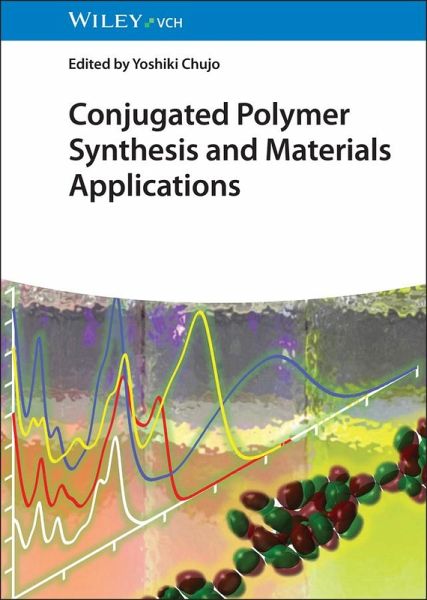
Comprehensive reference exploring the synthesis, preparation, and applications of new and novel conjugated polymers Conjugated Polymer Synthesis and Materials Applications summarizes the fundamentals and major developments in the synthesis of new conjugated polymers. The book explores novel methodologies for the preparation of inorganic-elements containing conjugated polymers and reviews recent applications of conjugated polymers in the electrical, optical, and biomedical fields. In each of the chapters, all of them written by internationally acclaimed experts, the book covers the…mehr
Comprehensive reference exploring the synthesis, preparation, and applications of new and novel conjugated polymers
Conjugated Polymer Synthesis and Materials Applications summarizes the fundamentals and major developments in the synthesis of new conjugated polymers. The book explores novel methodologies for the preparation of inorganic-elements containing conjugated polymers and reviews recent applications of conjugated polymers in the electrical, optical, and biomedical fields.
In each of the chapters, all of them written by internationally acclaimed experts, the book covers the whole spectrum of a specific conjugated polymer from fundamentals to materials applications.
Conjugated Polymer Synthesis and Materials Applications explores topics including:
Living conjugated polymers
Optically active through-space conjugated polymers
Carborane-containing conjugated polymers for optoelectronic materials
Polymers with three-dimensional conjugated molecules
Conjugated polymers with controlled higher-order structures
Conjugated polymers for energy storage devices
Low bandgap conjugated polymers
Advances in organic solar cell performance
Conjugated polymers for biomedical applications
Conjugated Polymer Synthesis and Materials Applications is an essential up-to-date reference on the subject for students and researchers in the field as well as professionals in related industries.
Dieser Download kann aus rechtlichen Gründen nur mit Rechnungsadresse in D ausgeliefert werden.
Die Herstellerinformationen sind derzeit nicht verfügbar.
Autorenporträt
Yoshiki Chujo is a Professor Emeritus of Kyoto University. His research interests focus on polymer synthesis and organic-inorganic hybrid materials. He has received numerous awards throughout his career, including the Award of the Society of Polymer Science, Japan (SPSJ), the Scientific Award of the Chemical Society of Japan (CSJ), the Award of the CSJ, the SPSJ Award for Outstanding Achievement in Polymer Science and Technology, and the Medal with Purple Ribbon from Emperor.
Inhaltsangabe
Preface
1 TRANSITION-METAL-CATALYZED POLYCONDENSATION 1.1 Introduction 1.2 Ni-Catalyzed Polycondensation 1.3 Pd-Catalyzed Polycondensation 1.4 Pd-Catalyzed Polycondensation via C-H Bond Functionalization 1.5 Cu- and Fe-Catalyzed Polycondensation 1.6 Other Transition-Metal-Catalyzed Polymerizations 1.7 Summary
2 LIVING CONJUGATED POLYMERS 2.1 Introduction 2.2 Metal Pi-Binding in CTP 2.3 Common Catalysts in CTP 2.4 Kumada-Corriu Catalyst-Transfer Polycondensation (KCTP) 2.5 Murahashi Catalyst-Transfer Polycondensation (MCTP) 2.6 Negishi Catalyst-Transfer Polycondensation (NCTP) 2.7 Suzuki-Miyaura Catalyst-Transfer Polycondensation (SMCTP) 2.8 Stille CTP 2.9 Buchward-Hartwig Amination and Direct Arylation Polymerization (C-H Activation) 2.10 Chain-Growth Polymerization of Aromatic without Metals 2.11 Conclusions
3 OPTICALLY ACTIVE THROUGH-SPACE CONJUGATED POLYMERS BASED ON PLANAR CHIRAL [2.2]PARACYCLOPHANE 3.1 Introduction 3.2 Through-Space Conjugation of [2.2]Paracyclophane-Based Conjugated Polymers 3.3 Optically Active Through-Space Conjugated Polymers Based on Planar Chiral [2.2]Paracyclophane 3.4 Optically Active Through-Space Conjugated Cyclic Oligomers Based on Planar Chiral [2.2]Paracyclophane 3.5 Conclusion
4 DEVELOPMENT OF SOLID-STATE LUMINESCENT CONJUGATED POLYMERS CONTAINING BORON ELEMENT-BLOCKS AND THEIR APPLICATIONS 4.1 Introduction 4.2 Boron Ketoiminates 4.3 Rational Design for AIE-Active Molecules Based on Excitation-Driven Complexes 4.4 AIE-Active Materials Having NIR Luminescent Properties 4.5 Conclusion
5 ARSENIC-CONTAINING CONJUGATED POLYMERS 5.1 Introduction 5.2 Arsenic in Organic Compounds 5.3 As-C Bond Formation 5.4 Arsenic-Containing ¿-Conjugated Systems 5.5 Poly(vinylene-arsine)s 5.6 Arsole Polymers 5.7 Pi-Conjugated Polymers with Other Arsenic Units 5.8 Conclusions
6 CARBORANE-CONTAINING CONJUGATED POLYMERS AND THEIR APPLICATIONS FOR OPTOELECTRONIC MATERIALS 6.1 Introduction 6.2 Advanced Functional Materials 6.3 Electronic Properties of Carborane-Containing Conjugated Polymers 6.4 Luminescent Materials 6.5 Photochemistry of o-Carboranes 6.6 Applications for Solid-State Luminescent Materials 6.7 Stimuli-Responsive Luminochromic Materials 6.8 Conclusion
7 LOW BANDGAP CONJUGATED POLYMERS 7.1 Introduction 7.2 Design Principles of LBG-CPs 7.3 Synthesis of LBG-CPs 7.4 Application of LBG-CPs 7.5 Conclusion and Perspective
8 POLYMERS WITH THREE-DIMENSIONAL CONJUGATED MOLECULES 8.1 Introduction 8.2 Corannulene Containing Polymer 8.3 Supramolecular Polymers Based on Bowl-Shaped Pi-Conjugated molecules 8.4 Helicene-Based Polymers 8.5 Conclusion and Outlook
9 CONJUGATED POLYMERS FOR ENERGY STORAGE DEVICES 9.1 Introduction 9.2 Conjugated Polymers as Binder Materials in LIBs 9.3 Conjugated Polymers as Anodic Materials 9.4 Polymerizable Conjugated Molecules as Electrolyte additives 9.5 Pi-Conjugated Polymers as Electrocatalysts 9.6 Conclusion
10 CONJUGATED POLYMERS AND THEIR APPLICATIONS IN ORGANIC FIELD EFFECT TRANSISTOR, ORGANIC ELECTROCHEMICAL TRANSISTORS, AND ORGANIC THERMOELECTRICS 10.1 Introduction 10.2 Polymers for Organic Field Effect Transistors 10.3 Organic Electrochemical Transistors (OECTs) 10.4 Organic Thermoelectrics (OTEs)
11 PI-CONJUGATED POLYMERS WITH CONTROLLED HIGHER-ORDER STRUCTURES: POLY(ACETYLENE)S AND POLY(ARYLENEETHYNYLENE)S 11.1 Introduction 11.2 Helical Substituted Poly(acetylene)s 11.3 Poly(aryleneethynylene)s 11.4 Platinum-Containing Poly(aryleneethynylene)s 11.5 Summary and Outlook
12 ADVANCES IN ORGANIC SOLAR CELL PERFORMANCE INVOLVING ANTHRACENE AND ANTHANTHRONE CORE POLYCYCLIC AROMATIC MATERIALS 12.1 Introduction 12.2 Anthrace
1 TRANSITION-METAL-CATALYZED POLYCONDENSATION 1.1 Introduction 1.2 Ni-Catalyzed Polycondensation 1.3 Pd-Catalyzed Polycondensation 1.4 Pd-Catalyzed Polycondensation via C-H Bond Functionalization 1.5 Cu- and Fe-Catalyzed Polycondensation 1.6 Other Transition-Metal-Catalyzed Polymerizations 1.7 Summary
2 LIVING CONJUGATED POLYMERS 2.1 Introduction 2.2 Metal Pi-Binding in CTP 2.3 Common Catalysts in CTP 2.4 Kumada-Corriu Catalyst-Transfer Polycondensation (KCTP) 2.5 Murahashi Catalyst-Transfer Polycondensation (MCTP) 2.6 Negishi Catalyst-Transfer Polycondensation (NCTP) 2.7 Suzuki-Miyaura Catalyst-Transfer Polycondensation (SMCTP) 2.8 Stille CTP 2.9 Buchward-Hartwig Amination and Direct Arylation Polymerization (C-H Activation) 2.10 Chain-Growth Polymerization of Aromatic without Metals 2.11 Conclusions
3 OPTICALLY ACTIVE THROUGH-SPACE CONJUGATED POLYMERS BASED ON PLANAR CHIRAL [2.2]PARACYCLOPHANE 3.1 Introduction 3.2 Through-Space Conjugation of [2.2]Paracyclophane-Based Conjugated Polymers 3.3 Optically Active Through-Space Conjugated Polymers Based on Planar Chiral [2.2]Paracyclophane 3.4 Optically Active Through-Space Conjugated Cyclic Oligomers Based on Planar Chiral [2.2]Paracyclophane 3.5 Conclusion
4 DEVELOPMENT OF SOLID-STATE LUMINESCENT CONJUGATED POLYMERS CONTAINING BORON ELEMENT-BLOCKS AND THEIR APPLICATIONS 4.1 Introduction 4.2 Boron Ketoiminates 4.3 Rational Design for AIE-Active Molecules Based on Excitation-Driven Complexes 4.4 AIE-Active Materials Having NIR Luminescent Properties 4.5 Conclusion
5 ARSENIC-CONTAINING CONJUGATED POLYMERS 5.1 Introduction 5.2 Arsenic in Organic Compounds 5.3 As-C Bond Formation 5.4 Arsenic-Containing ¿-Conjugated Systems 5.5 Poly(vinylene-arsine)s 5.6 Arsole Polymers 5.7 Pi-Conjugated Polymers with Other Arsenic Units 5.8 Conclusions
6 CARBORANE-CONTAINING CONJUGATED POLYMERS AND THEIR APPLICATIONS FOR OPTOELECTRONIC MATERIALS 6.1 Introduction 6.2 Advanced Functional Materials 6.3 Electronic Properties of Carborane-Containing Conjugated Polymers 6.4 Luminescent Materials 6.5 Photochemistry of o-Carboranes 6.6 Applications for Solid-State Luminescent Materials 6.7 Stimuli-Responsive Luminochromic Materials 6.8 Conclusion
7 LOW BANDGAP CONJUGATED POLYMERS 7.1 Introduction 7.2 Design Principles of LBG-CPs 7.3 Synthesis of LBG-CPs 7.4 Application of LBG-CPs 7.5 Conclusion and Perspective
8 POLYMERS WITH THREE-DIMENSIONAL CONJUGATED MOLECULES 8.1 Introduction 8.2 Corannulene Containing Polymer 8.3 Supramolecular Polymers Based on Bowl-Shaped Pi-Conjugated molecules 8.4 Helicene-Based Polymers 8.5 Conclusion and Outlook
9 CONJUGATED POLYMERS FOR ENERGY STORAGE DEVICES 9.1 Introduction 9.2 Conjugated Polymers as Binder Materials in LIBs 9.3 Conjugated Polymers as Anodic Materials 9.4 Polymerizable Conjugated Molecules as Electrolyte additives 9.5 Pi-Conjugated Polymers as Electrocatalysts 9.6 Conclusion
10 CONJUGATED POLYMERS AND THEIR APPLICATIONS IN ORGANIC FIELD EFFECT TRANSISTOR, ORGANIC ELECTROCHEMICAL TRANSISTORS, AND ORGANIC THERMOELECTRICS 10.1 Introduction 10.2 Polymers for Organic Field Effect Transistors 10.3 Organic Electrochemical Transistors (OECTs) 10.4 Organic Thermoelectrics (OTEs)
11 PI-CONJUGATED POLYMERS WITH CONTROLLED HIGHER-ORDER STRUCTURES: POLY(ACETYLENE)S AND POLY(ARYLENEETHYNYLENE)S 11.1 Introduction 11.2 Helical Substituted Poly(acetylene)s 11.3 Poly(aryleneethynylene)s 11.4 Platinum-Containing Poly(aryleneethynylene)s 11.5 Summary and Outlook
12 ADVANCES IN ORGANIC SOLAR CELL PERFORMANCE INVOLVING ANTHRACENE AND ANTHANTHRONE CORE POLYCYCLIC AROMATIC MATERIALS 12.1 Introduction 12.2 Anthrace
Es gelten unsere Allgemeinen Geschäftsbedingungen: www.buecher.de/agb
Impressum
www.buecher.de ist ein Internetauftritt der buecher.de internetstores GmbH
Geschäftsführung: Monica Sawhney | Roland Kölbl | Günter Hilger
Sitz der Gesellschaft: Batheyer Straße 115 - 117, 58099 Hagen
Postanschrift: Bürgermeister-Wegele-Str. 12, 86167 Augsburg
Amtsgericht Hagen HRB 13257
Steuernummer: 321/5800/1497
USt-IdNr: DE450055826