40,95 €
inkl. MwSt.
Sofort per Download lieferbar
20 °P sammeln

Andere Kunden interessierten sich auch für
") Perceiving Geometry (eBook, PDF)72,95 €
Perceiving Geometry (eBook, PDF)72,95 €") Brain Mechanisms in Problem Solving and Intelligence (eBook, PDF)112,95 €
Brain Mechanisms in Problem Solving and Intelligence (eBook, PDF)112,95 €") The Evolving Brain (eBook, PDF)72,95 €
The Evolving Brain (eBook, PDF)72,95 €") Brain Asymmetry and Neural Systems (eBook, PDF)80,95 €
Brain Asymmetry and Neural Systems (eBook, PDF)80,95 €") Sentic Computing (eBook, PDF)72,95 €
Sentic Computing (eBook, PDF)72,95 €") Multimodal Oscillation-based Connectivity Theory (eBook, PDF)72,95 €
Multimodal Oscillation-based Connectivity Theory (eBook, PDF)72,95 €") The Prefrontal Cortex as an Executive, Emotional, and Social Brain (eBook, PDF)136,95 €
The Prefrontal Cortex as an Executive, Emotional, and Social Brain (eBook, PDF)136,95 €



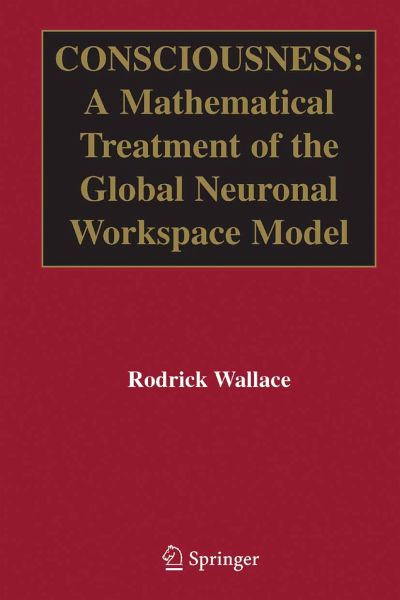
This book makes formal, detailed application of "the informational turn in philosophy" to the global neuronal workspace (GNW) model of consciousness. It uses an extended statistical model of cognitive process to incorporate the effects of embedding physiological, social, and cultural contextual constraints which operate more slowly than the workspace itself, but severely limit the possible realms available to that workspace, and hence to consciousness itself. This is the first formal, comprehensive, and reasonably rigorous, mathematical treatment of the GNW and is the only one to include the effects of embedding contexts in a 'natural' manner.
Dieser Download kann aus rechtlichen Gründen nur mit Rechnungsadresse in A, B, BG, CY, CZ, D, DK, EW, E, FIN, F, GR, HR, H, IRL, I, LT, L, LR, M, NL, PL, P, R, S, SLO, SK ausgeliefert werden.
From the reviews:
"To formulate a serious, clear-cut and transparent formal framework for cognitive neuroscience is a challenge ... . I think that Wallace's book presents an appreciable step in the right direction. ... Beyond references that are necessary for basic elements of his work, the author has put together additional interesting reading material ... . It is a book that can unfold its potential to well-educated readers with genuinely interdisciplinary ambitions ... ." (Harald Atmanspacher, Acta Biotheoretica, Vol. 54, 2006)
"To formulate a serious, clear-cut and transparent formal framework for cognitive neuroscience is a challenge ... . I think that Wallace's book presents an appreciable step in the right direction. ... Beyond references that are necessary for basic elements of his work, the author has put together additional interesting reading material ... . It is a book that can unfold its potential to well-educated readers with genuinely interdisciplinary ambitions ... ." (Harald Atmanspacher, Acta Biotheoretica, Vol. 54, 2006)