80,95 €
80,95 €
inkl. MwSt.
Sofort per Download lieferbar

40 °P sammeln
80,95 €
Als Download kaufen
80,95 €
inkl. MwSt.
Sofort per Download lieferbar
40 °P sammeln
Jetzt verschenken
Alle Infos zum eBook verschenken
80,95 €
inkl. MwSt.
Sofort per Download lieferbar
Alle Infos zum eBook verschenken
40 °P sammeln

Andere Kunden interessierten sich auch für
") Debating the American Conservative Movement (eBook, PDF)24,95 €
Debating the American Conservative Movement (eBook, PDF)24,95 €") Conservative Americanism (eBook, ePUB)80,95 €
Conservative Americanism (eBook, ePUB)80,95 €") Lincoln's Enduring Legacy (eBook, PDF)82,95 €
Lincoln's Enduring Legacy (eBook, PDF)82,95 €") The Brave Men of Company A (eBook, PDF)62,95 €
The Brave Men of Company A (eBook, PDF)62,95 €") A House Built by Slaves (eBook, PDF)12,95 €
A House Built by Slaves (eBook, PDF)12,95 €") Americanization and Anti-americanism (eBook, PDF)29,95 €
Americanization and Anti-americanism (eBook, PDF)29,95 €") Confederates against the Confederacy (eBook, PDF)58,95 €
Confederates against the Confederacy (eBook, PDF)58,95 €
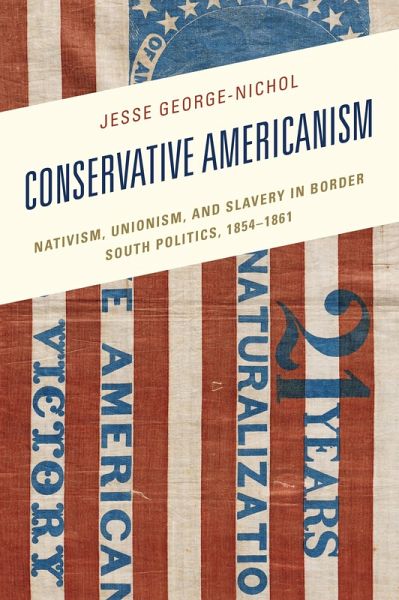
Conservative Americanism: Nativism, Unionism, and Slavery in Border South Politics, 1854-1861 explores the rise of Conservative Americanism-an ideology that linked the worsening sectional crisis of the 1850s to the country's growing immigrant population-among former Whigs in the Border South. Jesse George-Nichol challenges the prevailing wisdom that Unionism, rather than genuine nativism, drove these Southerners to join the nativist Know Nothing or American Party. She argues that Southern nativism and Unionism were inextricably linked, bound by a conviction that foreigners and foreign ideas posed a threat to slavery. Southern moderates understood that immigrants were responsible for the growing political imbalance between the free and slave states, and after the Kansas-Nebraska crisis, they came to believe that foreign radicalism was central to the mounting animus against slavery in the North and West. These Southerners increasingly saw the sectional conflict as one that not only pitted Northerners against Southerners and freedom against slavery, but also as a collision between native American moderation and foreign fanaticism. This perception continued to motivate Southern Know Nothings through the election of 1860, the secession crisis, and beyond. This book sheds new light on the relationships between conservatism, nativism, Unionism, and slavery in Border South politics before the Civil War. George-Nichol thus argues that understanding Southern nativism is essential to understanding Southern Unionism in the Civil War-era.