
25,95 €
inkl. MwSt.
Sofort per Download lieferbar
13 °P sammeln

Andere Kunden interessierten sich auch für
") A Lot of People Are Saying (eBook, ePUB)9,95 €
A Lot of People Are Saying (eBook, ePUB)9,95 €") Illuminati: los amos que controlan el mundo (eBook, ePUB)9,49 €
Illuminati: los amos que controlan el mundo (eBook, ePUB)9,49 €") Solidarity in Contingency (eBook, ePUB)4,99 €
Solidarity in Contingency (eBook, ePUB)4,99 €") Mind Hacked: How an Extraterrestrial Computer-Brain Interface Gave Me Insight Into Their Civilization (eBook, ePUB)8,99 €
Mind Hacked: How an Extraterrestrial Computer-Brain Interface Gave Me Insight Into Their Civilization (eBook, ePUB)8,99 € (eBook, ePUB)") Thoughts on Post Truth Politics and Magical Thinking (Ramsey Dukes' Thoughts On series, #2) (eBook, ePUB)7,49 €
Thoughts on Post Truth Politics and Magical Thinking (Ramsey Dukes' Thoughts On series, #2) (eBook, ePUB)7,49 €") Matrix Conspiracy - Part 1 (eBook, ePUB)16,95 €
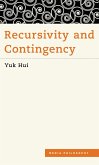
Matrix Conspiracy - Part 1 (eBook, ePUB)16,95 €") Recursivity and Contingency (eBook, ePUB)31,95 €
Recursivity and Contingency (eBook, ePUB)31,95 €




What do conspiracy theories, algorithms and meritocracy have in common? All three avoid contingency and frantically look for necessities. The COVID-19 crisis has brought about a proliferation of conspiracy theories that reject, among other things, official accounts of the virus's origins and remedies, and sometimes even the existence of the virus itself. Conspiratorial thinking usually links events to secret plots concocted by powerful conspirators, whether it be Bill Gates or Big Pharma. In this book, I point to another dominant driving force: the desire to find simple and apparently reasonable explanations for phenomena that are actually purely random and contingent. Often, unfounded conspiracy theories emerge because contingency is not accepted, and necessities are looked for at all costs. Nothing happens by chance, and there must be a plan or an intelligent design behind everything.
This book deals with 'contingency phobia'. This special phobia is not only manifest in most unwarranted conspiracy theories, but it also appears, in Western culture, as a recurrent psychological, cognitive and scientific pattern. It is the cause of a variety of other phenomena that have become emblematic for liberal democracies, such as the contemporary algorithm culture or the obsession with merit and ranking. Not only the conspiratorial mindset rejects a world of contingency and strives to create a universe structured by a necessary order; life coaches, algorithm engineers and neoliberal meritocrats all do the same. This book analyses these phenomena by using the same criteria: how do humans deal with contingency and how do they try to establish necessities?
Some philosophies, such as Daoism and Zen Buddhism, make unwarranted conspiracy theories quasi-impossible because they find original ways of combining contingency with ontological, theological or cosmological premises. I identify sources that other disciplines examining conspiracy theories, for example, political science, anthropology, psychology or sociology, have rarely seen as primary. Political scientists focus on the macro level and construe conspiracy theories mostly as national or regional phenomena whereas anthropologists, psychologists and sociologists tend to focus on the micro level. The present study is an example of practical philosophy depicting conspiratorial thinking as an organic or a dynamic phenomenon by crystallising cognitive and cultural 'necessity-contingency patterns' that can be found in politics, culture, religion and science.
This book deals with 'contingency phobia'. This special phobia is not only manifest in most unwarranted conspiracy theories, but it also appears, in Western culture, as a recurrent psychological, cognitive and scientific pattern. It is the cause of a variety of other phenomena that have become emblematic for liberal democracies, such as the contemporary algorithm culture or the obsession with merit and ranking. Not only the conspiratorial mindset rejects a world of contingency and strives to create a universe structured by a necessary order; life coaches, algorithm engineers and neoliberal meritocrats all do the same. This book analyses these phenomena by using the same criteria: how do humans deal with contingency and how do they try to establish necessities?
Some philosophies, such as Daoism and Zen Buddhism, make unwarranted conspiracy theories quasi-impossible because they find original ways of combining contingency with ontological, theological or cosmological premises. I identify sources that other disciplines examining conspiracy theories, for example, political science, anthropology, psychology or sociology, have rarely seen as primary. Political scientists focus on the macro level and construe conspiracy theories mostly as national or regional phenomena whereas anthropologists, psychologists and sociologists tend to focus on the micro level. The present study is an example of practical philosophy depicting conspiratorial thinking as an organic or a dynamic phenomenon by crystallising cognitive and cultural 'necessity-contingency patterns' that can be found in politics, culture, religion and science.
Dieser Download kann aus rechtlichen Gründen nur mit Rechnungsadresse in A, D ausgeliefert werden.