
39,95 €
inkl. MwSt.
Sofort per Download lieferbar
20 °P sammeln

Andere Kunden interessierten sich auch für
") Contemporary American Science Fiction Film (eBook, ePUB)39,95 €
Contemporary American Science Fiction Film (eBook, ePUB)39,95 €") Cinema and Surveillance (eBook, PDF)21,95 €
Cinema and Surveillance (eBook, PDF)21,95 €") The Body in Jean-Luc Godard's New Wave Films (eBook, PDF)18,95 €
The Body in Jean-Luc Godard's New Wave Films (eBook, PDF)18,95 €") Gothic Cinema (eBook, PDF)25,95 €
Gothic Cinema (eBook, PDF)25,95 €") Translating Silent Cinema (eBook, PDF)42,95 €
Translating Silent Cinema (eBook, PDF)42,95 €") Flashbacks in Film (eBook, PDF)39,95 €
Flashbacks in Film (eBook, PDF)39,95 €") Breaking Down Joker (eBook, PDF)39,95 €
Breaking Down Joker (eBook, PDF)39,95 €
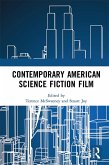

Contemporary American Science Fiction Film explores and interrogates a diverse variety of popular and culturally relevant American science fiction films made in the first two decades of the new millennium, offering a ground-breaking investigation of the impactful role of genre cinema in the modern era.
Placing one of the most popular and culturally resonant American film genres broadly within its rich social, historical, industrial, and political context, the book interrogates some of the defining critical debates of the era via an in-depth analysis of a range of important films. An international team of authors draw on case studies from across the science fiction genre to examine what these films can tell us about the time period, how the films themselves connect to the social and political context, how the fears and anxieties they portray resonate beyond the screen, and how the genre responds to the shifting coordinates of the Hollywood film industry.
Offering new insights and perspectives on the cinematic science fiction genre, this volume will appeal primarily to scholars and students of film, television, cultural and media studies, as well as anyone interested in science fiction and speculative film.
Placing one of the most popular and culturally resonant American film genres broadly within its rich social, historical, industrial, and political context, the book interrogates some of the defining critical debates of the era via an in-depth analysis of a range of important films. An international team of authors draw on case studies from across the science fiction genre to examine what these films can tell us about the time period, how the films themselves connect to the social and political context, how the fears and anxieties they portray resonate beyond the screen, and how the genre responds to the shifting coordinates of the Hollywood film industry.
Offering new insights and perspectives on the cinematic science fiction genre, this volume will appeal primarily to scholars and students of film, television, cultural and media studies, as well as anyone interested in science fiction and speculative film.
Dieser Download kann aus rechtlichen Gründen nur mit Rechnungsadresse in A, B, BG, CY, CZ, D, DK, EW, E, FIN, F, GR, HR, H, IRL, I, LT, L, LR, M, NL, PL, P, R, S, SLO, SK ausgeliefert werden.
"Contemporary American Science Fiction Film is an outstanding collection of essays on the power and provocation of those future orientated films that nonetheless conjure up the maelstrom of what it is like to dream and despair in the first two decades of the new millennium. Covering blockbuster, transmedia and independent science fiction film, the collection examines the long and refracted lens of the present through its concern with the geopolitical, the technological, the deadly traumatic, and the precariat economic. It also senses science fiction and the way it troubles selfhood and identity, so the intimate and the personal are woven into the collection's articulations. With standout chapters on Arrival, Children of Men, Annihilation, and Black Panther, amongst others, Contemporary American Science Fiction Film is a profoundly important text for all time, or for as long as this world has left to live..."
Professor Sean Redmond, Deakin University, Australia
"McSweeney and Joy's Contemporary American Science Fiction Film provides a fascinating foray into the strange and exciting allegorical world of science fiction film over the past two decades. The collection covers a key selection of widely popular films, from Black Panther to Blade Runner 2049, from Star Wars to Planet of the Apes. It is also a wide-ranging cultural and political history of the United States in the 21st century, providing deep explorations of the latent meanings and emotional resonances of the films, of their imagery, and of what they reveal about the sociopolitical worlds within which they were dreamt and projected."
Jeremiah Morelock, Boston College, USA
"Framing science fiction as the "allegorical mode" in 21st century cinema, Contemporary American Science Fiction Film ranges widely across the cultural landscape, tackling the War on Terror, "9/11," global warming, a politicized media, diversity and inclusion efforts, and other defining moments and movements. The collection matches these haunting components of the cultural imaginary with the latest science fiction cinema in consistently stimulating ways. Voicing that treatment are a number of the genre's most eloquent and considered commentators, who here demonstrate not just science fiction's widespread popularity, but the crucial cultural function it serves for us today."
J. P. Telotte, Professor Emeritus, Georgia Institute of Technology, USA
Including case studies of various motion pictures, Contemporary American Science Fiction Film offers a superb investigation of the science fiction genre. McSweeney and Joy (both, Southampton Solent Univ., UK) argue that "science fiction films have often been both a valuable witness to and [an] interrogator of key moments of ideological tension" and that science fiction, working as allegory, possesses the ability to "manifest aspects of the cultural imaginary, which ... become[s] problematic to express explicitly in their political and social climates" (p. 1). Each of the 12 chapters centers on a film and explores how the film reflects its time of creation, works as a cultural artifact linked to historical moments, and expresses larger cultural anxieties. Treating films such as Children of Men (2006) and Interstellar (2014), the essays, all by eminent scholars, decipher the fictional worlds of time loops, alternative histories, clones, and dystopias. Of particular note are Carol Donelan's examination of the Planet of the Apes reboot franchise; Andrew Schopp's reading of the eco-horror film Annihilation (2018) as hybridization, anxiety, and destruction in American identity; and Paul Petrovic's interpretation of the dark comedy Sorry to Bother You (2018). Taken together, these essays contribute greatly to film scholarship and make for a solid text for science fiction film courses.
--S. B. Skelton, Kansas State University, CHOICE
Professor Sean Redmond, Deakin University, Australia
"McSweeney and Joy's Contemporary American Science Fiction Film provides a fascinating foray into the strange and exciting allegorical world of science fiction film over the past two decades. The collection covers a key selection of widely popular films, from Black Panther to Blade Runner 2049, from Star Wars to Planet of the Apes. It is also a wide-ranging cultural and political history of the United States in the 21st century, providing deep explorations of the latent meanings and emotional resonances of the films, of their imagery, and of what they reveal about the sociopolitical worlds within which they were dreamt and projected."
Jeremiah Morelock, Boston College, USA
"Framing science fiction as the "allegorical mode" in 21st century cinema, Contemporary American Science Fiction Film ranges widely across the cultural landscape, tackling the War on Terror, "9/11," global warming, a politicized media, diversity and inclusion efforts, and other defining moments and movements. The collection matches these haunting components of the cultural imaginary with the latest science fiction cinema in consistently stimulating ways. Voicing that treatment are a number of the genre's most eloquent and considered commentators, who here demonstrate not just science fiction's widespread popularity, but the crucial cultural function it serves for us today."
J. P. Telotte, Professor Emeritus, Georgia Institute of Technology, USA
Including case studies of various motion pictures, Contemporary American Science Fiction Film offers a superb investigation of the science fiction genre. McSweeney and Joy (both, Southampton Solent Univ., UK) argue that "science fiction films have often been both a valuable witness to and [an] interrogator of key moments of ideological tension" and that science fiction, working as allegory, possesses the ability to "manifest aspects of the cultural imaginary, which ... become[s] problematic to express explicitly in their political and social climates" (p. 1). Each of the 12 chapters centers on a film and explores how the film reflects its time of creation, works as a cultural artifact linked to historical moments, and expresses larger cultural anxieties. Treating films such as Children of Men (2006) and Interstellar (2014), the essays, all by eminent scholars, decipher the fictional worlds of time loops, alternative histories, clones, and dystopias. Of particular note are Carol Donelan's examination of the Planet of the Apes reboot franchise; Andrew Schopp's reading of the eco-horror film Annihilation (2018) as hybridization, anxiety, and destruction in American identity; and Paul Petrovic's interpretation of the dark comedy Sorry to Bother You (2018). Taken together, these essays contribute greatly to film scholarship and make for a solid text for science fiction film courses.
--S. B. Skelton, Kansas State University, CHOICE