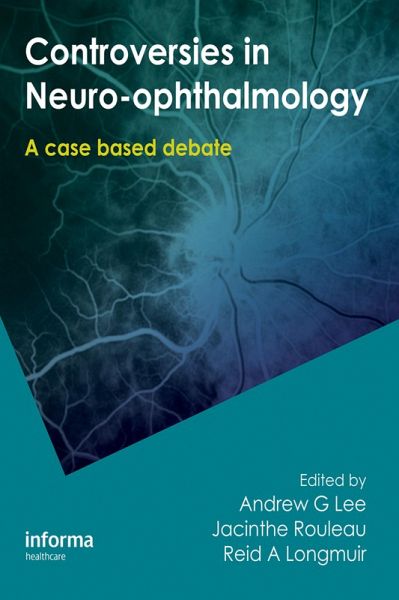
Controversies in Neuro-Ophthalmology (eBook, ePUB)
Redaktion: Lee, Andrew G.; Longmuir, Reid; Rouleau, Jacinthe
61,95 €
61,95 €
inkl. MwSt.
Sofort per Download lieferbar

31 °P sammeln
61,95 €
Als Download kaufen
61,95 €
inkl. MwSt.
Sofort per Download lieferbar
31 °P sammeln
Jetzt verschenken
Alle Infos zum eBook verschenken
61,95 €
inkl. MwSt.
Sofort per Download lieferbar
Alle Infos zum eBook verschenken
31 °P sammeln

Controversies in Neuro-Ophthalmology (eBook, ePUB)
Redaktion: Lee, Andrew G.; Longmuir, Reid; Rouleau, Jacinthe
- Format: ePub
- Merkliste
- Auf die Merkliste
- Bewerten Bewerten
- Teilen
- Produkt teilen
- Produkterinnerung
- Produkterinnerung

Bitte loggen Sie sich zunächst in Ihr Kundenkonto ein oder registrieren Sie sich bei
bücher.de, um das eBook-Abo tolino select nutzen zu können.
Hier können Sie sich einloggen
Sie sind bereits eingeloggt. Klicken Sie auf 2. tolino select Abo, um fortzufahren.

Bitte loggen Sie sich zunächst in Ihr Kundenkonto ein oder registrieren Sie sich bei bücher.de, um das eBook-Abo tolino select nutzen zu können.
Neuro-ophthalmology, like in any field of medicine, has many areas where controversy exists in diagnosis and treatment. Controversies in Neuro-Ophthalmology provides a comprehensive overview on the clinical presentation, diagnosis, and management of neuro-ophthalmic disorders and specifically addresses areas where there is a general lack of consens
- Geräte: eReader
- mit Kopierschutz
- eBook Hilfe
- Größe: 16.61MB
Andere Kunden interessierten sich auch für
The Superior Colliculus (eBook, ePUB)186,95 €
Controversies in Neuro-Ophthalmology (eBook, PDF)61,95 €
Amyloid and Amyloidosis (eBook, ePUB)61,95 €
Neurology of Vision and Visual Disorders (eBook, ePUB)175,95 €
Mark A. MentzerMild Traumatic Brain Injury (eBook, ePUB)49,95 €
Alzheimer's Disease (eBook, ePUB)206,95 €
Parkinson's Disease (eBook, ePUB)61,95 €-
-
-
Neuro-ophthalmology, like in any field of medicine, has many areas where controversy exists in diagnosis and treatment. Controversies in Neuro-Ophthalmology provides a comprehensive overview on the clinical presentation, diagnosis, and management of neuro-ophthalmic disorders and specifically addresses areas where there is a general lack of consens
Dieser Download kann aus rechtlichen Gründen nur mit Rechnungsadresse in A, B, BG, CY, CZ, D, DK, EW, E, FIN, F, GR, HR, H, IRL, I, LT, L, LR, M, NL, PL, P, R, S, SLO, SK ausgeliefert werden.
Produktdetails
- Produktdetails
- Verlag: Taylor & Francis eBooks
- Seitenzahl: 120
- Erscheinungstermin: 19. April 2016
- Englisch
- ISBN-13: 9781040209790
- Artikelnr.: 72524683
- Verlag: Taylor & Francis eBooks
- Seitenzahl: 120
- Erscheinungstermin: 19. April 2016
- Englisch
- ISBN-13: 9781040209790
- Artikelnr.: 72524683
- Herstellerkennzeichnung Die Herstellerinformationen sind derzeit nicht verfügbar.
Andrew G Lee, Jacinthe Rouleau, Reid Longmuir
1. Should a patient with unexplained isolated optic atrophy have
neuroimaging and further laboratory evaluation?
2. Should a young patient with a new diagnosis of optic neuritis have
testing and treatment for multiple sclerosis (MS)?
3. Should a patient with optic disc edema with macular star figure
(neuroretinitis) have lab testing and treatment?
4. Should a vasculoplastic patient with non arteritic anterior ischemic
optic neuropathy have any testing?
5. What is the treatment for giant cell arteritis?
6. Should I do a bilateral or unilateral temporal artery biopsy in
suspected giant cell arteritis?
7. Should I treat traumatic optic neuropathy?
8. Should I do a MRI or MR venogram in every patient with pseudotumor
cerebri?
9. Should we perform carotid Doppler and cardiac echo on young patients
with transient visual loss?
10. What is the best visual field test for neuro-ophthalmology?
11. Does visual rehabilitation therapy (e.g. Novavision) help patients with
homonymous hemianopsia
12. Should a patient with a pupil involved third nerve palsy have an
angiogram is the MRA or CTA are negative?
13. Do erectile dysfunction agents cause anterior ischemic optic
neuropathy?
14. Does amiodarone produce an optic neuropathy?
15. Should I start my patient with myasthenia gravis on steroids to reduce
the chance of generalized myasthenia gravis?
16. Does radiation therapy work for thyroid ophthalmopathy?
17. Should I do topical pharmacologic testing in the Horner syndrome?
18. Should a patient with giant cell arteritis have a fluorescein
angiogram?
19. Does pseudotumor cerebri without papilledema exist?
20. Does a patient with an isolated vasculopathic ocular motor cranial
nerve palsy need a neuroimaging study?
neuroimaging and further laboratory evaluation?
2. Should a young patient with a new diagnosis of optic neuritis have
testing and treatment for multiple sclerosis (MS)?
3. Should a patient with optic disc edema with macular star figure
(neuroretinitis) have lab testing and treatment?
4. Should a vasculoplastic patient with non arteritic anterior ischemic
optic neuropathy have any testing?
5. What is the treatment for giant cell arteritis?
6. Should I do a bilateral or unilateral temporal artery biopsy in
suspected giant cell arteritis?
7. Should I treat traumatic optic neuropathy?
8. Should I do a MRI or MR venogram in every patient with pseudotumor
cerebri?
9. Should we perform carotid Doppler and cardiac echo on young patients
with transient visual loss?
10. What is the best visual field test for neuro-ophthalmology?
11. Does visual rehabilitation therapy (e.g. Novavision) help patients with
homonymous hemianopsia
12. Should a patient with a pupil involved third nerve palsy have an
angiogram is the MRA or CTA are negative?
13. Do erectile dysfunction agents cause anterior ischemic optic
neuropathy?
14. Does amiodarone produce an optic neuropathy?
15. Should I start my patient with myasthenia gravis on steroids to reduce
the chance of generalized myasthenia gravis?
16. Does radiation therapy work for thyroid ophthalmopathy?
17. Should I do topical pharmacologic testing in the Horner syndrome?
18. Should a patient with giant cell arteritis have a fluorescein
angiogram?
19. Does pseudotumor cerebri without papilledema exist?
20. Does a patient with an isolated vasculopathic ocular motor cranial
nerve palsy need a neuroimaging study?
1. Should a patient with unexplained isolated optic atrophy have
neuroimaging and further laboratory evaluation?
2. Should a young patient with a new diagnosis of optic neuritis have
testing and treatment for multiple sclerosis (MS)?
3. Should a patient with optic disc edema with macular star figure
(neuroretinitis) have lab testing and treatment?
4. Should a vasculoplastic patient with non arteritic anterior ischemic
optic neuropathy have any testing?
5. What is the treatment for giant cell arteritis?
6. Should I do a bilateral or unilateral temporal artery biopsy in
suspected giant cell arteritis?
7. Should I treat traumatic optic neuropathy?
8. Should I do a MRI or MR venogram in every patient with pseudotumor
cerebri?
9. Should we perform carotid Doppler and cardiac echo on young patients
with transient visual loss?
10. What is the best visual field test for neuro-ophthalmology?
11. Does visual rehabilitation therapy (e.g. Novavision) help patients with
homonymous hemianopsia
12. Should a patient with a pupil involved third nerve palsy have an
angiogram is the MRA or CTA are negative?
13. Do erectile dysfunction agents cause anterior ischemic optic
neuropathy?
14. Does amiodarone produce an optic neuropathy?
15. Should I start my patient with myasthenia gravis on steroids to reduce
the chance of generalized myasthenia gravis?
16. Does radiation therapy work for thyroid ophthalmopathy?
17. Should I do topical pharmacologic testing in the Horner syndrome?
18. Should a patient with giant cell arteritis have a fluorescein
angiogram?
19. Does pseudotumor cerebri without papilledema exist?
20. Does a patient with an isolated vasculopathic ocular motor cranial
nerve palsy need a neuroimaging study?
neuroimaging and further laboratory evaluation?
2. Should a young patient with a new diagnosis of optic neuritis have
testing and treatment for multiple sclerosis (MS)?
3. Should a patient with optic disc edema with macular star figure
(neuroretinitis) have lab testing and treatment?
4. Should a vasculoplastic patient with non arteritic anterior ischemic
optic neuropathy have any testing?
5. What is the treatment for giant cell arteritis?
6. Should I do a bilateral or unilateral temporal artery biopsy in
suspected giant cell arteritis?
7. Should I treat traumatic optic neuropathy?
8. Should I do a MRI or MR venogram in every patient with pseudotumor
cerebri?
9. Should we perform carotid Doppler and cardiac echo on young patients
with transient visual loss?
10. What is the best visual field test for neuro-ophthalmology?
11. Does visual rehabilitation therapy (e.g. Novavision) help patients with
homonymous hemianopsia
12. Should a patient with a pupil involved third nerve palsy have an
angiogram is the MRA or CTA are negative?
13. Do erectile dysfunction agents cause anterior ischemic optic
neuropathy?
14. Does amiodarone produce an optic neuropathy?
15. Should I start my patient with myasthenia gravis on steroids to reduce
the chance of generalized myasthenia gravis?
16. Does radiation therapy work for thyroid ophthalmopathy?
17. Should I do topical pharmacologic testing in the Horner syndrome?
18. Should a patient with giant cell arteritis have a fluorescein
angiogram?
19. Does pseudotumor cerebri without papilledema exist?
20. Does a patient with an isolated vasculopathic ocular motor cranial
nerve palsy need a neuroimaging study?