19,99 €
inkl. MwSt.
Sofort per Download lieferbar
0 °P sammeln

Andere Kunden interessierten sich auch für
") Cork (eBook, ePUB)19,99 €
Cork (eBook, ePUB)19,99 €") The Story of the Cotton Plant (eBook, ePUB)19,99 €
The Story of the Cotton Plant (eBook, ePUB)19,99 €") Bamboo, Considered as a Paper-making Material (eBook, ePUB)19,99 €
Bamboo, Considered as a Paper-making Material (eBook, ePUB)19,99 €") Spices (eBook, ePUB)19,99 €
Spices (eBook, ePUB)19,99 €") Getting Gold (eBook, ePUB)19,99 €
Getting Gold (eBook, ePUB)19,99 €") Leather (eBook, ePUB)19,99 €
Leather (eBook, ePUB)19,99 €") Pulp and Paper Magazine (eBook, ePUB)19,99 €
Pulp and Paper Magazine (eBook, ePUB)19,99 €
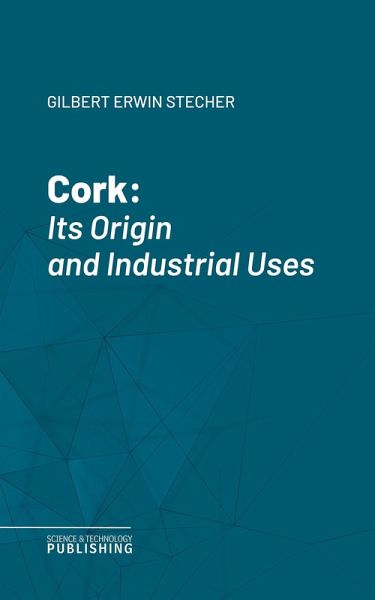
Cork: Its Origin and Industrial Uses is a comprehensive exploration of the natural material cork, delving into its botanical origins, methods of harvesting, and wide-ranging applications in industry. The book begins by tracing the history and geographical distribution of the cork oak (Quercus suber), primarily found in the Mediterranean region, and describes the unique biological properties that make cork such a valuable resource. Readers are guided through the process of cork extraction, from the careful stripping of bark to the sustainable management of cork forests, emphasizing the importance of environmental stewardship. The text provides detailed accounts of the physical and chemical characteristics of cork, explaining its remarkable elasticity, impermeability, and insulating properties. These qualities have made cork indispensable in a variety of industries, most notably in the production of wine bottle stoppers, but also in insulation, flooring, flotation devices, and even in the manufacture of specialized machinery components. The book examines the evolution of cork processing techniques, from traditional handcrafting to modern mechanized methods, and discusses the economic significance of cork production for countries like Portugal and Spain. In addition to its industrial uses, the book touches on the cultural and historical significance of cork, including its role in ancient civilizations and its continued relevance in contemporary society. Illustrated with diagrams and photographs, Cork: Its Origin and Industrial Uses serves as both a scientific treatise and a practical guide, offering valuable insights for botanists, industrialists, and anyone interested in the sustainable use of natural resources.
Dieser Download kann aus rechtlichen Gründen nur mit Rechnungsadresse in A, B, BG, CY, CZ, D, DK, EW, E, FIN, F, GR, HR, H, IRL, I, LT, L, LR, M, NL, PL, P, R, S, SLO, SK ausgeliefert werden.