45,95 €
inkl. MwSt.
Sofort per Download lieferbar
23 °P sammeln

Andere Kunden interessierten sich auch für
") Money Laundering Blacklists (eBook, PDF)41,95 €
Money Laundering Blacklists (eBook, PDF)41,95 €") Corporate Crime (eBook, ePUB)45,95 €
Corporate Crime (eBook, ePUB)45,95 €") Corporate Criminality and Liability for Fraud (eBook, PDF)44,95 €
Corporate Criminality and Liability for Fraud (eBook, PDF)44,95 €") Fraud Examinations in White-Collar Crime Investigations (eBook, PDF)41,95 €
Fraud Examinations in White-Collar Crime Investigations (eBook, PDF)41,95 €") Lawyers and the Proceeds of Crime (eBook, PDF)44,95 €
Lawyers and the Proceeds of Crime (eBook, PDF)44,95 €") The Private Sector and Organized Crime (eBook, PDF)41,95 €
The Private Sector and Organized Crime (eBook, PDF)41,95 €") Negotiating Class in Youth Justice (eBook, PDF)41,95 €
Negotiating Class in Youth Justice (eBook, PDF)41,95 €


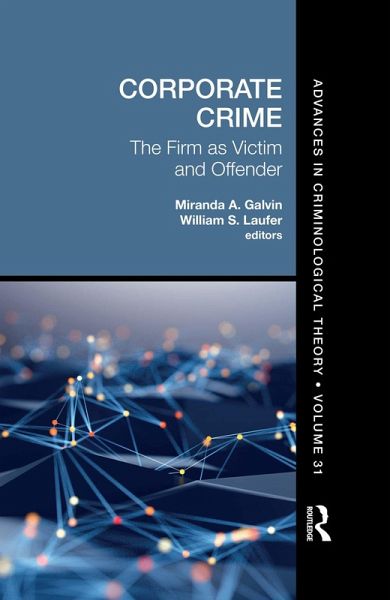
This volume speaks to the fundamental issues inherent in trying to understand the who-what-where-and-whys of corporate crime. Only in addressing these larger issues does it become possible to begin to integrate the study of corporate crime into the larger criminological theory literature. A collection of chapters by experts in the field grapples with three deceptively simple questions:
In the first section, chapter authors wrestle with what it means for a corporation to have agency enough to commit a violation of law as well as what philosophies of punishment might apply when there is no body to jail. The second section focuses attention on the often unnamed, ambiguous, or even ignored victims of corporate crime. Many authors in this section take a broad view of "victimization," speaking to the ways in which the intentional acts of corporations produce negative consequences for individuals and society at large through both the violation of law and the use of corporate power to produce laws that do not problematize corporate behavior. The third section turns to issues in corporate offending research, including the circumstances that beget offending, how corporations may be thought to have "life courses," and the role of the State in structuring criminal opportunity. The editors wrap up the volume by proposing a framework for developing a more comprehensive system of criminal responsibility for corporate actors.
The chapters in this volume underscore the failures of the current system and are intended to inspire readers to push for change. This important work will be of interest to a wide range of criminologists and has potential to shape the future of corporate crime theory and research. It is ideal for use in graduate seminars and upper-level undergraduate courses.
- When are firms morally and legally responsible agents?
- What are the harms of corporate wrongdoing and who are the victims?
- What theories offer insight to explain corporate wrongdoing?
In the first section, chapter authors wrestle with what it means for a corporation to have agency enough to commit a violation of law as well as what philosophies of punishment might apply when there is no body to jail. The second section focuses attention on the often unnamed, ambiguous, or even ignored victims of corporate crime. Many authors in this section take a broad view of "victimization," speaking to the ways in which the intentional acts of corporations produce negative consequences for individuals and society at large through both the violation of law and the use of corporate power to produce laws that do not problematize corporate behavior. The third section turns to issues in corporate offending research, including the circumstances that beget offending, how corporations may be thought to have "life courses," and the role of the State in structuring criminal opportunity. The editors wrap up the volume by proposing a framework for developing a more comprehensive system of criminal responsibility for corporate actors.
The chapters in this volume underscore the failures of the current system and are intended to inspire readers to push for change. This important work will be of interest to a wide range of criminologists and has potential to shape the future of corporate crime theory and research. It is ideal for use in graduate seminars and upper-level undergraduate courses.
Dieser Download kann aus rechtlichen Gründen nur mit Rechnungsadresse in A, B, BG, CY, CZ, D, DK, EW, E, FIN, F, GR, HR, H, IRL, I, LT, L, LR, M, NL, PL, P, R, S, SLO, SK ausgeliefert werden.