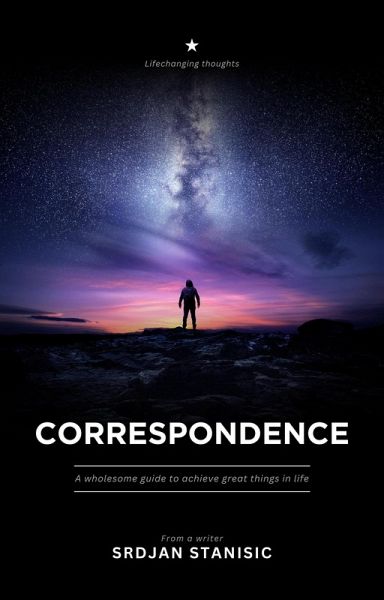
2,99 €
inkl. MwSt.
Sofort per Download lieferbar
0 °P sammeln

Andere Kunden interessierten sich auch für
 (eBook, ePUB)") The Outflow (Srdjan Stanisic's Short Stories, #1) (eBook, ePUB)2,99 €
The Outflow (Srdjan Stanisic's Short Stories, #1) (eBook, ePUB)2,99 € (eBook, ePUB)") La Mariée par Correspondance de la Rock Star (Romance Île Resort, #2) (eBook, ePUB)6,99 €
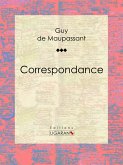
La Mariée par Correspondance de la Rock Star (Romance Île Resort, #2) (eBook, ePUB)6,99 €") Correspondance (eBook, ePUB)4,99 €
Correspondance (eBook, ePUB)4,99 €") Seoska uciteljica (eBook, ePUB)3,99 €
Seoska uciteljica (eBook, ePUB)3,99 €") Lettres de mon moulin (eBook, ePUB)9,99 €
Lettres de mon moulin (eBook, ePUB)9,99 €") Correspondance (eBook, ePUB)9,99 €
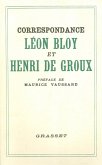
Correspondance (eBook, ePUB)9,99 €") Correspondance Léon Bloy et Henri de Groux (eBook, ePUB)5,99 €
Correspondance Léon Bloy et Henri de Groux (eBook, ePUB)5,99 €


In a remote Serbian village near RaSka, a grandson reflects on the life of his grandfather, Rade-a meticulous man who spent his years laboring in Munich, raising his sons with discipline, and carrying the legacy of the Stanisici clan from NikSic, Montenegro. Their history is one of war, intermarriage, and survival under Ottoman rule. But this is more than a family chronicle; it is a metaphysical journey through faith, science, and the contradictions of human nature.
A summer storm becomes a divine omen when lightning strikes twice-a warning from St. Elijah the Thunderer. The narrator grapples with Orthodox teachings, the Latin adage "festina lente" (hasten slowly), and the paradox of free will within God's grand design. He rejects Darwin's theory, asserting humanity's creation in God's image, and critiques Nietzsche's Übermensch ideal, citing the philosopher's deathbed doubts.
The narrative shifts between ancestral memories, theological debates, and existential questions: What existed before the Big Bang? Why did dinosaurs-if they were real-perish in self-destruction? Science, the narrator argues, is merely God's way of revealing fragments of His truth. Yet faith remains a choice, for "if God's existence were proven, it would not be faith, but knowledge."
Themes:
Style: Lyrical, contemplative, and rich in folk wisdom, blending personal anecdote with cosmic inquiry.
For readers who enjoy: Philosophical fiction, Slavic storytelling, theological debates, and works that bridge the sacred and the mundane.
A summer storm becomes a divine omen when lightning strikes twice-a warning from St. Elijah the Thunderer. The narrator grapples with Orthodox teachings, the Latin adage "festina lente" (hasten slowly), and the paradox of free will within God's grand design. He rejects Darwin's theory, asserting humanity's creation in God's image, and critiques Nietzsche's Übermensch ideal, citing the philosopher's deathbed doubts.
The narrative shifts between ancestral memories, theological debates, and existential questions: What existed before the Big Bang? Why did dinosaurs-if they were real-perish in self-destruction? Science, the narrator argues, is merely God's way of revealing fragments of His truth. Yet faith remains a choice, for "if God's existence were proven, it would not be faith, but knowledge."
Themes:
- The tension between Orthodox spirituality and modern skepticism.
- Intergenerational legacy and the weight of history.
- The symbolic role of nature (lightning, storms) as divine communication.
- Repentance and the search for meaning in flawed human theories (Darwin, Nietzsche).
Style: Lyrical, contemplative, and rich in folk wisdom, blending personal anecdote with cosmic inquiry.
For readers who enjoy: Philosophical fiction, Slavic storytelling, theological debates, and works that bridge the sacred and the mundane.
Dieser Download kann aus rechtlichen Gründen nur mit Rechnungsadresse in A, B, CY, CZ, D, DK, EW, E, FIN, F, GR, H, IRL, I, LT, L, LR, M, NL, PL, P, R, S, SLO, SK ausgeliefert werden.