
47,95 €
47,95 €
inkl. MwSt.
Sofort per Download lieferbar

24 °P sammeln
47,95 €
Als Download kaufen
47,95 €
inkl. MwSt.
Sofort per Download lieferbar
24 °P sammeln
Jetzt verschenken
Alle Infos zum eBook verschenken
47,95 €
inkl. MwSt.
Sofort per Download lieferbar
Alle Infos zum eBook verschenken
24 °P sammeln

Andere Kunden interessierten sich auch für
") Cosmology (eBook, PDF)47,95 €
Cosmology (eBook, PDF)47,95 €") Cosmology and the Early Universe (eBook, ePUB)47,95 €
Cosmology and the Early Universe (eBook, ePUB)47,95 €") Cosmology for Physicists (eBook, PDF)47,95 €
Cosmology for Physicists (eBook, PDF)47,95 €") Cosmology and the Early Universe (eBook, PDF)47,95 €
Cosmology and the Early Universe (eBook, PDF)47,95 €") The Early Universe (eBook, ePUB)70,95 €
The Early Universe (eBook, ePUB)70,95 €") Introduction to Cosmic Inflation and Dark Energy (eBook, ePUB)47,95 €
Introduction to Cosmic Inflation and Dark Energy (eBook, ePUB)47,95 €") Introduction to Particle Physics and Cosmology (eBook, ePUB)64,95 €
Introduction to Particle Physics and Cosmology (eBook, ePUB)64,95 €
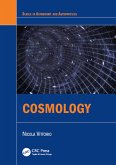

Modern cosmology has changed significantly over the years, from the discovery to the precision measurement era. The data now available provide a wealth of information, mostly consistent with a model where dark matter and dark energy are in a rough proportion of 3:7. The time is right for a fresh new textbook which captures the state-of-the art in cosmology.
Written by one of the world's leading cosmologists, this brand new, thoroughly class-tested textbook provides graduate and undergraduate students with coverage of the very latest developments and experimental results in the field. Prof. Nicola Vittorio shows what is meant by precision cosmology, from both theoretical and observational perspectives.
This book is divided into three main parts:
Carefully adapted from the course taught by Prof. Vittorio at the University of Rome Tor Vergata, this book will be an ideal companion for advanced students undertaking a course in cosmology.
Features:
Written by one of the world's leading cosmologists, this brand new, thoroughly class-tested textbook provides graduate and undergraduate students with coverage of the very latest developments and experimental results in the field. Prof. Nicola Vittorio shows what is meant by precision cosmology, from both theoretical and observational perspectives.
This book is divided into three main parts:
- Part I provides a pedagogical, but rigorous, general relativity-based discussion of cosmological models, showing the evidence for dark energy, the constraints from primordial nucleosynthesis and the need for inflation
- Part II introduces density fluctuations and their statistical description, discussing different theoretical scenarios, such as ¿¿CDM, as well as observations
- Part III introduces the general relativity approach to structure formation and discusses the physics behind the CMB temperature and polarization pattern of the microwave sky
Carefully adapted from the course taught by Prof. Vittorio at the University of Rome Tor Vergata, this book will be an ideal companion for advanced students undertaking a course in cosmology.
Features:
- Incorporates the latest experimental results, at a time of rapid change in this field, with balanced coverage of both theoretical and experimental perspectives
- Each chapter is accompanied by problems, with detailed solutions
- The basics of tensor calculus and GR are given in the appendices
Dieser Download kann aus rechtlichen Gründen nur mit Rechnungsadresse in A, B, BG, CY, CZ, D, DK, EW, E, FIN, F, GR, HR, H, IRL, I, LT, L, LR, M, NL, PL, P, R, S, SLO, SK ausgeliefert werden.
"The material is well presented, the equations are rigorously derived and complemented by the physical insight of an expert in the field, and all chapters are accompanied by useful exercises and their solutions...this book is a valuable and well-written introduction to the very active field of observational cosmology. It will serve as a welcome complement to the current literature in the field and will be very useful, especially for PhD students entering the field of cosmology."
-Ruth Durrer, Department de Physique Theorique, Universite de Geneve
"This textbook provides a full exploration of the developments in cosmological studies over the past hundred years; from the invention of General Relativity (GR) and the somewhat academic earlier exercises of its applications to the Universe, to the present practices of "precision cosmology", as a result of an impressive sequence of extensive observations and discoveries. The text is very clear, well-written throughout, and its various topics are all treated with mathematical rigour.
The book has 14 chapters, which are conveniently organized into three main sections, and each chapter ends with a number of exercises and fully-developed solutions, which provide further tools for a deeper understanding of the subject matters discussed. More than 350 well-selected figures (in black and white) clarify the text's physical assumptions, findings, and formal mathematical treatment. In addition, five appendices illustrate the basic mathematical tools required for a fuller appreciation of the GR theory, which is the foundation at the heart of our present understanding of cosmology. And finally, the bibliography of more than 200 entries will enable the keen student to locate the original works quoted in the text. The contents of the first, and at least parts of the second, section can also be used as a tutorial for students approaching the studies of cosmology, while the remaining parts of the textbook
-Ruth Durrer, Department de Physique Theorique, Universite de Geneve
"This textbook provides a full exploration of the developments in cosmological studies over the past hundred years; from the invention of General Relativity (GR) and the somewhat academic earlier exercises of its applications to the Universe, to the present practices of "precision cosmology", as a result of an impressive sequence of extensive observations and discoveries. The text is very clear, well-written throughout, and its various topics are all treated with mathematical rigour.
The book has 14 chapters, which are conveniently organized into three main sections, and each chapter ends with a number of exercises and fully-developed solutions, which provide further tools for a deeper understanding of the subject matters discussed. More than 350 well-selected figures (in black and white) clarify the text's physical assumptions, findings, and formal mathematical treatment. In addition, five appendices illustrate the basic mathematical tools required for a fuller appreciation of the GR theory, which is the foundation at the heart of our present understanding of cosmology. And finally, the bibliography of more than 200 entries will enable the keen student to locate the original works quoted in the text. The contents of the first, and at least parts of the second, section can also be used as a tutorial for students approaching the studies of cosmology, while the remaining parts of the textbook