34,95 €
34,95 €
inkl. MwSt.
Sofort per Download lieferbar

17 °P sammeln
34,95 €
Als Download kaufen
34,95 €
inkl. MwSt.
Sofort per Download lieferbar
17 °P sammeln
Jetzt verschenken
Alle Infos zum eBook verschenken
34,95 €
inkl. MwSt.
Sofort per Download lieferbar
Alle Infos zum eBook verschenken
17 °P sammeln

Andere Kunden interessierten sich auch für
") The Music of Theology (eBook, ePUB)42,95 €
The Music of Theology (eBook, ePUB)42,95 €") Sounding the Bookshelf 1501 (eBook, ePUB)4,99 €
Sounding the Bookshelf 1501 (eBook, ePUB)4,99 €") Melisma (eBook, ePUB)65,95 €
Melisma (eBook, ePUB)65,95 €") Composing the World (eBook, ePUB)19,95 €
Composing the World (eBook, ePUB)19,95 €") Music and the Making of Medieval Venice (eBook, ePUB)78,95 €
Music and the Making of Medieval Venice (eBook, ePUB)78,95 €") Singing the News of Death (eBook, ePUB)49,95 €
Singing the News of Death (eBook, ePUB)49,95 €") Mozart in the Woods (eBook, ePUB)5,99 €
Mozart in the Woods (eBook, ePUB)5,99 €


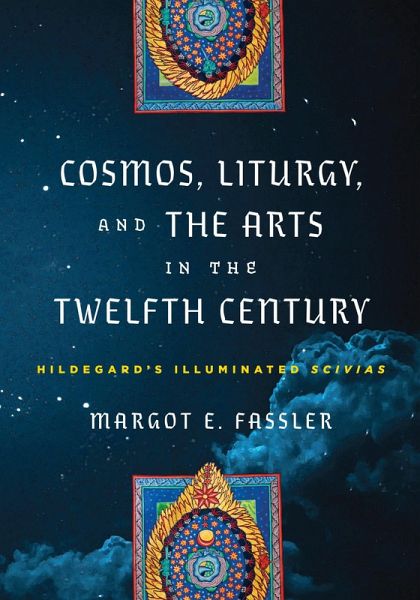
In Cosmos, Liturgy, and the Arts in the Twelfth Century, Margot E. Fassler takes readers into the rich, complex world of Hildegard of Bingen's Scivias (meaning "Know the ways") to explore how medieval thinkers understood and imagined the universe. Hildegard, renowned for her contributions to theology, music, literature, and art, developed unique methods for integrating these forms of thought and expression into a complete vision of the cosmos and of the human journey. Scivias was Hildegard's first major theological work and the only one of her writings that was both illuminated and copied by scribes from her monastery during her lifetime. It contains not just religious visions and theological commentary, but also a shortened version of Hildegard's play Ordo virtutum ("Play of the virtues"), plus the texts of fourteen musical compositions.
These elements of Scivias, Fassler contends, form a coherent whole demonstrating how Hildegard used theology and the liturgical arts to lead and to teach the nuns of her community. Hildegard's visual and sonic images unfold slowly and deliberately, opening up varied paths of knowing. Hildegard and her nuns adapted forms of singing that they believed to be crucial to the reform of the Church in their day and central to the ongoing turning of the heavens and to the nature of time itself. Hildegard's vision of the universe is a "Cosmic Egg," as described in Scivias, filled with strife and striving, and at its center unfolds the epic drama of every human soul, embodied through sound and singing. Though Hildegard's view of the cosmos is far removed from modern understanding, Fassler's analysis reveals how this dynamic cosmological framework from the Middle Ages resonates with contemporary thinking in surprising ways, and underscores the vitality of the arts as embodied modes of theological expression and knowledge.
These elements of Scivias, Fassler contends, form a coherent whole demonstrating how Hildegard used theology and the liturgical arts to lead and to teach the nuns of her community. Hildegard's visual and sonic images unfold slowly and deliberately, opening up varied paths of knowing. Hildegard and her nuns adapted forms of singing that they believed to be crucial to the reform of the Church in their day and central to the ongoing turning of the heavens and to the nature of time itself. Hildegard's vision of the universe is a "Cosmic Egg," as described in Scivias, filled with strife and striving, and at its center unfolds the epic drama of every human soul, embodied through sound and singing. Though Hildegard's view of the cosmos is far removed from modern understanding, Fassler's analysis reveals how this dynamic cosmological framework from the Middle Ages resonates with contemporary thinking in surprising ways, and underscores the vitality of the arts as embodied modes of theological expression and knowledge.
Dieser Download kann aus rechtlichen Gründen nur mit Rechnungsadresse in A, D ausgeliefert werden.