James A. Holstein
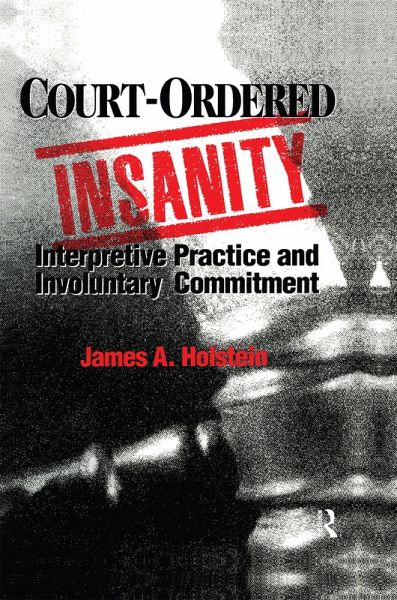
Court-Ordered Insanity (eBook, ePUB)
Interpretive Practice and Involuntary Commitment
44,95 €
44,95 €
inkl. MwSt.
Sofort per Download lieferbar

22 °P sammeln

44,95 €
Als Download kaufen
44,95 €
inkl. MwSt.
Sofort per Download lieferbar
22 °P sammeln
Jetzt verschenken
Alle Infos zum eBook verschenken
44,95 €
inkl. MwSt.
Sofort per Download lieferbar
Alle Infos zum eBook verschenken
22 °P sammeln
James A. Holstein
Court-Ordered Insanity (eBook, ePUB)
Interpretive Practice and Involuntary Commitment
- Format: ePub
- Merkliste
- Auf die Merkliste
- Bewerten Bewerten
- Teilen
- Produkt teilen
- Produkterinnerung
- Produkterinnerung

Bitte loggen Sie sich zunächst in Ihr Kundenkonto ein oder registrieren Sie sich bei
bücher.de, um das eBook-Abo tolino select nutzen zu können.
Hier können Sie sich einloggen
Sie sind bereits eingeloggt. Klicken Sie auf 2. tolino select Abo, um fortzufahren.

Bitte loggen Sie sich zunächst in Ihr Kundenkonto ein oder registrieren Sie sich bei bücher.de, um das eBook-Abo tolino select nutzen zu können.
This book, about involuntary commitment proceedings, focuses on interpretive practice at the nexus of legal, psychiatric, and practical reasoning. It describes the interactional dynamics through which legally and psychiatrically warranted decisions are publicly argued, negotiated, and justified.
- Geräte: eReader
- mit Kopierschutz
- eBook Hilfe
Andere Kunden interessierten sich auch für
George W. FairweatherCommunity Life for the Mentally Ill (eBook, ePUB)51,95 €
Jurgen RueschCommunication (eBook, ePUB)45,95 €
Thomas A. BanConditioning Behavior and Psychiatry (eBook, ePUB)45,95 €
Jemma ToshThe Body and Consent in Psychology, Psychiatry, and Medicine (eBook, ePUB)39,95 €
Andrew SkotnickiInjustice and Prophecy in the Age of Mass Incarceration (eBook, ePUB)31,95 €
Paul A. ObristCardiovascular Psychophysiology (eBook, ePUB)51,95 €
Ronald V. ClarkeSuicide (eBook, ePUB)45,95 €-
-
-
This book, about involuntary commitment proceedings, focuses on interpretive practice at the nexus of legal, psychiatric, and practical reasoning. It describes the interactional dynamics through which legally and psychiatrically warranted decisions are publicly argued, negotiated, and justified.
Dieser Download kann aus rechtlichen Gründen nur mit Rechnungsadresse in A, B, BG, CY, CZ, D, DK, EW, E, FIN, F, GR, HR, H, IRL, I, LT, L, LR, M, NL, PL, P, R, S, SLO, SK ausgeliefert werden.
Produktdetails
- Produktdetails
- Verlag: Taylor & Francis eBooks
- Seitenzahl: 224
- Erscheinungstermin: 13. August 2020
- Englisch
- ISBN-13: 9781000159790
- Artikelnr.: 59888410
- Verlag: Taylor & Francis eBooks
- Seitenzahl: 224
- Erscheinungstermin: 13. August 2020
- Englisch
- ISBN-13: 9781000159790
- Artikelnr.: 59888410
- Herstellerkennzeichnung Die Herstellerinformationen sind derzeit nicht verfügbar.
James A. Holstein is Associate Professor of Sodology, Marquette University. His research brings an ethnomethodologically-informed constructionist perspective to a variety of topics, including mental illness, sodal problems, family, the life course, and dispute processing. Dr. Holstein is coeditor of the research annual, Perspectives on Social Problems, and coauthor (with J. Gubrium) of What Is Family? and Constructing the Life Course. In addition, he is coeditor (with Gale Miller) of Reconsidering Social Constructionism and Constructionist Controversies (both: Aldine de Gruyter, New York).
Acknowledgments
Introduction
1. Interpretive Practice and Involuntary Commitment
Perspectives on Mental Illness
Reality as an Interactional Accomplishment
The Labeling Controversy
Constitutive Analysis
Studying Interpretive Practice
Notes
2. Analyzing Involuntary Commitment
A History of Involuntary Commitment
Contemporary Involuntary Commitment Laws
Research Settings
Commitment Hearings in Brief
Methodological Approach
Notes
3. Decision
Making in Context: Outlook and Orientations
Contingent Factors and Commitment Decisions
Background Assumptions and Orientations
Psychiatry and the Law
Danger or Disability?
Notes
4. The Sequential Organization of Commitment Hearings
Delimiting Legal Proceedings: The Summons
Producing Psychiatric Assessments
Organizing the Patient's Rebuttal
Attorneys' Comments and Summations
Resolution
Interpretive Issues for Involuntary Commitment
Notes
5. The Conversational Organization of Competence and Incompetence
Interactional Competence and Crazy Talk
Organizing Interactional Competence
Organizing Incompetence
Incompetence, Normalcy, and Conversational Practice
Notes
6. Troubles, Tenability, and the Placement of Insanity
Tenability and Troubles
Managing Basic Necessities
The Presence of Competent Caretakers
Cooperation with a Treatment Regime
Placing Insanity: Matching Needs to
Accommodations
Accomplishing Tenability
Tenability and Accountability
Notes
7. Mental Illness Assumptions
Mental Illness Assumptions as Interpretive Schemes
Mental Illness and Credibility
Contextualizing Patients' Performance
Suspending the Assumption
Tenability and Mental Illness
Notes
8. Constructing Tenability: Interpretive Practice in Cultural Context
Producing People
Using Normal Forms
Accomplishing Accommodations: Matching People with Places
Description, Rhetoric, and Argumentation
Notes
9. Action That Divides
Mental Illness and Community Custody
Accountability Structures
Rationalizing Compassion, Domesticating Control
Notes
Appendices
Appendix 1: Patient Polly Brown
Appendix 2: Patient Regina Farmer
Appendix 3: Patient Jason Andro
References
Index.
Introduction
1. Interpretive Practice and Involuntary Commitment
Perspectives on Mental Illness
Reality as an Interactional Accomplishment
The Labeling Controversy
Constitutive Analysis
Studying Interpretive Practice
Notes
2. Analyzing Involuntary Commitment
A History of Involuntary Commitment
Contemporary Involuntary Commitment Laws
Research Settings
Commitment Hearings in Brief
Methodological Approach
Notes
3. Decision
Making in Context: Outlook and Orientations
Contingent Factors and Commitment Decisions
Background Assumptions and Orientations
Psychiatry and the Law
Danger or Disability?
Notes
4. The Sequential Organization of Commitment Hearings
Delimiting Legal Proceedings: The Summons
Producing Psychiatric Assessments
Organizing the Patient's Rebuttal
Attorneys' Comments and Summations
Resolution
Interpretive Issues for Involuntary Commitment
Notes
5. The Conversational Organization of Competence and Incompetence
Interactional Competence and Crazy Talk
Organizing Interactional Competence
Organizing Incompetence
Incompetence, Normalcy, and Conversational Practice
Notes
6. Troubles, Tenability, and the Placement of Insanity
Tenability and Troubles
Managing Basic Necessities
The Presence of Competent Caretakers
Cooperation with a Treatment Regime
Placing Insanity: Matching Needs to
Accommodations
Accomplishing Tenability
Tenability and Accountability
Notes
7. Mental Illness Assumptions
Mental Illness Assumptions as Interpretive Schemes
Mental Illness and Credibility
Contextualizing Patients' Performance
Suspending the Assumption
Tenability and Mental Illness
Notes
8. Constructing Tenability: Interpretive Practice in Cultural Context
Producing People
Using Normal Forms
Accomplishing Accommodations: Matching People with Places
Description, Rhetoric, and Argumentation
Notes
9. Action That Divides
Mental Illness and Community Custody
Accountability Structures
Rationalizing Compassion, Domesticating Control
Notes
Appendices
Appendix 1: Patient Polly Brown
Appendix 2: Patient Regina Farmer
Appendix 3: Patient Jason Andro
References
Index.
Acknowledgments
Introduction
1. Interpretive Practice and Involuntary Commitment
Perspectives on Mental Illness
Reality as an Interactional Accomplishment
The Labeling Controversy
Constitutive Analysis
Studying Interpretive Practice
Notes
2. Analyzing Involuntary Commitment
A History of Involuntary Commitment
Contemporary Involuntary Commitment Laws
Research Settings
Commitment Hearings in Brief
Methodological Approach
Notes
3. Decision
Making in Context: Outlook and Orientations
Contingent Factors and Commitment Decisions
Background Assumptions and Orientations
Psychiatry and the Law
Danger or Disability?
Notes
4. The Sequential Organization of Commitment Hearings
Delimiting Legal Proceedings: The Summons
Producing Psychiatric Assessments
Organizing the Patient's Rebuttal
Attorneys' Comments and Summations
Resolution
Interpretive Issues for Involuntary Commitment
Notes
5. The Conversational Organization of Competence and Incompetence
Interactional Competence and Crazy Talk
Organizing Interactional Competence
Organizing Incompetence
Incompetence, Normalcy, and Conversational Practice
Notes
6. Troubles, Tenability, and the Placement of Insanity
Tenability and Troubles
Managing Basic Necessities
The Presence of Competent Caretakers
Cooperation with a Treatment Regime
Placing Insanity: Matching Needs to
Accommodations
Accomplishing Tenability
Tenability and Accountability
Notes
7. Mental Illness Assumptions
Mental Illness Assumptions as Interpretive Schemes
Mental Illness and Credibility
Contextualizing Patients' Performance
Suspending the Assumption
Tenability and Mental Illness
Notes
8. Constructing Tenability: Interpretive Practice in Cultural Context
Producing People
Using Normal Forms
Accomplishing Accommodations: Matching People with Places
Description, Rhetoric, and Argumentation
Notes
9. Action That Divides
Mental Illness and Community Custody
Accountability Structures
Rationalizing Compassion, Domesticating Control
Notes
Appendices
Appendix 1: Patient Polly Brown
Appendix 2: Patient Regina Farmer
Appendix 3: Patient Jason Andro
References
Index.
Introduction
1. Interpretive Practice and Involuntary Commitment
Perspectives on Mental Illness
Reality as an Interactional Accomplishment
The Labeling Controversy
Constitutive Analysis
Studying Interpretive Practice
Notes
2. Analyzing Involuntary Commitment
A History of Involuntary Commitment
Contemporary Involuntary Commitment Laws
Research Settings
Commitment Hearings in Brief
Methodological Approach
Notes
3. Decision
Making in Context: Outlook and Orientations
Contingent Factors and Commitment Decisions
Background Assumptions and Orientations
Psychiatry and the Law
Danger or Disability?
Notes
4. The Sequential Organization of Commitment Hearings
Delimiting Legal Proceedings: The Summons
Producing Psychiatric Assessments
Organizing the Patient's Rebuttal
Attorneys' Comments and Summations
Resolution
Interpretive Issues for Involuntary Commitment
Notes
5. The Conversational Organization of Competence and Incompetence
Interactional Competence and Crazy Talk
Organizing Interactional Competence
Organizing Incompetence
Incompetence, Normalcy, and Conversational Practice
Notes
6. Troubles, Tenability, and the Placement of Insanity
Tenability and Troubles
Managing Basic Necessities
The Presence of Competent Caretakers
Cooperation with a Treatment Regime
Placing Insanity: Matching Needs to
Accommodations
Accomplishing Tenability
Tenability and Accountability
Notes
7. Mental Illness Assumptions
Mental Illness Assumptions as Interpretive Schemes
Mental Illness and Credibility
Contextualizing Patients' Performance
Suspending the Assumption
Tenability and Mental Illness
Notes
8. Constructing Tenability: Interpretive Practice in Cultural Context
Producing People
Using Normal Forms
Accomplishing Accommodations: Matching People with Places
Description, Rhetoric, and Argumentation
Notes
9. Action That Divides
Mental Illness and Community Custody
Accountability Structures
Rationalizing Compassion, Domesticating Control
Notes
Appendices
Appendix 1: Patient Polly Brown
Appendix 2: Patient Regina Farmer
Appendix 3: Patient Jason Andro
References
Index.