55,95 €
inkl. MwSt.
Sofort per Download lieferbar
28 °P sammeln

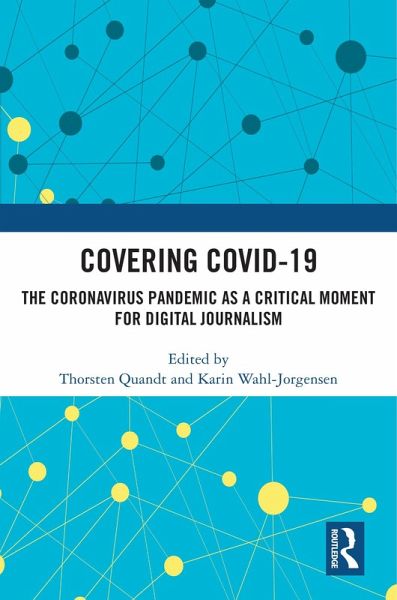
This book explores the profound impact of the Covid-19 pandemic, framing it as a "critical moment" for digital journalism, examining how journalistic practices, content and audiences were shaped by the crisis.
Featuring a global range of original research projects, using an array of research methods, the volume shows that the pandemic has transformed digital journalism in both temporary and lasting ways. In terms of the practices of journalists, remote working shifted journalists away from on-the-ground reporting, increasing dependence on elite and state sources. Press freedom faced growing threats, particularly in authoritarian contexts. In terms of news content, data journalism gained increased salience as a source of journalistic authority, while sourcing patterns shifted as official sources and health experts came to predominate. For audiences, several studies published here demonstrated increased consumption of TV, social media, and online news. Audience responses to the crisis ranged from extensive news-seeking to news avoidance. Social media became a key news source, but also fostered "dark participation" on fringe platforms like 8kun and Gab, creating a parallel information ecosystem dominated by low-credibility actors.
This volume is essential reading for scholars and students in media and journalism studies seeking a comprehensive understanding of how the pandemic reshaped digital journalism.
The chapters in this book were originally published as a special issue of Digital Journalism.
Featuring a global range of original research projects, using an array of research methods, the volume shows that the pandemic has transformed digital journalism in both temporary and lasting ways. In terms of the practices of journalists, remote working shifted journalists away from on-the-ground reporting, increasing dependence on elite and state sources. Press freedom faced growing threats, particularly in authoritarian contexts. In terms of news content, data journalism gained increased salience as a source of journalistic authority, while sourcing patterns shifted as official sources and health experts came to predominate. For audiences, several studies published here demonstrated increased consumption of TV, social media, and online news. Audience responses to the crisis ranged from extensive news-seeking to news avoidance. Social media became a key news source, but also fostered "dark participation" on fringe platforms like 8kun and Gab, creating a parallel information ecosystem dominated by low-credibility actors.
This volume is essential reading for scholars and students in media and journalism studies seeking a comprehensive understanding of how the pandemic reshaped digital journalism.
The chapters in this book were originally published as a special issue of Digital Journalism.
Dieser Download kann aus rechtlichen Gründen nur mit Rechnungsadresse in A, B, BG, CY, CZ, D, DK, EW, E, FIN, F, GR, HR, H, IRL, I, LT, L, LR, M, NL, PL, P, R, S, SLO, SK ausgeliefert werden.