42,95 €
inkl. MwSt.
Sofort per Download lieferbar
21 °P sammeln

Andere Kunden interessierten sich auch für
") Gender, Sexuality, Decolonization (eBook, PDF)41,95 €
Gender, Sexuality, Decolonization (eBook, PDF)41,95 €") Routledge Handbook of Chinese Gender & Sexuality (eBook, PDF)47,95 €
Routledge Handbook of Chinese Gender & Sexuality (eBook, PDF)47,95 €") Appearance and Identity Crisis in Modern Indian History (eBook, PDF)45,95 €
Appearance and Identity Crisis in Modern Indian History (eBook, PDF)45,95 €") Psychology and Gender (eBook, PDF)39,95 €
Psychology and Gender (eBook, PDF)39,95 €") Transnational Contact Zones (eBook, PDF)41,95 €
Transnational Contact Zones (eBook, PDF)41,95 €") COVID-19 Assemblages (eBook, ePUB)42,95 €
COVID-19 Assemblages (eBook, ePUB)42,95 €") Transgenders in India (eBook, PDF)39,95 €
Transgenders in India (eBook, PDF)39,95 €
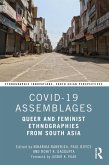
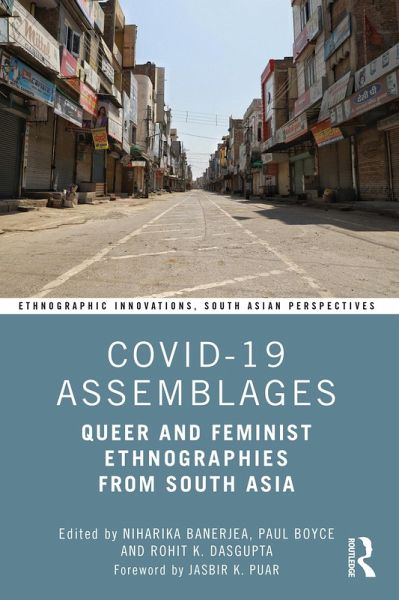
This book documents and analyzes the effects of the COVID-19 pandemic through queer and feminist perspectives. A testament of dispossessions as well as a celebration of various forms of resilience, community building and critical responses, it chronicles the social history of queer and trans persons and women in South Asia and the diasporas.
Through a creative and collaborative form of ethnographic writing, the book enters in conversation with the worlds of domestic helps, caregivers, cultural workers, students, sex workers and other precariously employed people. It examines the confining effects of the pandemic on the lived realities of many queer and trans individuals, the caste-oppressed and women across socio-economic backgrounds. The chapters in the volume piece together narratives of prejudice, hardship, self-expression and resistance from interviews, personal accounts, as well as poems and stories from activists, artists and other collaborators. The book pays particular attention to issues of power and asymmetrical relationships amidst COVID-19 and offers critiques to deepen the understanding of the uneven fault lines within which historically oppressed persons reside in South Asia.
Exploring themes of migration, disability and sexual politics, this book is an essential reading for scholars and researchers of gender and sexuality studies, cultural studies, South Asian studies, sociology and social anthropology.
Through a creative and collaborative form of ethnographic writing, the book enters in conversation with the worlds of domestic helps, caregivers, cultural workers, students, sex workers and other precariously employed people. It examines the confining effects of the pandemic on the lived realities of many queer and trans individuals, the caste-oppressed and women across socio-economic backgrounds. The chapters in the volume piece together narratives of prejudice, hardship, self-expression and resistance from interviews, personal accounts, as well as poems and stories from activists, artists and other collaborators. The book pays particular attention to issues of power and asymmetrical relationships amidst COVID-19 and offers critiques to deepen the understanding of the uneven fault lines within which historically oppressed persons reside in South Asia.
Exploring themes of migration, disability and sexual politics, this book is an essential reading for scholars and researchers of gender and sexuality studies, cultural studies, South Asian studies, sociology and social anthropology.
Dieser Download kann aus rechtlichen Gründen nur mit Rechnungsadresse in A, B, BG, CY, CZ, D, DK, EW, E, FIN, F, GR, HR, H, IRL, I, LT, L, LR, M, NL, PL, P, R, S, SLO, SK ausgeliefert werden.
'COVID-19 Assemblages provides timely and critical insight on how the pandemic has produced incisive scholarship on gender, sexuality and health during a global crisis. Bringing together a broad range of interdisciplinary scholarship the book sheds important light on the struggle to find the means to represent intimacy, collaboration and empowerment during a time of enforced social distancing, alienation and isolation.'
Joseph Alter, Professor of Anthropology, University of Pittsburgh.
'COVID-19 Assemblages is one of the first anthologies that examines the pandemic ethnographically. Offering a remarkable set of quotidian and critical perspectives on the severely exacerbated modes of stratification and precarity that ordinary people have met with extraordinary grace, this book is a testament to unfolding possibilities of ethnographic critique and patchwork assemblages deployed through the prism of queer feminism.'
Svati Shah, Associate Professor of Women, Gender and Sexuality Studies, University of Massachusetts Amherst.
Joseph Alter, Professor of Anthropology, University of Pittsburgh.
'COVID-19 Assemblages is one of the first anthologies that examines the pandemic ethnographically. Offering a remarkable set of quotidian and critical perspectives on the severely exacerbated modes of stratification and precarity that ordinary people have met with extraordinary grace, this book is a testament to unfolding possibilities of ethnographic critique and patchwork assemblages deployed through the prism of queer feminism.'
Svati Shah, Associate Professor of Women, Gender and Sexuality Studies, University of Massachusetts Amherst.
'COVID-19 Assemblages provides timely and critical insight on how the pandemic has produced incisive scholarship on gender, sexuality and health during a global crisis. Bringing together a broad range of interdisciplinary scholarship the book sheds important light on the struggle to find the means to represent intimacy, collaboration and empowerment during a time of enforced social distancing, alienation and isolation.'
Joseph Alter, Professor of Anthropology, University of Pittsburgh.
'COVID-19 Assemblages is one of the first anthologies that examines the pandemic ethnographically. Offering a remarkable set of quotidian and critical perspectives on the severely exacerbated modes of stratification and precarity that ordinary people have met with extraordinary grace, this book is a testament to unfolding possibilities of ethnographic critique and patchwork assemblages deployed through the prism of queer feminism.'
Svati Shah, Associate Professor of Women, Gender and Sexuality Studies, University of Massachusetts Amherst.
Joseph Alter, Professor of Anthropology, University of Pittsburgh.
'COVID-19 Assemblages is one of the first anthologies that examines the pandemic ethnographically. Offering a remarkable set of quotidian and critical perspectives on the severely exacerbated modes of stratification and precarity that ordinary people have met with extraordinary grace, this book is a testament to unfolding possibilities of ethnographic critique and patchwork assemblages deployed through the prism of queer feminism.'
Svati Shah, Associate Professor of Women, Gender and Sexuality Studies, University of Massachusetts Amherst.