Tom Lawson, Helen Anderson
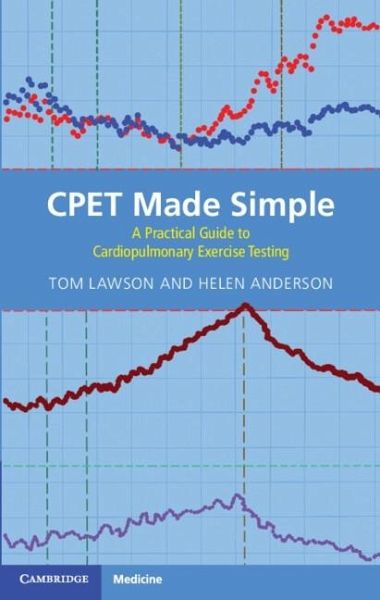
CPET Made Simple (eBook, ePUB)
A Practical Guide to Cardiopulmonary Exercise Testing
18,95 €
18,95 €
inkl. MwSt.
Sofort per Download lieferbar
9 °P sammeln
18,95 €
Als Download kaufen
18,95 €
inkl. MwSt.
Sofort per Download lieferbar
9 °P sammeln
Jetzt verschenken
Alle Infos zum eBook verschenken
18,95 €
inkl. MwSt.
Sofort per Download lieferbar
Alle Infos zum eBook verschenken
9 °P sammeln
Tom Lawson, Helen Anderson
CPET Made Simple (eBook, ePUB)
A Practical Guide to Cardiopulmonary Exercise Testing
- Format: ePub
- Merkliste
- Auf die Merkliste
- Bewerten Bewerten
- Teilen
- Produkt teilen
- Produkterinnerung
- Produkterinnerung

Bitte loggen Sie sich zunächst in Ihr Kundenkonto ein oder registrieren Sie sich bei
bücher.de, um das eBook-Abo tolino select nutzen zu können.
Hier können Sie sich einloggen
Sie sind bereits eingeloggt. Klicken Sie auf 2. tolino select Abo, um fortzufahren.

Bitte loggen Sie sich zunächst in Ihr Kundenkonto ein oder registrieren Sie sich bei bücher.de, um das eBook-Abo tolino select nutzen zu können.
- Geräte: eReader
- mit Kopierschutz
- eBook Hilfe
- Größe: 12.56MB
- FamilySharing(5)
Andere Kunden interessierten sich auch für
Neville M. JadejaCritical Care EEG Basics (eBook, ePUB)21,95 €
George AllenInfection Control Update, An Issue of Perioperative Nursing Clinics (eBook, ePUB)33,95 €
Joshua Jataunamo OscarModern Anaesthesia: (eBook, ePUB)12,99 €
Joel A. Kaplan MDKaplan's Cardiac Anesthesia E-Book (eBook, ePUB)187,95 €
Zimmerman MDFuhrman & Zimmerman's Pediatric Critical Care E-Book (eBook, ePUB)165,95 €
Robert M. ArnoldNavigating Communication with Seriously Ill Patients (eBook, ePUB)27,95 €
Alan MerryMedication Safety during Anesthesia and the Perioperative Period (eBook, ePUB)37,95 €-
-
-
Produktdetails
- Verlag: Cambridge University Press
- Erscheinungstermin: 31. März 2024
- Englisch
- ISBN-13: 9781009412902
- Artikelnr.: 70914020
Dieser Download kann aus rechtlichen Gründen nur mit Rechnungsadresse in A, B, BG, CY, CZ, D, DK, EW, E, FIN, F, GR, HR, H, IRL, I, LT, L, LR, M, NL, PL, P, R, S, SLO, SK ausgeliefert werden.
- Herstellerkennzeichnung Die Herstellerinformationen sind derzeit nicht verfügbar.
Tom Lawson is Consultant Anaesthetist at Swansea Bay University Health Board in Swansea.
Glossary
List of Abbreviations
Introduction
Part I. What is Cardiopulmonary Exercise Testing?: 1. What is cardiopulmonary exercise testing?
2. Exercise physiology
3. Anaerobic threshold, ventilatory, and cardiovascular response to exercise and the Fick principle
Part II. Conducting a Cardiopulmonary Exercise Test: 4. Conduct of a CPET
5. Spirometry and flow-volume loops
6. Ergometers and work rate increment, equipment, staff, and preparation
7. Workload, breath-by-breath analysis and test phases, and stopping a cardiopulmonary exercise test
Part III. Interpreting a Cardiopulmonary Exercise Test: 8. Different plots and CPET interpretation
9. RER versus time (or work rate) plot
10. VO2 (and VCO2) versus work rate versus time plot
11. VCO2 versus VO2 plot
12. VEVO2 and VEVCO2 versus time (or work or VO2) plot
13. PETO2 and PETCO2 versus time (or work or VO2) plot
14. Heart rate and O2 pulse (VO2/HR) versus time plot
15. VE versus time plot
16. VE versus VCO2 plot
17. Vt versus VE plot
18. Additional parameters of interest and presentation of results
Part IV. Assessment of Exercise Capacity and Causes of Exercise Limitation and Dyspnoea: 19. General interpretation and a normal test
20. Submaximal test
21. CPET in trained athletes, deconditioning, and obesity
22. Cardiovascular limitation
23. Ventilatory limitation
24. Pulmonary vascular limitation
25. Peripheral vascular limitation
26. Peripheral muscle limitation
27. CPET and dyspnoea
28. Dysfunctional breathing
29. Peri-operative risk stratification and shared decision making
Further Reading
Index.
List of Abbreviations
Introduction
Part I. What is Cardiopulmonary Exercise Testing?: 1. What is cardiopulmonary exercise testing?
2. Exercise physiology
3. Anaerobic threshold, ventilatory, and cardiovascular response to exercise and the Fick principle
Part II. Conducting a Cardiopulmonary Exercise Test: 4. Conduct of a CPET
5. Spirometry and flow-volume loops
6. Ergometers and work rate increment, equipment, staff, and preparation
7. Workload, breath-by-breath analysis and test phases, and stopping a cardiopulmonary exercise test
Part III. Interpreting a Cardiopulmonary Exercise Test: 8. Different plots and CPET interpretation
9. RER versus time (or work rate) plot
10. VO2 (and VCO2) versus work rate versus time plot
11. VCO2 versus VO2 plot
12. VEVO2 and VEVCO2 versus time (or work or VO2) plot
13. PETO2 and PETCO2 versus time (or work or VO2) plot
14. Heart rate and O2 pulse (VO2/HR) versus time plot
15. VE versus time plot
16. VE versus VCO2 plot
17. Vt versus VE plot
18. Additional parameters of interest and presentation of results
Part IV. Assessment of Exercise Capacity and Causes of Exercise Limitation and Dyspnoea: 19. General interpretation and a normal test
20. Submaximal test
21. CPET in trained athletes, deconditioning, and obesity
22. Cardiovascular limitation
23. Ventilatory limitation
24. Pulmonary vascular limitation
25. Peripheral vascular limitation
26. Peripheral muscle limitation
27. CPET and dyspnoea
28. Dysfunctional breathing
29. Peri-operative risk stratification and shared decision making
Further Reading
Index.
Glossary
List of Abbreviations
Introduction
Part I. What is Cardiopulmonary Exercise Testing?: 1. What is cardiopulmonary exercise testing?
2. Exercise physiology
3. Anaerobic threshold, ventilatory, and cardiovascular response to exercise and the Fick principle
Part II. Conducting a Cardiopulmonary Exercise Test: 4. Conduct of a CPET
5. Spirometry and flow-volume loops
6. Ergometers and work rate increment, equipment, staff, and preparation
7. Workload, breath-by-breath analysis and test phases, and stopping a cardiopulmonary exercise test
Part III. Interpreting a Cardiopulmonary Exercise Test: 8. Different plots and CPET interpretation
9. RER versus time (or work rate) plot
10. VO2 (and VCO2) versus work rate versus time plot
11. VCO2 versus VO2 plot
12. VEVO2 and VEVCO2 versus time (or work or VO2) plot
13. PETO2 and PETCO2 versus time (or work or VO2) plot
14. Heart rate and O2 pulse (VO2/HR) versus time plot
15. VE versus time plot
16. VE versus VCO2 plot
17. Vt versus VE plot
18. Additional parameters of interest and presentation of results
Part IV. Assessment of Exercise Capacity and Causes of Exercise Limitation and Dyspnoea: 19. General interpretation and a normal test
20. Submaximal test
21. CPET in trained athletes, deconditioning, and obesity
22. Cardiovascular limitation
23. Ventilatory limitation
24. Pulmonary vascular limitation
25. Peripheral vascular limitation
26. Peripheral muscle limitation
27. CPET and dyspnoea
28. Dysfunctional breathing
29. Peri-operative risk stratification and shared decision making
Further Reading
Index.
List of Abbreviations
Introduction
Part I. What is Cardiopulmonary Exercise Testing?: 1. What is cardiopulmonary exercise testing?
2. Exercise physiology
3. Anaerobic threshold, ventilatory, and cardiovascular response to exercise and the Fick principle
Part II. Conducting a Cardiopulmonary Exercise Test: 4. Conduct of a CPET
5. Spirometry and flow-volume loops
6. Ergometers and work rate increment, equipment, staff, and preparation
7. Workload, breath-by-breath analysis and test phases, and stopping a cardiopulmonary exercise test
Part III. Interpreting a Cardiopulmonary Exercise Test: 8. Different plots and CPET interpretation
9. RER versus time (or work rate) plot
10. VO2 (and VCO2) versus work rate versus time plot
11. VCO2 versus VO2 plot
12. VEVO2 and VEVCO2 versus time (or work or VO2) plot
13. PETO2 and PETCO2 versus time (or work or VO2) plot
14. Heart rate and O2 pulse (VO2/HR) versus time plot
15. VE versus time plot
16. VE versus VCO2 plot
17. Vt versus VE plot
18. Additional parameters of interest and presentation of results
Part IV. Assessment of Exercise Capacity and Causes of Exercise Limitation and Dyspnoea: 19. General interpretation and a normal test
20. Submaximal test
21. CPET in trained athletes, deconditioning, and obesity
22. Cardiovascular limitation
23. Ventilatory limitation
24. Pulmonary vascular limitation
25. Peripheral vascular limitation
26. Peripheral muscle limitation
27. CPET and dyspnoea
28. Dysfunctional breathing
29. Peri-operative risk stratification and shared decision making
Further Reading
Index.