41,95 €
41,95 €
inkl. MwSt.
Sofort per Download lieferbar

21 °P sammeln
41,95 €
Als Download kaufen
41,95 €
inkl. MwSt.
Sofort per Download lieferbar
21 °P sammeln
Jetzt verschenken
Alle Infos zum eBook verschenken
41,95 €
inkl. MwSt.
Sofort per Download lieferbar
Alle Infos zum eBook verschenken
21 °P sammeln

Andere Kunden interessierten sich auch für
") Creating Heritage (eBook, ePUB)41,95 €
Creating Heritage (eBook, ePUB)41,95 €") Thinking Heritage Through China (eBook, PDF)42,95 €
Thinking Heritage Through China (eBook, PDF)42,95 €") Emotion, Affective Practices, and the Past in the Present (eBook, PDF)39,95 €
Emotion, Affective Practices, and the Past in the Present (eBook, PDF)39,95 €") Adaptive Reuse in Latin America (eBook, PDF)42,95 €
Adaptive Reuse in Latin America (eBook, PDF)42,95 €") Affective Architectures (eBook, PDF)41,95 €
Affective Architectures (eBook, PDF)41,95 €") Navigating Polyvocal Heritage in a Postcolonial Cultural Landscape (eBook, PDF)42,95 €
Navigating Polyvocal Heritage in a Postcolonial Cultural Landscape (eBook, PDF)42,95 €") Heritage is Movement (eBook, PDF)42,95 €
Heritage is Movement (eBook, PDF)42,95 €


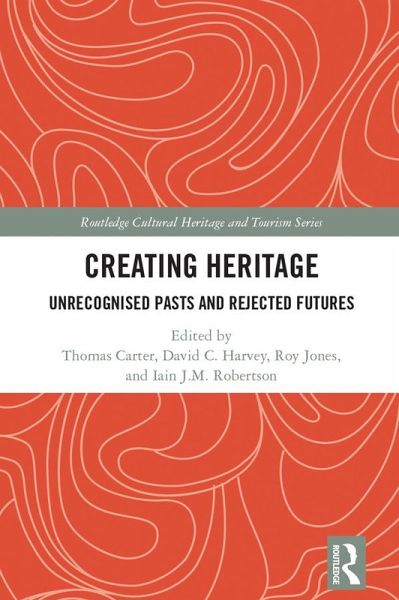
This book investigates the selection process of heritagisation to understand what specific pasts are being selected or rejected for representation, who is selecting them, how and to whom they are being represented and why they are being presented, or dismissed, in the ways that they are.
Some aspects of our pasts are venerated and memorialised for a variety of reasons, while others are forgotten or even hidden. This volume, thus, provides examples from across a spectrum. Some phenomena are well-suited to heritagisation, such as animals memorialised for their bravery, long past agricultural techniques and implements, and impressive landscapes. However, this book also deals with products (e.g. tobacco), historical periods (e.g. the Third Reich) and scientific techniques (e.g. genetic modification) with negative connotations that extend beyond their heritage attributes.
This volume considers how the actors in the heritage industry admit, valorise, prioritise and rationalise historic resources as heritage products. These findings provide practical examples of how heritage institutions privilege, frame and/or exclude a wide range of heritage items. They also contrast the invocations of sectional (local, national or class based) and more cosmopolitan heritages and consider the extent to which innovation and change are or can be acknowledged within the heritage discourse.
Some aspects of our pasts are venerated and memorialised for a variety of reasons, while others are forgotten or even hidden. This volume, thus, provides examples from across a spectrum. Some phenomena are well-suited to heritagisation, such as animals memorialised for their bravery, long past agricultural techniques and implements, and impressive landscapes. However, this book also deals with products (e.g. tobacco), historical periods (e.g. the Third Reich) and scientific techniques (e.g. genetic modification) with negative connotations that extend beyond their heritage attributes.
This volume considers how the actors in the heritage industry admit, valorise, prioritise and rationalise historic resources as heritage products. These findings provide practical examples of how heritage institutions privilege, frame and/or exclude a wide range of heritage items. They also contrast the invocations of sectional (local, national or class based) and more cosmopolitan heritages and consider the extent to which innovation and change are or can be acknowledged within the heritage discourse.
Dieser Download kann aus rechtlichen Gründen nur mit Rechnungsadresse in A, B, BG, CY, CZ, D, DK, EW, E, FIN, F, GR, HR, H, IRL, I, LT, L, LR, M, NL, PL, P, R, S, SLO, SK ausgeliefert werden.