41,95 €
inkl. MwSt.
Erscheint vor. 27.01.26
21 °P sammeln

Andere Kunden interessierten sich auch für
") Creating Sustainable Cities Through Pedestrian Urbanism (eBook, ePUB)41,95 €
Creating Sustainable Cities Through Pedestrian Urbanism (eBook, ePUB)41,95 €") Co-producing Knowledge for Sustainable Cities (eBook, PDF)41,95 €
Co-producing Knowledge for Sustainable Cities (eBook, PDF)41,95 €") Sustainable Development Goals and Indian Cities (eBook, PDF)38,95 €
Sustainable Development Goals and Indian Cities (eBook, PDF)38,95 €") Urban Ecology (eBook, PDF)38,95 €
Urban Ecology (eBook, PDF)38,95 €") Frankenstein Urbanism (eBook, PDF)37,95 €
Frankenstein Urbanism (eBook, PDF)37,95 €") Circular Cities (eBook, PDF)37,95 €
Circular Cities (eBook, PDF)37,95 €") Performance Metrics for Sustainable Cities (eBook, PDF)41,95 €
Performance Metrics for Sustainable Cities (eBook, PDF)41,95 €

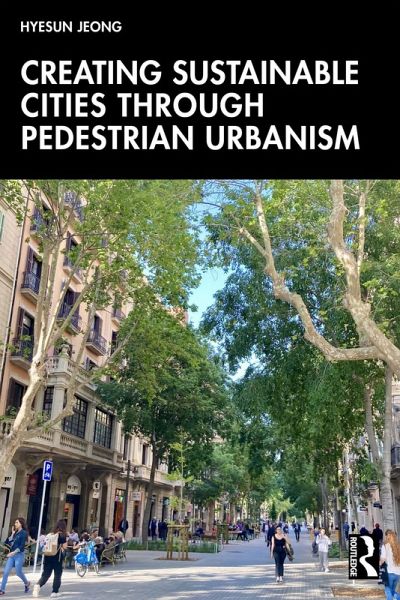
As cities grapple with climate change and social inequality, a growing movement recognizes walking as fundamental to urban sustainability. Creating Sustainable Cities Through Pedestrian Urbanism explores how communities worldwide are rethinking the relationship between mobility, place, and belonging.
Drawing from diverse cities across North America, Europe, and Asia, this book examines the shift from car-dominated planning toward human-centered design. It traces how walkable environments support environmental goals while fostering social connection and cultural vitality, demonstrating that sustainable cities are also more equitable and livable cities.
This book investigates varied examples: cultural programming in transit stations, night festivals and murals, pedestrian-friendly street transformations, adaptive public spaces, and community-led initiatives. It considers how everyday elements-café culture, green infrastructure, neighborhood events-contribute to places that are both environmentally responsible and socially cohesive.
Written for urban practitioners, community advocates, and engaged citizens, this book offers insights rather than prescriptions, recognizing that each place requires its own approach to pedestrian urbanism. By examining what works and what doesn't across different contexts and scales, Creating Sustainable Cities Through Pedestrian Urbanism contributes to ongoing conversations about building cities that serve both people and planet. Sustainable urban futures, it suggests, may be closer than we walk.
Drawing from diverse cities across North America, Europe, and Asia, this book examines the shift from car-dominated planning toward human-centered design. It traces how walkable environments support environmental goals while fostering social connection and cultural vitality, demonstrating that sustainable cities are also more equitable and livable cities.
This book investigates varied examples: cultural programming in transit stations, night festivals and murals, pedestrian-friendly street transformations, adaptive public spaces, and community-led initiatives. It considers how everyday elements-café culture, green infrastructure, neighborhood events-contribute to places that are both environmentally responsible and socially cohesive.
Written for urban practitioners, community advocates, and engaged citizens, this book offers insights rather than prescriptions, recognizing that each place requires its own approach to pedestrian urbanism. By examining what works and what doesn't across different contexts and scales, Creating Sustainable Cities Through Pedestrian Urbanism contributes to ongoing conversations about building cities that serve both people and planet. Sustainable urban futures, it suggests, may be closer than we walk.
Dieser Download kann aus rechtlichen Gründen nur mit Rechnungsadresse in A, B, BG, CY, CZ, D, DK, EW, E, FIN, F, GR, HR, H, IRL, I, LT, L, LR, M, NL, PL, P, R, S, SLO, SK ausgeliefert werden.