Sie sind bereits eingeloggt. Klicken Sie auf 2. tolino select Abo, um fortzufahren.
Bitte loggen Sie sich zunächst in Ihr Kundenkonto ein oder registrieren Sie sich bei bücher.de, um das eBook-Abo tolino select nutzen zu können.
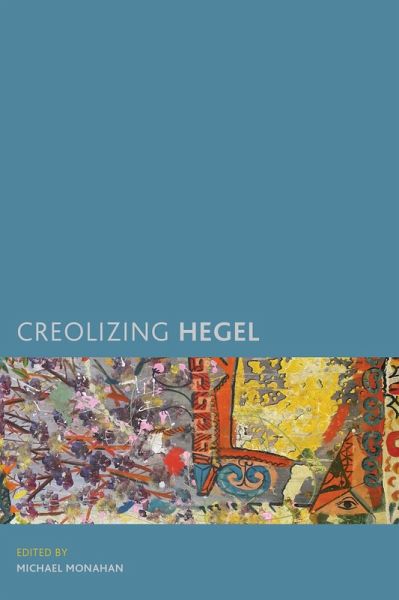
The 19th-century German thinker G.W.F. Hegel is a towering figure in the canon of European philosophy. Indeed, most of the significant figures of European Philosophy after Hegel explicitly address his thought in their own work. Outside of the familiar territory of the Western canon, however, Hegel has also loomed large, most often as a villain, but sometimes also as a resource in struggles for liberation from colonialism, sexism and racism. Hegel understood his own work as aiming above freedom, yet ironically wrote texts that are not only explicitly Eurocentric and even racist. Should we, and…mehr
The 19th-century German thinker G.W.F. Hegel is a towering figure in the canon of European philosophy. Indeed, most of the significant figures of European Philosophy after Hegel explicitly address his thought in their own work. Outside of the familiar territory of the Western canon, however, Hegel has also loomed large, most often as a villain, but sometimes also as a resource in struggles for liberation from colonialism, sexism and racism. Hegel understood his own work as aiming above freedom, yet ironically wrote texts that are not only explicitly Eurocentric and even racist. Should we, and is it even possible, to bring Hegelian texts and ideas into productive discourse with those he so often himself saw as distinctly Other and even inferior? In response to this question, Creolizing Hegel brings together transdisciplinary scholars presenting various approaches to creolizing the work of Hegel. The essays in this volume take Hegelian texts and themes across borders of method, discipline, and tradition. The task is not simply to compare and contrast Hegel with some 'outsider' figure or tradition, but rather to reconsider and reconfigure our understandings of all of the figures and ideas brought together in these cross-disciplinary essays.
Die Herstellerinformationen sind derzeit nicht verfügbar.
Autorenporträt
Michael J. Monahan is Associate Professor of Philosophy at Marquette University. He is the author of The Creolizing Subject: Race, Reason, and the Politics of Purity (2011). Contributors: María Acosta, Philosophy, DePaul University, USA; Stefan Bird-Pollan, Philosophy, University of Kentucky, USA; Norman Ajari, Equipe de Recherche sur les Rationalités Philosophiques et les Savoirs (ERRAPHIS), Université de Toulouse, France; Jeffrey A. Gauthier, Philosophy, Portland University, USA; Nicholas A. Germana, Keene State College, USA; Nigel C. Gibson, Development Studies, Univeristy of Kwa-Zulu Natal, South Africa; Greg Graham, African and African-American Studies, Oklahoma University, USA; Paget Henry, Brown University, USA; Brandon Hogan, Howard University, USA; Craig Matarrese, Mankato State University, USA; Shannon M. Mussett, Philosophy, Utah Valley University, USA; Karen Ng, Philosophy, Vanderbilt University, USA; Carlos Alberto Sánchez, Philosophy, San-Jose State University, USA; Ricardo Sanín Restrepo, Political and Legal Theory, Universidad Autónoma de Ciudad de Mexico, Mexico; Richard Dien Winfield, Philosophy, University of Georgia, USA; Rocío Zambrana, Philosophy, University of Oregon, USA
Inhaltsangabe
Introduction: What is Rational is Creolizing.Michael J. Monahan / Part I: Reason, Logic, and Dialectic / 1. Boundary, Ambivalence, Jaibería, or, How to Appropriate Hegel Rocío Zambrana / 2. CLR James, Africana Transcendental Philosophy and the Creolizing of Hegel Paget Henry / 3. Thinking Through the Negative: Adorno's Reading of Hegel / Stefan Bird-Pollan 4. Why I Am So Wise: Hegelian Reflections on Whether Reason Can be Enhanced Richard Dien WinfieldPart II: History and Aesthetics / 5. Revisiting "Hegel and Haiti": Postcolonial Readings of the Lord/Bondsman Dialectic Nicholas A. Germana / 6. Hegel and Adorno on Negative Universal History: The Dialectics of Species Life Karen Ng / 7. Hegel Among the Cannibals Oscar Guardiola-Rivera / 8. Creolizing Hegel's Theory of Tragedy Greg A.Graham / 9. Hegel, Musical Subjectivity, and Jazz Craig Matarrese / Part III: Ethical Life, Law, and Politics / 10. The Future is Now: Loepoldo Zea's Hegelianism and the Liberation of the Mexican Past Carlos Alberto Sánchez / 11. Crossing Boundaries: Hegel, Beauvoir, and hooks on Exclusion and Identity Shannon M. Mussett / 12.Ideal Theory and Racial Justice: Some Hegelian Considerations Brandon Hogan / 13. Oppression, Legal Reform, and Hegel's Natural Law Internalism Jeffrey A. Gauthier
Introduction: What is Rational is Creolizing.Michael J. Monahan / Part I: Reason, Logic, and Dialectic / 1. Boundary, Ambivalence, Jaibería, or, How to Appropriate Hegel Rocío Zambrana / 2. CLR James, Africana Transcendental Philosophy and the Creolizing of Hegel Paget Henry / 3. Thinking Through the Negative: Adorno's Reading of Hegel / Stefan Bird-Pollan 4. Why I Am So Wise: Hegelian Reflections on Whether Reason Can be Enhanced Richard Dien WinfieldPart II: History and Aesthetics / 5. Revisiting "Hegel and Haiti": Postcolonial Readings of the Lord/Bondsman Dialectic Nicholas A. Germana / 6. Hegel and Adorno on Negative Universal History: The Dialectics of Species Life Karen Ng / 7. Hegel Among the Cannibals Oscar Guardiola-Rivera / 8. Creolizing Hegel's Theory of Tragedy Greg A.Graham / 9. Hegel, Musical Subjectivity, and Jazz Craig Matarrese / Part III: Ethical Life, Law, and Politics / 10. The Future is Now: Loepoldo Zea's Hegelianism and the Liberation of the Mexican Past Carlos Alberto Sánchez / 11. Crossing Boundaries: Hegel, Beauvoir, and hooks on Exclusion and Identity Shannon M. Mussett / 12.Ideal Theory and Racial Justice: Some Hegelian Considerations Brandon Hogan / 13. Oppression, Legal Reform, and Hegel's Natural Law Internalism Jeffrey A. Gauthier
Es gelten unsere Allgemeinen Geschäftsbedingungen: www.buecher.de/agb
Impressum
www.buecher.de ist ein Internetauftritt der buecher.de internetstores GmbH
Geschäftsführung: Monica Sawhney | Roland Kölbl | Günter Hilger
Sitz der Gesellschaft: Batheyer Straße 115 - 117, 58099 Hagen
Postanschrift: Bürgermeister-Wegele-Str. 12, 86167 Augsburg
Amtsgericht Hagen HRB 13257
Steuernummer: 321/5800/1497
USt-IdNr: DE450055826